Skip to content
city skyline during night time
Taipei · 台北 · 25.03°N 121.56°E

Where to stay in Taipei: pick the right neighborhood

Choose a Taipei base that matches your trip: modern skyline, leafy cafés, late-night street culture, hot springs, or design-forward city living.

Choose a Taipei base that matches your trip: modern skyline, leafy cafés, late-night street culture, hot springs, or design-forward city living.

Updated June 20, 2026

Quick facts資訊

Time needed
12–15 minute read
Best time / for
First-time planning, couples and short trips
Good to know
Stay near an MRT station you’ll use daily; avoid a hotel that adds daily transfers.
Best for
First-time planning, couples, short trips
Time to read
12–15 minutes
Rule of thumb
Stay near an MRT station you’ll use daily
Biggest mistake
A “perfect” hotel that adds daily transfers

Highlights亮點

  • Zhongshan is the easiest all-around base
  • Xinyi is best for modern Taipei + Taipei 101
  • Daan is calm, green, and café-rich
  • Ximending is the late-night, youthful option

How to choose (the 60-second method)

Don’t choose by hotel photos alone—choose by rhythm. Where will you be every morning? Where will you want to come back to at night? Taipei is easy to get around, but your base shapes how relaxed you feel.

Pick one core priority (food, shopping, quiet, nightlife, hot springs) and choose a neighborhood that naturally supports it.

  • If you want the easiest all-rounder: choose Zhongshan
  • If you want calm + parks + cafés: choose Daan
  • If you want skyline + malls + Taipei 101 energy: choose Xinyi
  • If you want late nights + street culture: choose Ximending
  • If you want a spa-style pace: choose Beitou/Xinbeitou

Quick picks: the best bases for most travelers

If you’re deciding fast, these are the most reliable choices. Taipei has many good areas, but these bases consistently make trips smoother because they’re walkable, well-connected, and easy to pair with common sightseeing loops.

  • Zhongshan: best all-around base (central, design-y, easy transit)
  • Daan: calm base with cafés and greenery (great for quiet evenings)
  • Xinyi: modern Taipei base (Taipei 101, malls, wide sidewalks)
  • Ximending: energetic base for late nights and street food
  • Beitou/Xinbeitou: hot springs base (slower pace, nature-adjacent)

Zhongshan: the “everything works” base

Zhongshan is the easiest recommendation because it does a little of everything well: cafés, food, nightlife, and fast access to multiple parts of the city. It feels more “local neighborhood” than the big landmark zones, but it’s still extremely convenient.

Choose Zhongshan if you want a smooth trip with minimal planning. It’s especially good for first-timers who want a stylish, central home base.

  • Best for: first-timers, couples, café lovers, design-shopping days
  • Works well with: Datong/Dadaocheng mornings, Zhongzheng landmarks, Xinyi evenings
  • Micro-areas to search: around Zhongshan MRT, Shuanglian MRT, Minquan W. Rd area

Daan: calm streets, parks, and café rhythm

Daan is a comfort-forward base. Streets feel greener, mornings feel calmer, and it’s easy to build a trip with fewer late-night distractions (in a good way).

Choose Daan if you want quiet nights, easy park resets, and a trip that feels balanced rather than overloaded.

  • Best for: quiet sleepers, long walks, coffee culture, slower pacing
  • Tradeoff: less “instant night energy” than Ximending or Xinyi
  • Micro-areas to search: around Daan MRT, Zhongxiao Dunhua area, Daan Park vicinity

Xinyi: modern Taipei, skyline walks, Taipei 101 energy

Xinyi is Taipei’s modern front stage: towers, malls, clean sidewalks, and easy evening strolls with big-city lighting. If your dream photo is Taipei 101 (or you love shopping as a travel activity), this is the most convenient base.

It’s also a strong pick for travelers who want a straightforward, hotel-forward experience with lots of familiar conveniences.

  • Best for: skyline lovers, shoppers, modern city vibe, short stays
  • Tradeoff: less “old Taipei texture” outside the landmark core
  • Micro-areas to search: Taipei 101/World Trade Center, City Hall area
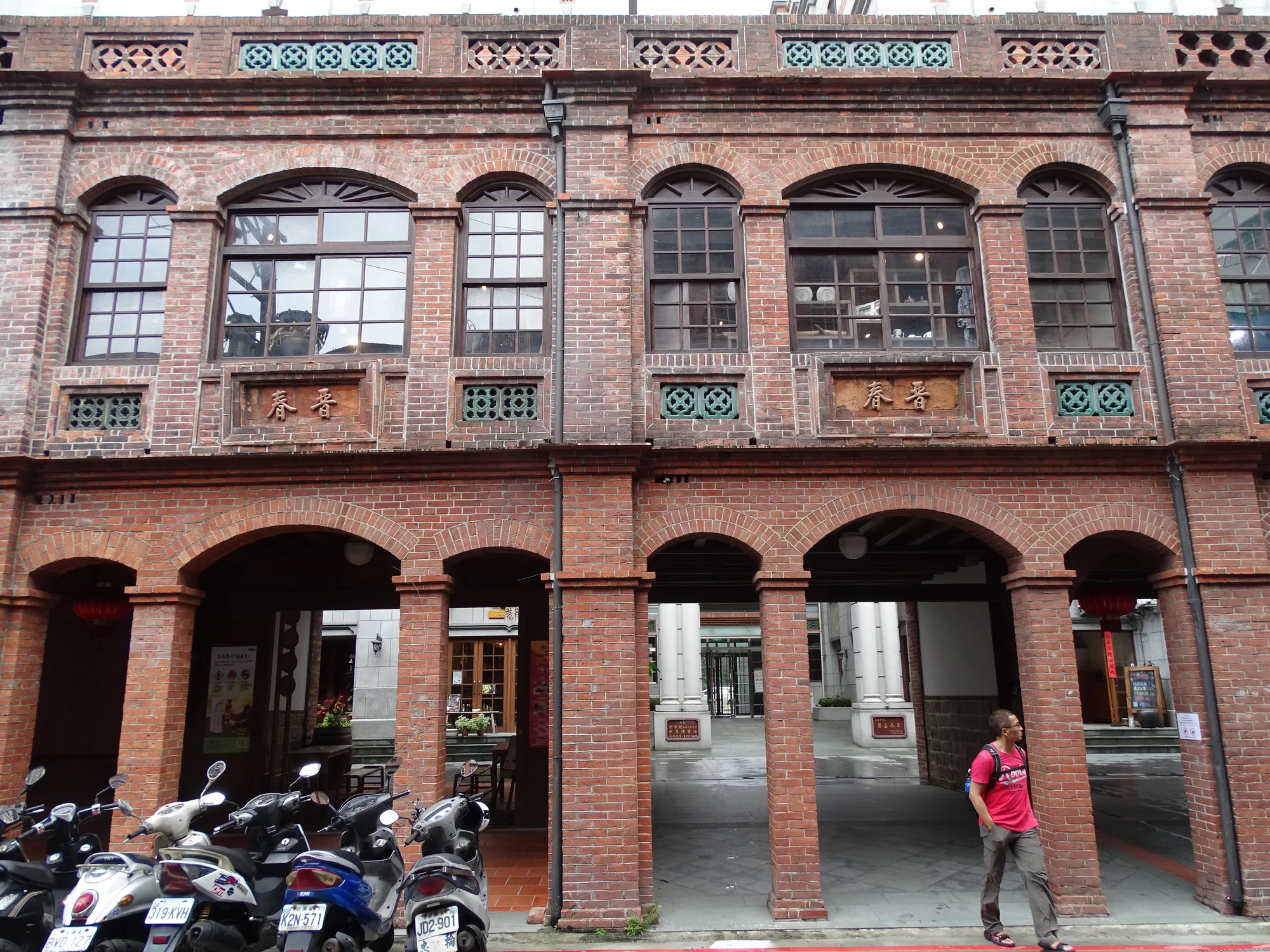
A historic red-brick shophouse facade with arched windows and a covered arcade on Dihua Street, Dadaocheng, Taipei
Photo: Adam Jones from Kelowna, BC, Canada · CC BY-SA 2.0 · Wikimedia Commons

Ximending: late-night energy and easy street food

Ximending is Taipei’s loud, bright, youthful zone—perfect if you want to step outside and immediately be in the middle of it. It’s convenient, tourist-friendly, and fun at night.

Choose Ximending if your trip is built around evening strolling, casual eating, and being close to older Taipei (Wanhua/Longshan Temple) without complicated transit.

  • Best for: late nights, street culture, groups, first-time “city night” energy
  • Tradeoff: noise and crowds can be a lot if you’re sensitive
  • Micro-areas to search: around Ximen MRT, slightly off the main pedestrian streets

Beitou and Xinbeitou: hot springs as your home base

Beitou (and the Xinbeitou hot-spring area) is a different pace: steam, parks, and a “reset day” vibe built into daily life. Staying here makes sense if hot springs are a core reason you’re coming to Taipei—or if you want to end most evenings quietly.

It can also be a strategic split-stay: a central base first, then one or two nights in Beitou for a calm finish.

  • Best for: restorative travel, cooler-weather trips, slower evenings
  • Tradeoff: you’ll commute more for nightlife and some city-center icons
  • Micro-areas to search: Xinbeitou MRT vicinity for the hot-springs lane feel

Practical logistics (airport, day trips, and late nights)

Prioritize proximity to an MRT station over almost everything else. A ‘perfect’ hotel that requires multiple daily transfers will slowly drain your trip energy.

If you’re doing multiple day trips (Jiufen, Pingxi, Yilan, north coast), consider staying somewhere with easy access to major connectors. Taipei Main Station is very practical for rail and airport transfers—even if it’s not the most “romantic” base.

If you’re carrying luggage or landing late, the best first evening plan is local: settle in, do a nearby café or simple street-food dinner, and save the big sightseeing loop for tomorrow.

  • Late nights: Ximending and Zhongshan are easy for “walk home” evenings
  • Early flights: prioritize a simple route to the Airport MRT or your airport bus
  • Day trips: being near a major connector can be worth it for short stays

A quick hotel checklist (small things that matter)

When the goal is a relaxed trip, your hotel is a support system. Small details—walk time to transit, elevator access, and night noise—matter more than a dramatic lobby photo.

  • Walking time: 5–10 minutes to an MRT station is a sweet spot
  • Elevator access: helpful if you’re carrying luggage or traveling with kids
  • Noise: ask for higher floors or rooms away from major roads if sensitive
  • A nearby breakfast option: convenience stores are great, but a calm café is even better

Hostels vs hotels vs serviced apartments (pick the format first)

Before you compare neighborhoods, it helps to decide what kind of room you actually want—because the format shapes your trip as much as the district does. Taipei is well stocked at every level: social hostels with dorms and private capsule-style rooms, small business hotels that trade lobby drama for clean, quiet efficiency, polished international hotels in the landmark zones, and serviced apartments that come with a small kitchen and a more “live here for a while” feel.

As a rough rule: hostels suit solo travelers and anyone who values budget and built-in social energy; business and boutique hotels suit couples and short stays where you mostly want a comfortable, well-located base to sleep and reset; serviced apartments shine for families, longer stays, and anyone who wants to cook a few meals or do laundry without a daily café-and-restaurant rhythm. None of these is “better”—they just match different trips.

Whatever the format, the location rule still rules. A simple capsule near a station you use daily will often beat a beautiful apartment that adds two transfers to every outing. Decide the format, then layer it onto the neighborhood that fits your priority.

  • Hostels: best for solo travelers, budgets, and meeting people
  • Business/boutique hotels: best for couples and short, low-effort stays
  • Serviced apartments: best for families and longer stays (kitchen, laundry, space)
  • Whatever you choose, keep it within an easy walk of an MRT station you’ll use
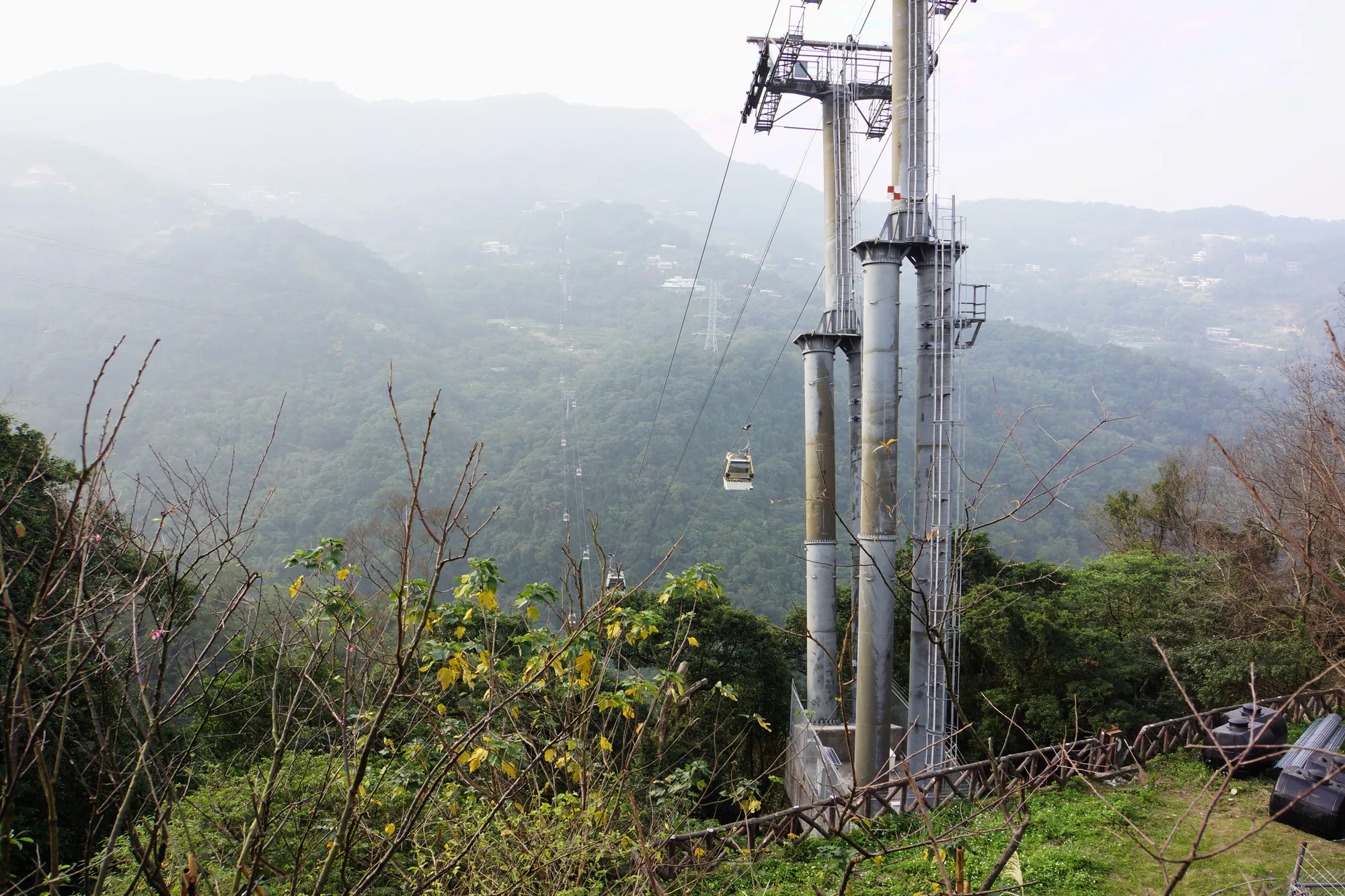
Maokong Gondola cable-car cabins on grey towers descending over forested green tea hills in Taipei
Photo: lienyuan lee · CC BY 3.0 · Wikimedia Commons

Budget, mid-range, or splurge—by area

Each neighborhood leans toward a price band, and knowing that up front saves a lot of fruitless searching. Ximending and the Wanhua side, plus the area around Taipei Main Station, tend to carry the most genuinely budget and mid-range options, including hostels and small hotels—handy if you want to spend on food and experiences rather than the room. Zhongshan sits comfortably in the mid-range with a stylish streak, which is part of why it’s such a reliable all-rounder.

Daan reads a touch more upscale and residential, with calmer boutique stays and serviced apartments that suit travelers who want quiet and greenery. Xinyi is where the modern, hotel-forward splurge lives: it’s the landmark district, so it naturally trends pricier, especially for rooms with skyline angles. Beitou and Xinbeitou run their own scale entirely, from simple guesthouses to hot-spring resorts where the bath is the whole point.

Prices move with season, demand, and events, so treat any figure you find as a snapshot—rates are worth confirming when you book. The more useful move is to match the price band to the area’s personality—then you’re paying for the trip you actually want, not fighting the neighborhood’s nature.

  • Budget/mid: Ximending, Wanhua side, Taipei Main Station vicinity
  • Mid-range with style: Zhongshan
  • Calm/upscale-leaning: Daan
  • Modern splurge + skyline rooms: Xinyi
  • Hot-spring stays (their own scale): Beitou/Xinbeitou

Match the base to the traveler (solo, couples, families, business)

The “best” area changes depending on who’s traveling. Solo travelers often do well in Zhongshan or Ximending: both are lively, walkable, and easy to navigate alone, and Ximending in particular makes a single traveler feel plugged into the city at night. If you want quieter solo evenings with good coffee, Daan is the gentle alternative.

Couples tend to love Zhongshan for its mix of cafés, food, and easy nights, or Daan for calm, leafy strolls; Xinyi works if a skyline-and-101 evening is part of the romance. Families usually want to minimize transfers and maximize space, which points to Zhongshan or Daan—and serviced apartments help enormously when you’re traveling with kids who nap, snack, and need a home base mid-day.

Business travelers usually prioritize predictable transit and reliable rooms over neighborhood character. Xinyi suits meetings near the financial and convention core, while Zhongshan and the Main Station vicinity give you fast access across the city and to the Airport MRT for tight schedules. Pick the base around your single biggest constraint and the rest tends to fall into place.

  • Solo: Zhongshan or Ximending (lively, walkable); Daan for quieter nights
  • Couples: Zhongshan or Daan; Xinyi for a skyline evening
  • Families: Zhongshan/Daan, ideally a serviced apartment for space
  • Business: Xinyi for the convention core; Zhongshan/Main Station for transit

The split-stay strategy (when one base isn’t enough)

For trips of four nights or more, consider splitting your stay rather than forcing one neighborhood to do everything. A classic Taipei split is a central base first—Zhongshan, Daan, or Xinyi—for the city sightseeing, then one or two nights in Beitou for a slow, hot-spring finish. You front-load the energy and end the trip relaxed instead of frazzled.

Split stays also help if your interests pull in different directions. If you’re combining city days with lots of northern day trips (Tamsui, the north coast, Yangmingshan), a stretch near a major connector or on the Red line can cut your commuting; if your trip leans toward old Taipei and food, a few nights near Ximending and Wanhua puts you in the thick of it. The cost is the hassle of moving once mid-trip—usually a small price for a base that actually fits each phase.

If you do split, keep luggage logistics in mind. Move on a day you’re not also trying to sightsee heavily, and lean on the MRT or a short taxi for the transfer. Many hotels and hostels will hold bags before check-in or after check-out, which makes a mid-trip switch far smoother.

  • Common split: central base first, then Beitou for a hot-spring finish
  • Worth it for trips of roughly four nights or more
  • Move on a light sightseeing day; use the MRT or a short taxi
  • Ask about bag storage so the transfer day isn’t wasted

How to read a listing (MRT distance, noise, and the fine print)

Listings are written to sell, so learn to read between the lines. The single most useful detail is the real walking time to the nearest MRT station—not the straight-line distance a map shows. A place advertised as “near” a station can still be a hot, luggage-dragging walk, so look for an explicit walking time, check the route on a map, and remember that 5–10 minutes to a station you’ll use daily is the sweet spot.

Noise is the other thing listings downplay. Rooms over a main road, above a busy lane, or in the heart of Ximending’s pedestrian core can be loud well into the night. If you’re a light sleeper, request a higher floor or a room facing a courtyard or quiet side street, and scan recent reviews specifically for the words “noise,” “street,” and “thin walls.” Many Taipei buildings are older than their renovated rooms suggest, so soundproofing varies.

Finally, mind the practical fine print: whether there’s an elevator (older buildings and walk-up guesthouses sometimes don’t), whether breakfast is included or genuinely useful, and the check-in window if you’re landing late. None of these are dealbreakers on their own, but together they decide how relaxed the stay actually feels.

  • Look for explicit walking time to the MRT, not just “near the station”
  • Light sleeper? Ask for a higher floor or a room off the main road
  • Search reviews for “noise,” “street,” and “elevator” before booking
  • Confirm the check-in window if you’re arriving late at night

Booking timing and a few more areas worth a look

Taipei rarely sells out the way some cities do, but timing still pays off. Rooms get tighter and pricier around major holidays—Lunar New Year especially, plus long weekends and big events—so if your dates overlap one of those, book earlier and confirm any holiday surcharges. Outside peak periods, you have more freedom to wait for a good rate, though booking ahead still locks in the best-located rooms in the popular districts.

It’s also worth looking beyond the headline neighborhoods. The Songshan and Nanjing East Road area is well-connected and more local-feeling, a solid mid-range base if you want everyday Taipei rather than landmarks at your doorstep. Gongguan, near the universities on the Green line, has a youthful, student vibe with cheap eats and easy access toward Xindian for the Bitan riverside. The Wanhua and Ximending overlap deserves nuance too: stay a block or two off the main pedestrian streets and you get the convenience and night energy without the worst of the noise.

Wherever you land, the underlying logic doesn’t change. Pick your one core priority, choose the format and area that support it, stay near a station you’ll actually use, and book with a little extra lead time if your dates touch a holiday. Get those right and Taipei does the rest.

  • Book earlier around Lunar New Year, long weekends, and big events
  • Songshan/Nanjing E. Rd: well-connected, local-feeling mid-range base
  • Gongguan (Green line): student vibe, cheap eats, easy Xindian/Bitan access
  • Wanhua/Ximending: stay just off the main pedestrian lanes for less noise

Read these next 延伸閱讀

The pages that pair best with this one — tap a card to keep planning.

FAQ 常見問題

Quick answers to common planning questions.

Hostel, hotel, or serviced apartment—which should I pick?
It depends on your trip shape. Hostels suit solo travelers and tight budgets; business and boutique hotels suit couples and short stays where you just want a comfortable, well-located base; serviced apartments suit families and longer stays thanks to kitchens, laundry, and extra space. Whatever you choose, keep it within an easy walk of an MRT station you’ll use daily.
Should I split my stay between two neighborhoods?
For trips of about four nights or more, it can be worth it. A common split is a central base first—Zhongshan, Daan, or Xinyi—for sightseeing, then one or two nights in Beitou for a hot-spring finish. Move on a light day, use the MRT or a short taxi, and ask whether your hotels can hold luggage to make the transfer painless.
How early should I book accommodation in Taipei?
Outside peak periods you have flexibility, but rooms get tighter and pricier around Lunar New Year, long weekends, and major events—so book earlier and check for holiday surcharges if your dates overlap. Even in normal times, booking ahead helps you secure the best-located rooms in popular districts. Prices move, so rates are worth a glance when you book.
Are there good bases beyond the main five neighborhoods?
Yes. The Songshan/Nanjing East Road area is well-connected and local-feeling, a solid mid-range choice. Gongguan, near the universities on the Green line, has a student vibe with cheap eats and easy access toward Xindian and Bitan. And in the Wanhua/Ximending zone, staying just off the main pedestrian streets gives you the convenience without the heaviest noise.
What’s the best neighborhood to stay in for first-timers?
Zhongshan is the safest all-around base: central, walkable, and great for cafés and food. If you want quiet nights, Daan is a close second. If you want skyline energy, choose Xinyi.
What’s the best area for food and cafés?
Zhongshan and Daan are the most consistent picks for daily eating + café rhythm. They’re walkable, have lots of good mid-range options, and make it easy to build “one great meal + one great coffee + one dessert” days.
What’s the best area for nightlife (without chaos)?
Zhongshan tends to be the most balanced: bars and late dinners without the nonstop intensity of Ximending’s pedestrian core. Xinyi can be great too if you want modern, skyline-adjacent nights.
Should I stay near Taipei Main Station?
It’s great for logistics and day trips, but it can feel busy and less “neighborhood-like.” Many travelers prefer staying in Zhongshan or Daan, then using Main Station as a connector when needed.
Is Ximending a good place to stay?
If you like late nights, street food, and a lively atmosphere, yes. If you’re noise-sensitive or want calm evenings, consider Daan or Zhongshan instead.
Is Xinyi only good if I love shopping?
Shopping is a big part of the neighborhood, but not the only reason to stay. Xinyi is also great for modern-city strolling, easy Taipei 101 access, and a polished “hotel + skyline” style trip—especially for short stays.
Is it worth staying in Beitou for hot springs?
It can be—especially if you want a slower, restorative pace or you’re visiting in cooler weather. If you’re short on time, you can also visit Beitou as a half-day trip from a central base.
Where should families stay?
Choose a base that minimizes transfers and maximizes comfort: Zhongshan and Daan are strong defaults. If your plan includes a lot of zoo/gondola time, a Wenshan-adjacent base can also make sense—but for most families, central is easier.
Where should a short-stay (1–2 nights) traveler stay?
Zhongshan or Xinyi. Zhongshan gives you flexibility for varied sightseeing, while Xinyi is great if your priority is Taipei 101 and modern city energy. Keep it simple: one base, near MRT, minimal transfers.
What’s the #1 hotel-location rule in Taipei?
Stay near an MRT station you’ll actually use daily. Short, easy transit beats a “perfect” hotel that requires multiple transfers every day.


Helpful links 連結

Official pages and references for planning details.

Keep exploring 繼續逛

Hand-picked next reads to make your Taipei plan smoother.

Zhongshan: the stylish all-rounder (cafés, bars, easy transit)

Zhongshan: the stylish all-rounder (cafés, bars, easy transit)

A central, design-forward district with great food, cafés, nightlife, and convenient connections—an ideal ‘default’ base for many trips. It blends boutique shopping, art spaces, and a relaxed adult nightlife within easy reach of everywhere.

Read more →
Daan: leafy boulevards, coffee culture, and calm city living

Daan: leafy boulevards, coffee culture, and calm city living

A polished, livable part of Taipei with parks, cafés, great food, and an unhurried rhythm—perfect for slowing down between big sights. It’s where the city feels most residential and refined, anchored by the green expanse of Daan Forest Park.

Read more →
Xinyi: modern Taipei—Taipei 101, skyline walks, and shopping

Xinyi: modern Taipei—Taipei 101, skyline walks, and shopping

Taipei’s most modern district: towers, malls, wide sidewalks, and the city’s most iconic skyline moments around Taipei 101. It’s the easiest place to feel the city’s contemporary momentum, especially at sunset and after dark.

Read more →
Ximending: youth culture, neon nights, and easy street food

Ximending: youth culture, neon nights, and easy street food

Taipei’s most famous pedestrian shopping area—bright signage, pop culture, and a steady stream of snacks and late-night eats. Compact, walkable, and endlessly photogenic, it’s the city’s easiest ‘Taipei at night’ to dive into on day one.

Read more →
Beitou: hot springs, steam, and a slower side of Taipei

Beitou: hot springs, steam, and a slower side of Taipei

A geothermal escape inside the city—hot springs, calm streets, and a nature-forward vibe that feels like a mini vacation. Sitting on the volcanic flank of Yangmingshan, it’s the easiest big change of pace you can do without leaving Taipei.

Read more →
Taipei MRT basics: how to ride like a local

Taipei MRT basics: how to ride like a local

A practical guide to using the Taipei Metro (MRT): EasyCard tips, transfers, station etiquette, and how to plan routes without stress.

Read more →

Ready to plan your next stop? 下一站

Start with a simple loop: one neighborhood stroll, one iconic sight, and one night market. Taipei rewards balance.

Tip: hours, prices, and seasonal schedules can change. When something matters (like a museum ticket or a special exhibition), check the official listing before you go.