Skip to content
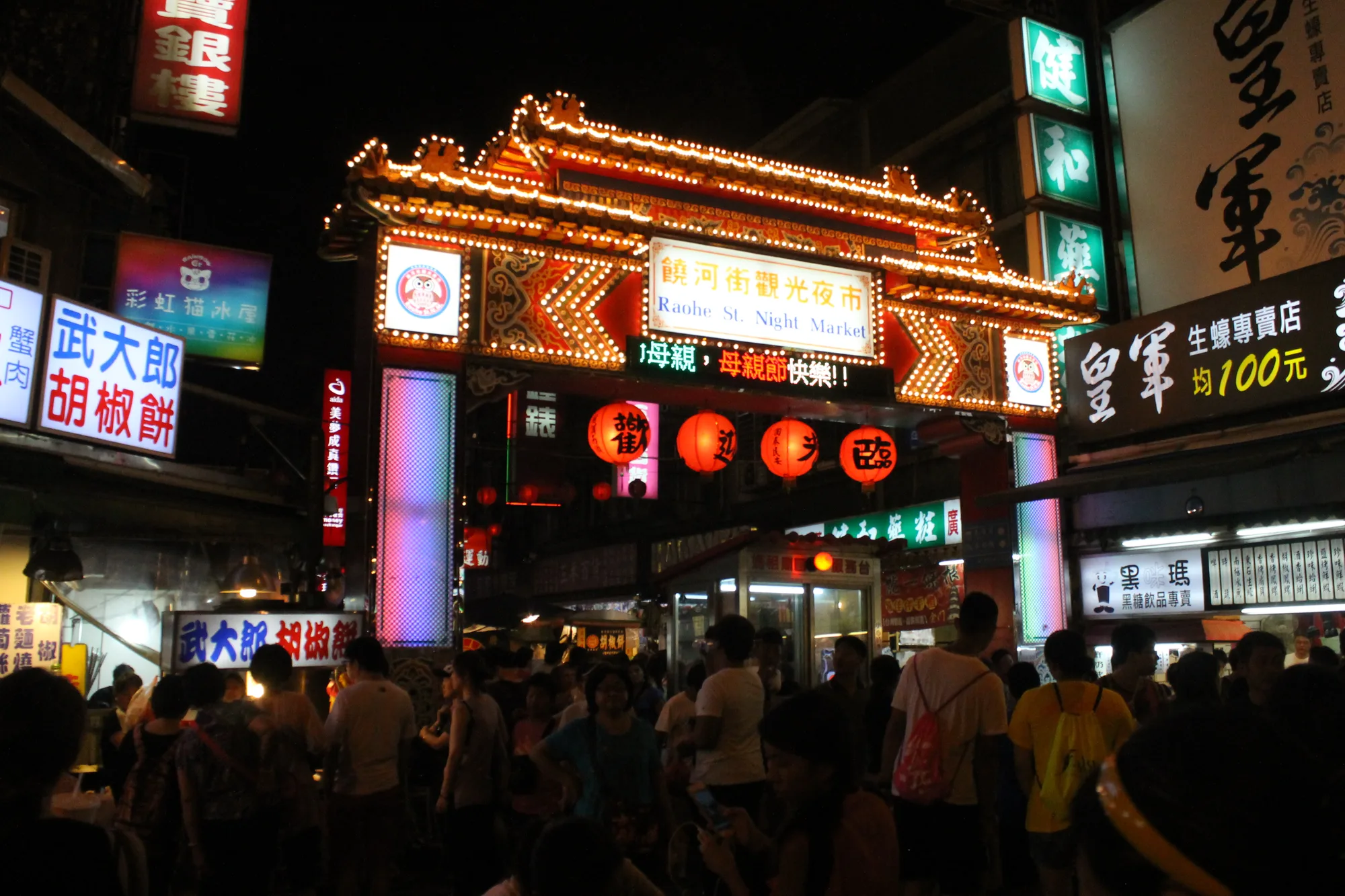
The illuminated traditional entrance gate of Raohe Street Night Market in Taipei with red lanterns and a dense crowd
Taipei · 台北 · 25.03°N 121.56°E

Huaxi Street Night Market (Snake Alley): a gritty old-Taipei night walk

Taiwan’s first tourist-designated night market, a covered ~600 m lane in Wanhua next to Longshan Temple. Nicknamed “Snake Alley” for its historic snake and medicinal foods, it’s more about atmosphere than endless options—best paired with Wanhua’s heritage streets.

ironypoisoning · CC BY-SA 2.0

Taiwan’s first tourist-designated night market, a covered ~600 m lane in Wanhua next to Longshan Temple. Nicknamed “Snake Alley” for its historic snake and medicinal foods, it’s more about atmosphere than endless options—best paired with Wanhua’s heritage streets.

Updated June 20, 2026

Map

Visualize where this fits in your day (and plan nearby pairings).

Open full map →

Quick facts資訊

Cost
Free
Hours
Roughly 16:00–24:00 daily (most food stalls close by about 22:00)
Time needed
1–1.5 hours
Getting there
MRT Longshan Temple (Blue Line), Exit 1, about a 5-min walk
Best time / for
Evening after dark; arrive before about 22:00 for the full food selection
Good to know
The food section winds down early—most stalls are closed by around 22:00, so come early evening.
District
Wanhua
Best for
Atmosphere, street photography, old-district walks
Length
~600 m, covered lane

Highlights亮點

  • Taiwan’s first tourist-designated night market (covered, palace-style archways)
  • Historic “Snake Alley” character—five minutes from Longshan Temple
  • Great for a “different side of Taipei” evening

Why go

Huaxi is less about doing a perfect snack crawl and more about mood. It’s a covered lane that feels distinctly “old Taipei”: close to temples, close to heritage streets, and best experienced as a short, curious walk. It carries real significance too—this was Taiwan’s first tourist-designated night market, with its renovated covered market opening in October 1987, complete with three palace-style archways and old-style lanterns.

The market runs about 600 metres between Guiyang Street and Guangzhou Street in Wanhua District, right next to Longshan Temple. If you’ve already done a big market like Shilin or Raohe, Huaxi is a great contrast stop.

“Snake Alley” history

The market’s nickname, “Snake Alley,” comes from its historic snake and medicinal foods—a once-famous draw that has faded with the times. The last snake restaurant here closed in 2018, so don’t come expecting that spectacle; what remains is the atmosphere and the layered history of the lane.

That history includes a grittier past: the area was a red-light district until prostitution was outlawed in the 1990s. Today it reads as a quieter, more local stretch of old Wanhua, which is exactly its appeal for travelers after texture rather than crowds.

  • Nicknamed “Snake Alley” for historic snake/medicinal foods
  • The last snake restaurant closed in 2018
  • Historically a red-light district until the 1990s
The illuminated traditional entrance gate of Raohe Street Night Market in Taipei with red lanterns and a dense crowd
Photo: ironypoisoning · CC BY-SA 2.0 · Wikimedia Commons

How to do it comfortably

Keep the visit simple: go early evening, walk slowly, try one snack if it looks good, then move on. The food section winds down early—most stalls are closed by around 22:00—so arrive before then if you want the fullest selection. You’ll enjoy it more if you don’t force it into a long stay.

  • Go early evening for easier walking and more open stalls
  • Treat it as a short atmosphere loop (1–1.5 hours)
  • Pair with a calmer dinner afterward if you’re market-ed out
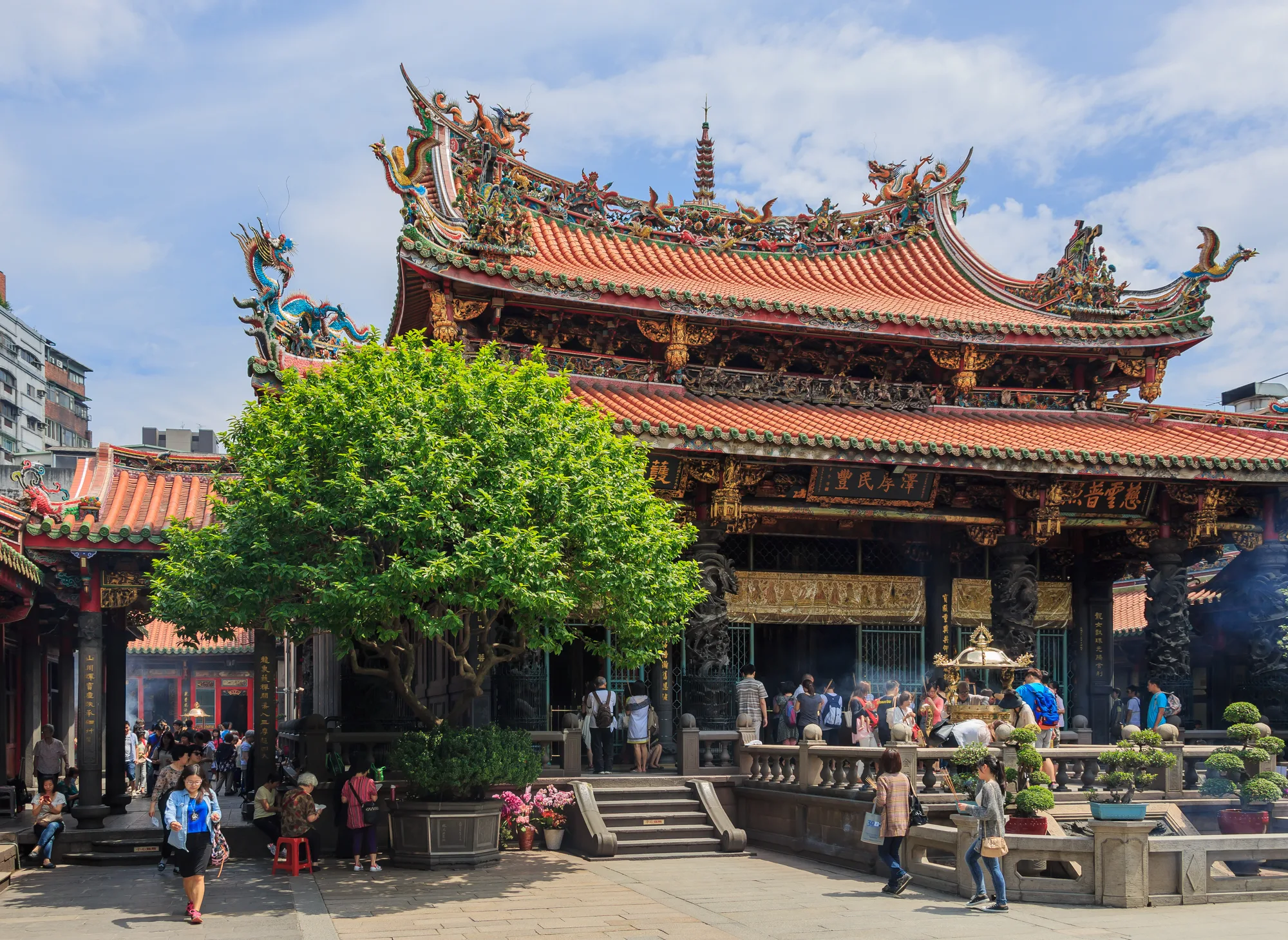
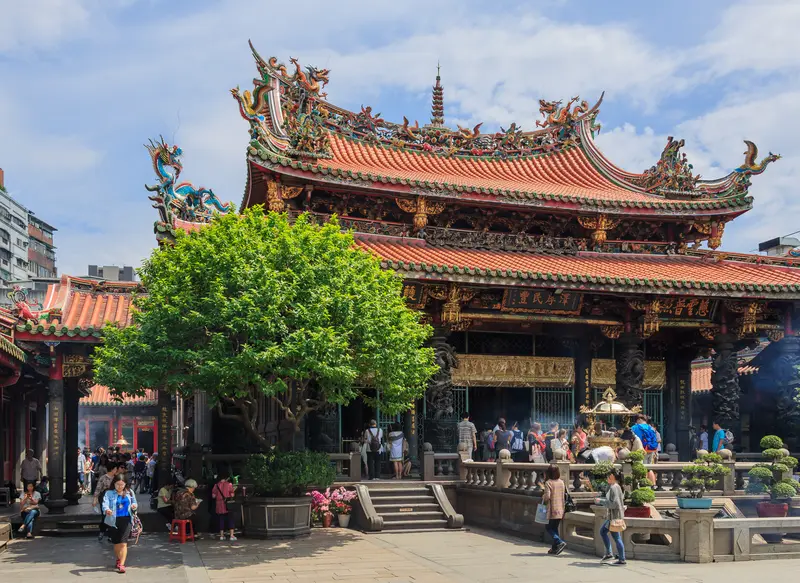
The ornate main hall of Longshan Temple in Wanhua, Taipei, with a dragon-decorated multi-tiered roof and red columns
Photo: CEphoto, Uwe Aranas · CC BY-SA 3.0 · Wikimedia Commons

How to pair it

The best pairing is a Wanhua heritage loop: temple first, heritage lanes next, then Huaxi for night texture—and finish in Ximending for neon contrast. From MRT Longshan Temple (Exit 1) it’s about a five-minute walk, so the whole loop stays tight and walkable.

  • Longshan Temple → Bopiliao → Huaxi → Ximending
  • Temple loop → Huaxi quick walk → dessert stop

What to eat and look for

Even without the snakes, Huaxi keeps a strong old-Wanhua food identity. This is the place for restorative, slightly old-fashioned tastes rather than the sweet, trend-driven snacks of the big tourist markets—think squid soup, herbal stews, oyster vermicelli, turtle and tonic soups, and stalls selling traditional Chinese medicinal drinks meant to ‘nourish’ you. It’s food with a backstory, eaten under lanterns by regulars who’ve come for decades.

The covered lane also gives it a particular character: the palace-style archways and overhead lights make it photogenic in a way open-air markets aren’t, and the roof means it works even on a drizzly evening. Take it slowly, watch the older vendors at work, and treat one or two bowls as the point rather than a long grazing crawl.

FAQ 常見問題

Quick answers to common planning questions.

Is it good for families with kids?
It’s fine for a short, early-evening walk, but it leans more atmospheric and old-fashioned than fun-for-kids—the food skews toward tonic soups and traditional dishes rather than the sweet snacks children gravitate to. For a more kid-friendly night, Raohe or Ningxia tend to be the easier picks.
What are Huaxi Street Night Market’s hours?
It runs roughly 16:00–24:00 daily, but the food section closes early—most stalls are shut by around 22:00. Come early evening for the best selection.
Why is it called Snake Alley?
For its historic snake and medicinal foods, once a famous draw. That era has ended, though—the last snake restaurant closed in 2018—so the appeal now is the atmosphere and history of the lane.
How do I get there?
Take the MRT Blue Line to Longshan Temple station and use Exit 1; the market is about a five-minute walk and sits right next to the temple.
Is it worth visiting on its own?
It’s best as a short add-on rather than a destination. Pair it with Longshan Temple, the Wanhua heritage streets, and Ximending for a complete old-Taipei evening.
Is there an entry fee?
No—the market is free to walk through. You only pay for whatever food or goods you buy.

Helpful links 連結

Official pages and references for planning details.

Keep exploring 繼續逛

Hand-picked next reads to make your Taipei plan smoother.

Wanhua: old Taipei texture, temples, and historic street life

Wanhua: old Taipei texture, temples, and historic street life

Taipei’s oldest district: temple atmosphere, heritage blocks, and everyday street scenes—best explored slowly with snacks and short walks. Anchored by Longshan Temple, it’s where the city’s lived-in history is most palpable.

Read more →
Ximending: youth culture, neon nights, and easy street food

Ximending: youth culture, neon nights, and easy street food

Taipei’s most famous pedestrian shopping area—bright signage, pop culture, and a steady stream of snacks and late-night eats. Compact, walkable, and endlessly photogenic, it’s the city’s easiest ‘Taipei at night’ to dive into on day one.

Read more →
Longshan Temple: Taipei’s living heritage in Wanhua

Longshan Temple: Taipei’s living heritage in Wanhua

Founded in 1738 in Taipei’s oldest neighborhood, Longshan Temple is a working Buddhist-and-Taoist shrine wrapped in ornate Taiwanese craftsmanship—and the perfect gateway into the old streets of Wanhua.

Read more →
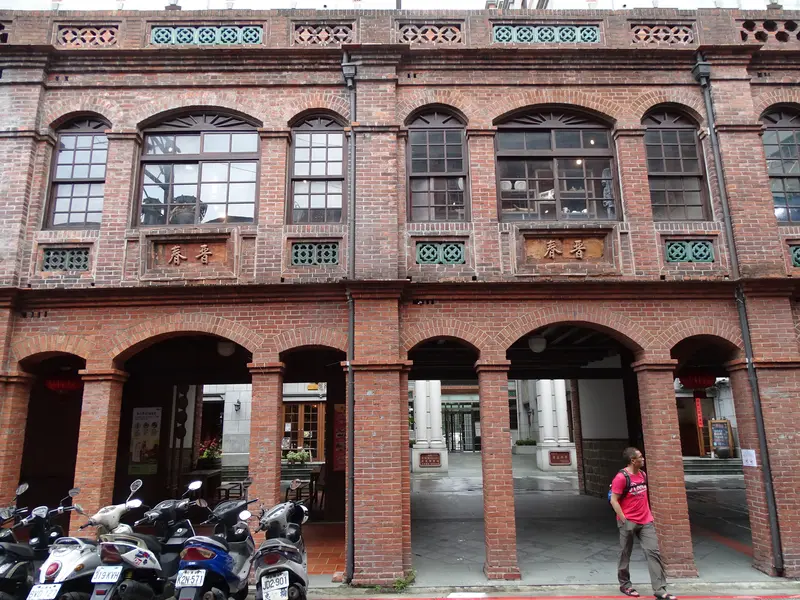
Bopiliao Historical Block: heritage lanes in Wanhua

Bopiliao Historical Block: heritage lanes in Wanhua

A preserved Qing-era commercial street beside Longshan Temple, with red-brick arcades layering Fujianese, Qing, Japanese-colonial and Western styles. A photogenic, free heritage stop—best paired with the temple and slow Wanhua wandering.

Read more →
The Red House (Ximending): heritage architecture + plaza energy

The Red House (Ximending): heritage architecture + plaza energy

A landmark 1908 red-brick complex at the edge of Ximending—Taiwan’s first government-built public market, now a cultural-creative hub. Its octagonal “Red House Theater” and cruciform building make a quick, photogenic stop before street food and a late-night stroll.

Read more →
Night markets 101: how to eat your way through Taipei

Night markets 101: how to eat your way through Taipei

A practical night-market playbook: what to expect, how to order, crowd strategy, and which markets fit your vibe.

Read more →

Ready to plan your next stop? 下一站

Start with a simple loop: one neighborhood stroll, one iconic sight, and one night market. Taipei rewards balance.

Tip: hours, prices, and seasonal schedules can change. When something matters (like a museum ticket or a special exhibition), check the official listing before you go.