Skip to content
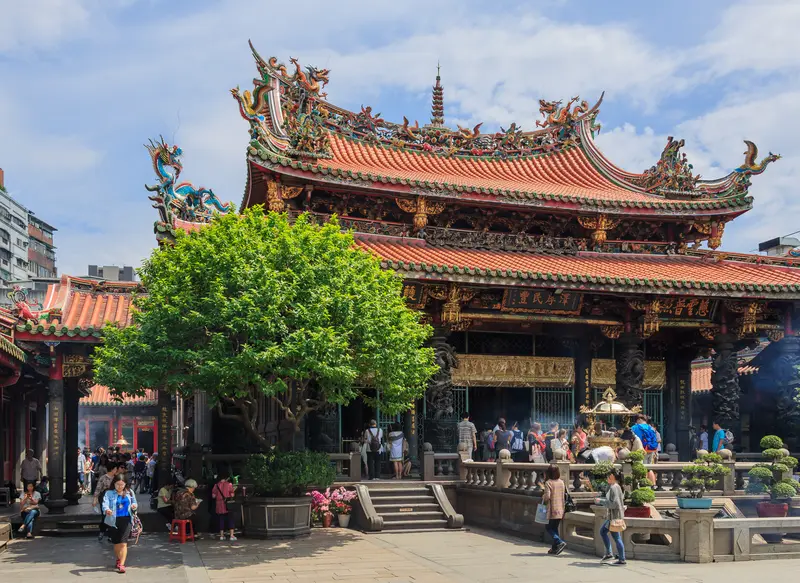
white concrete building under blue sky during daytime
Taipei · 台北 · 25.03°N 121.56°E

Accessibility in Taipei: practical planning for smoother days

A planning-first guide to accessible Taipei: choosing the right base, minimizing transfers, and building days with rest, elevators, and comfort as the default.

A planning-first guide to accessible Taipei: choosing the right base, minimizing transfers, and building days with rest, elevators, and comfort as the default.

Updated June 20, 2026

Quick facts資訊

Getting there
MRT stations have elevators, though the accessible route can differ from the quickest stair/escalator path at large interchanges—check the station map.
Best time / for
Travelers with mobility needs, families, and slower-pace trips
Good to know
Some older streets have uneven pavement and occasional steps. Confirm elevator routes and any service changes on the official Taipei Metro site, and pre-check venue accessibility where it matters.
Best for
Travelers with mobility needs, families, slower pace trips
Core idea
Design days for comfort first, then add sights
Most useful move
Fewer transfers (and fewer stairs)
Tip
A calm itinerary feels ‘bigger’ than an exhausting one

Highlights亮點

  • Choose a base near an MRT station with elevators
  • Plan by district to reduce transfers and walking stress
  • Use malls and museums as “elevator + restroom” anchors

Designing a comfortable Taipei itinerary (comfort-first, then highlights)

The biggest accessibility upgrade is itinerary design: fewer transfers, shorter hops, and predictable rest points. Taipei’s café culture makes it easy to build in breaks without losing momentum.

Choose neighborhoods that naturally support this style (like Zhongshan or Daan) and keep days in clusters. The goal is a smooth day, not the maximum number of pins on a map.

Where to stay (the base neighborhood strategy)

Your accommodation choice matters more than any single attraction. Staying near an MRT station with easy elevator access can remove dozens of small stress moments across a trip.

If your priority is convenience, aim for a base near major MRT lines and lots of flat, walkable streets. If your priority is quiet, choose a calmer area with simple routes to central sights.

  • Zhongshan: central, walkable, great for café breaks
  • Daan: leafy, relaxed, good for a slower pace
  • Xinyi: modern sidewalks, malls, and straightforward landmarks

MRT strategy: fewer transfers, more elevators

Use the MRT as your default. The key is reducing transfers, because transfers are where you’re most likely to face stairs, longer walks, and platform changes.

When you’re planning a route, prioritize simplicity over speed. One clean line is usually better than a faster route with multiple changes.

  • Choose routes with fewer transfers, even if it takes a bit longer
  • Use elevator exits when available (plan your exit, not just your station)
  • Use malls and department stores as step-free connectors in busy areas
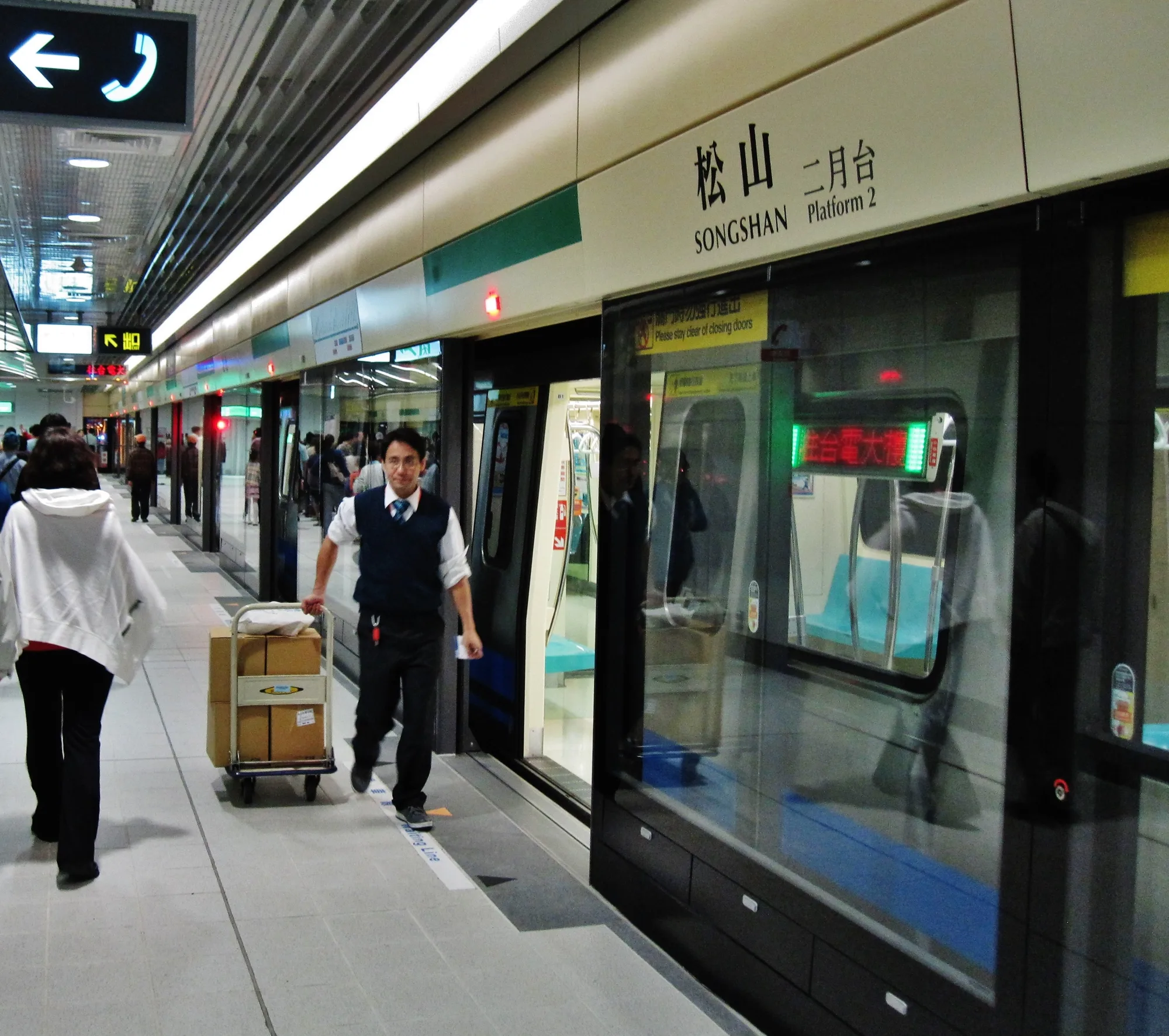
A Taipei Metro train at the platform of Songshan Station, with green-line platform signage
Photo: 李元顥 · CC BY-SA 4.0 · Wikimedia Commons

Buses and taxis: the “last-mile” comfort upgrade

Buses can be useful, but if the goal is a low-friction day, taxis and ride-hailing can be the best last-mile option—especially in rain, in heat, or after a long museum day.

Treat taxis as an accessibility tool, not a luxury. A short hop can keep your evening pleasant instead of exhausting.

Plan ahead and confirm the details that matter

Accessibility information is best confirmed close to your trip and directly from the source, because facilities, lift availability, and temporary closures change. For transit, the official Taipei Metro site publishes station facility information, and Taiwan’s open-data portal even hosts a dataset of accessible elevators—useful for plotting step-free routes in advance. For longer trips, Taiwan High Speed Rail and the conventional railway both publish barrier-free service information worth checking if your plans extend beyond the city.

For specific venues—a museum, restaurant, or hotel—a quick message or call ahead is the highest-value move you can make. Ask the questions that actually affect your day: step-free entrance, lift access between floors, accessible restrooms, and whether assistance can be arranged. Hotels in particular vary widely, so confirm the specifics of an ‘accessible’ room rather than relying on a label. Ten minutes of checking before you book removes far more friction than any on-the-day workaround.


  • Confirm station facilities on the official Taipei Metro site before relying on a lift
  • Use Taipei’s open-data accessible-elevator dataset to plan step-free routes
  • Message or call venues ahead about entrances, lifts, and accessible restrooms
  • For ‘accessible’ hotel rooms, confirm the exact features rather than the label
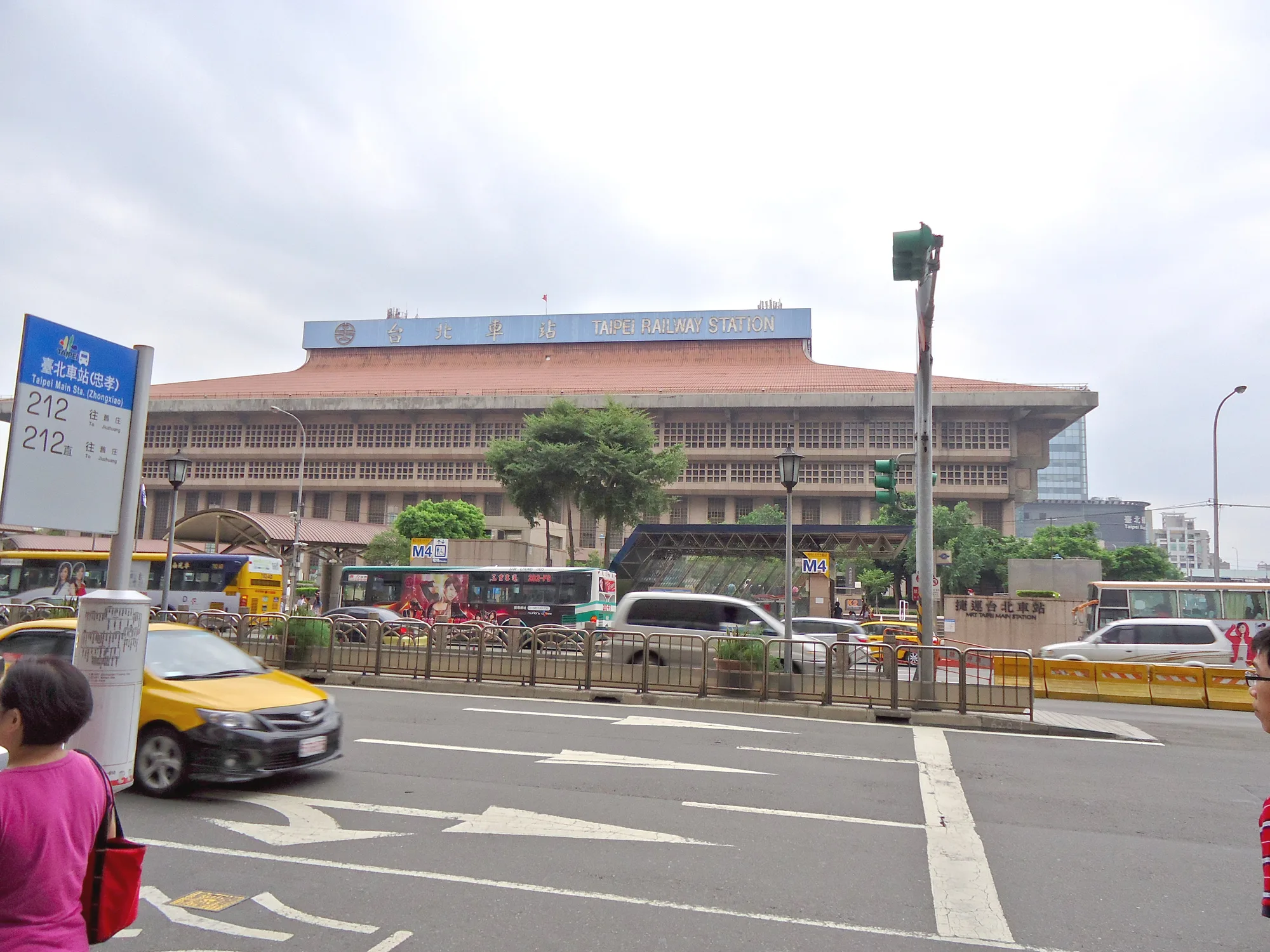
The large Taipei Main Station building with its red roof and Taipei Railway Station signage
Photo: Muhammad Riza · CC BY-SA 2.0 · Wikimedia Commons

Choosing attractions that feel easy

A good accessible Taipei trip mixes indoor anchors (museums, malls, observatories) with short, flat outdoor walks (parks, riverside paths). This keeps the day feeling varied without being physically punishing.

  • Indoor anchors: museums, creative parks, observatories, department stores
  • Outdoor anchors: riverside paths, city parks, flat heritage streets
  • Avoid stacking multiple “steep” sights in one day (hikes + hill temples + long transfers)

MRT elevators and step-free routing in detail

The Taipei Metro is designed to be accessible, with elevators at stations and priority seating that’s standard and widely respected. The practical catch is that at large interchange stations the elevator route can differ from the quickest stair-or-escalator path, and it sometimes adds a short detour. A few seconds with the station map before you commit to a route saves a lot of backtracking, and it’s completely normal to choose a slightly longer line purely to avoid a stair-heavy transfer.

Exit choice matters as much as the line. Big stations have many exits, and the elevator-equipped one isn’t always the most obvious; picking your exit on the map before you surface means you come up on the right side of the street, near the elevator, rather than facing a flight of stairs. Where you want certainty—say, for a specific station’s elevator status—confirm on the official Taipei Metro site, which publishes facility information and any temporary outages.

  • Check the station map for the elevator route at large interchanges
  • Choose your exit before you surface so you come up near the elevator
  • Priority seating is standard—it’s respected and offered up readily
  • Confirm specific station facilities or outages on the official Taipei Metro site

Two example day templates (use as a blueprint)

Templates reduce decision fatigue. Pick one and swap in your favorite attractions rather than reinventing the whole day on the fly.

  • Template A (indoor-first): museum → lunch → mall/café reset → early dinner
  • Template B (balanced): flat walk → indoor anchor → café reset → short sunset viewpoint

FAQ 常見問題

Quick answers to common planning questions.

Is Taipei generally accessible for travelers with mobility needs?
It can be very manageable with the right planning. The biggest wins come from choosing a convenient base, reducing transfers, and using taxis for the last mile when needed.
Is the MRT the best transport option for accessibility?
Often, yes—because it’s predictable and easy to plan. The main challenge is transfers and station exits, so plan for elevator routes and simpler lines when possible.
Are sidewalks always smooth and step-free?
Not always. Some older streets have uneven pavement and occasional steps. Use malls, parks, and major boulevards when you want the smoothest walking.
Are taxis common and easy to use?
Yes. Taxis are widely available and can be a great last-mile tool—especially in rain, in heat, or late at night when comfort matters most.
What’s a simple way to make days feel easier?
Plan by district. Do fewer neighborhoods per day, add one café or mall reset, and keep your evening close to your base when you’re tired.
Are night markets accessible?
They can be crowded and uneven underfoot. Go earlier for more space, choose wider aisles where possible, and treat it as a short food mission rather than a long wandering session.
How can I confirm a station or venue is step-free before I go?
Check the official Taipei Metro site for station facility information, and Taipei’s open-data portal hosts an accessible-elevator dataset for plotting step-free routes. For specific venues and hotels, a quick message or call ahead about entrances, lifts, and accessible restrooms is the highest-value step you can take.

Ready to plan your next stop? 下一站

Start with a simple loop: one neighborhood stroll, one iconic sight, and one night market. Taipei rewards balance.

Tip: hours, prices, and seasonal schedules can change. When something matters (like a museum ticket or a special exhibition), check the official listing before you go.