Skip to content
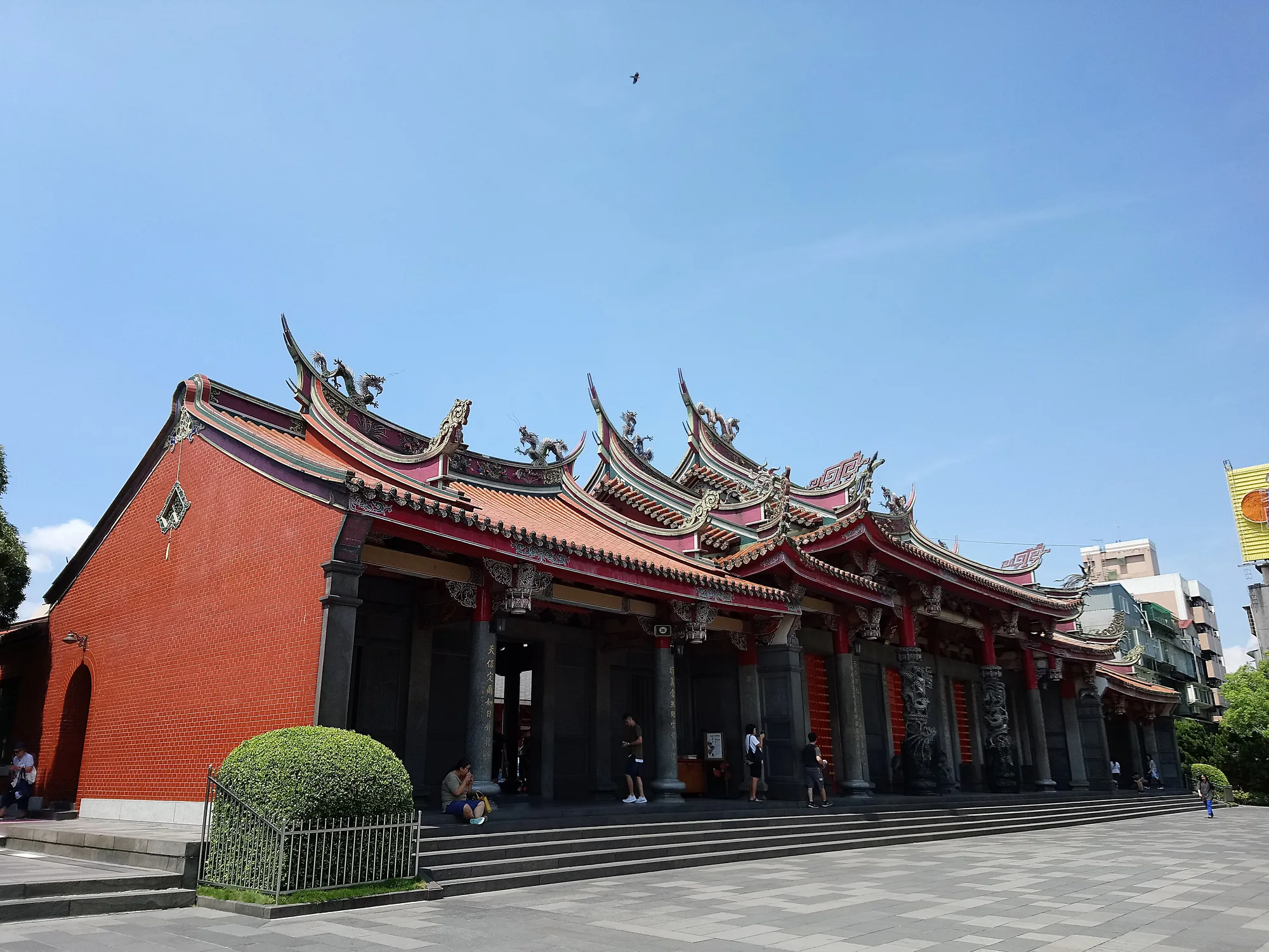
The red-walled Xingtian Temple main hall in Taipei with its ornate swallowtail roof under a blue sky
Taipei · 台北 · 25.03°N 121.56°E

Xingtian Temple: a modern city temple with an incense-free vibe

A beloved Zhongshan temple dedicated to Guan Gong, the deified Three Kingdoms general worshipped as a god of war and patron of merchants. Built in 1967 and famous since 2014 as the first temple in Taiwan to ban incense and joss paper—busy, local, and known for its free blue-robed blessing rituals.

寺人孟子 · CC BY-SA 4.0

A beloved Zhongshan temple dedicated to Guan Gong, the deified Three Kingdoms general worshipped as a god of war and patron of merchants. Built in 1967 and famous since 2014 as the first temple in Taiwan to ban incense and joss paper—busy, local, and known for its free blue-robed blessing rituals.

Updated June 20, 2026

Map

Visualize where this fits in your day (and plan nearby pairings).

Open full map →

Quick facts資訊

Cost
Free
Hours
06:00–22:00 daily
Time needed
30–60 minutes
Getting there
MRT Xingtian Temple (Orange Line), Exit 3, about a 5-min walk
Best time / for
Weekday mornings or late afternoon; avoid the 1st and 15th of the lunar month (peak worship)
Good to know
Since 2014 the temple has banned burning incense and joss paper—the first temple in Taiwan to do so—so don’t expect to light incense.
District
Zhongshan
Best for
Culture, people-watching, a calm ritual stop
Dedicated to
Guan Gong (Guan Yu, 162–219 AD)

Highlights亮點

  • One of Taipei’s most visited city temples, covering over 7,000 m²
  • Free “shoujing” collar-pulling blessings by blue-robed volunteers
  • Incense-free since 2014—a calmer, smoke-free temple visit

Why go

Xingtian Temple is a “living Taipei” stop: locals visiting between errands, people quietly praying, and a rhythm that feels everyday rather than staged. Built in 1967 on the site of a former sugar refinery in Zhongshan District, it’s a relatively young temple by Taipei standards, but it has become one of the city’s most visited—covering over 7,000 m² and busy from morning to night.

It’s dedicated to Guan Gong (Guan Yu, 162–219 AD), the Three Kingdoms general later deified as a god of war and, importantly here, a patron of businessmen and merchants—which is why you’ll often see office workers and shopkeepers stopping in to pray. If you want a temple visit that feels present-day rather than purely historic, this is a strong choice.

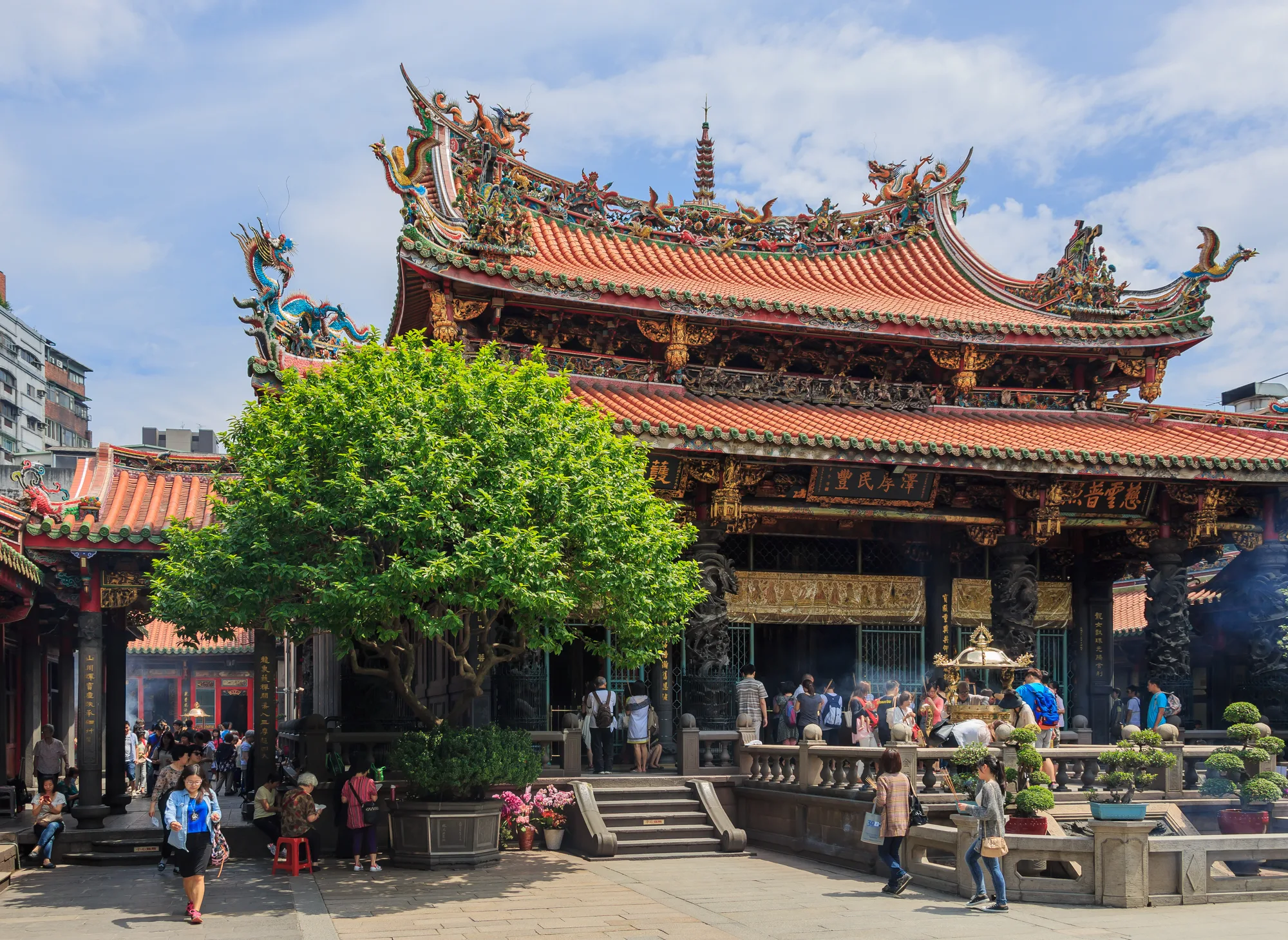
The ornate main hall of Longshan Temple in Wanhua, Taipei, with a dragon-decorated multi-tiered roof and red columns
Photo: CEphoto, Uwe Aranas · CC BY-SA 3.0 · Wikimedia Commons

The incense-free temple

Xingtian Temple’s most distinctive feature is what you won’t find: smoke. In 2014 it became the first temple in Taiwan to ban the burning of incense and joss paper, a public-health and environmental decision that many other temples have since echoed. The result is a noticeably cleaner, quieter atmosphere—worship here is done with hands pressed together rather than with sticks of incense.

The temple is also known for its free “shoujing” (collar-pulling) blessing rituals, performed by volunteers in distinctive blue robes. These calming ceremonies, meant to soothe and protect, draw long but orderly queues and are one of the most authentic things you can quietly observe.

  • No incense or joss paper—worship is smoke-free
  • Free blue-robed “shoujing” collar-pulling blessings
  • Notable dragon sculptures and traditional carved detail to look up at

How to visit respectfully

Enter quietly, observe first, and follow the flow. Keep photos respectful and avoid blocking pathways or photographing people mid-prayer. If you’re unsure what to do, stand back for a minute—Taipei temples teach by example, and Xingtian’s calm layout makes it easy to read.

Timing matters here. Weekday mornings or late afternoons are calmest; try to avoid the 1st and 15th of the lunar month, when worshippers pack the halls and the queues for blessings stretch long.

  • Watch first, then follow the rhythm
  • Keep your voice low; avoid intrusive photos
  • Avoid the 1st and 15th of the lunar month if you want quiet
green and red pagoda temple
Photo: Dave Weatherall / Unsplash

How to pair it

Xingtian fits perfectly into a “stylish Taipei” day: temple in the morning, cafés in the afternoon, night market in the evening. The MRT Xingtian Temple station (Orange Line) is about a five-minute walk via Exit 3, so it slots cleanly into a Zhongshan-based plan.

  • Temple → Zhongshan cafés → Ningxia Night Market
  • Temple → Yuanshan park + museum → dinner in Zhongshan

FAQ 常見問題

Quick answers to common planning questions.

What’s the temple best known for, beyond the no-incense rule?
It’s famous for shoujing — a free ritual blessing performed by blue-robed volunteers to dispel bad luck and ‘calm the spirit,’ which draws steady, devoted crowds. Dedicated to Guan Gong, the deified general associated with loyalty and business, it’s especially popular with merchants and students, and the calm, smoke-free halls make it one of the city’s most approachable working temples.
When’s the best time of day to visit?
Weekday mornings or late afternoons are calmest and most atmospheric. Avoid the 1st and 15th of the lunar month, when worship peaks and the temple gets very busy — though if you want to feel its full devotional energy, those days deliver it.
Can I light incense at Xingtian Temple?
No. Since 2014 the temple has banned burning incense and joss paper—it was the first temple in Taiwan to do so. Worship here is smoke-free, done with hands pressed together rather than incense sticks.
Is Xingtian Temple free to visit?
Yes, entry is free. The temple’s well-known “shoujing” collar-pulling blessing rituals, performed by blue-robed volunteers, are also free.
What are the opening hours?
The temple is open daily from 06:00 to 22:00. Weekday mornings and late afternoons are the calmest times to visit.
How do I get there by MRT?
Take the MRT Zhonghe–Xinlu (Orange) Line to Xingtian Temple station and use Exit 3; the temple is about a five-minute walk away.
When is it busiest?
The 1st and 15th of each lunar month are peak worship days, when the temple is most crowded. Visit on a regular weekday if you’d prefer a quieter experience.

Helpful links 連結

Official pages and references for planning details.

Keep exploring 繼續逛

Hand-picked next reads to make your Taipei plan smoother.

Zhongshan: the stylish all-rounder (cafés, bars, easy transit)

Zhongshan: the stylish all-rounder (cafés, bars, easy transit)

A central, design-forward district with great food, cafés, nightlife, and convenient connections—an ideal ‘default’ base for many trips. It blends boutique shopping, art spaces, and a relaxed adult nightlife within easy reach of everywhere.

Read more →
Ningxia Night Market: a focused food street in Datong

Ningxia Night Market: a focused food street in Datong

One of Taipei’s oldest and most food-focused night markets—a single ~400 m lane of traditional Taiwanese street food, many recipes 50+ years old. Perfect for a short, high-impact snack crawl without getting lost in endless lanes.

Read more →
Taipei Fine Arts Museum: modern art with park-side breathing room

Taipei Fine Arts Museum: modern art with park-side breathing room

Taiwan’s first museum built for modern and contemporary art, opened in 1983 in a striking white, dougong-inspired building beside Yuanshan’s Expo Park. Home to a 5,000-plus-work collection and the Taipei Biennial—best paired with a park stroll so the day stays spacious and calm.

Read more →
Temples in Taipei: etiquette, timing, and what to notice

Temples in Taipei: etiquette, timing, and what to notice

A respectful, beginner-friendly guide to visiting Taipei’s temples—what to wear, how to move, and how to appreciate the details without feeling awkward.

Read more →
Coffee culture in Taipei: cafés, slow mornings, and espresso breaks

Coffee culture in Taipei: cafés, slow mornings, and espresso breaks

Taipei’s café scene is one of the best ways to feel the city’s pace. Use coffee stops as itinerary ‘buffers’—and discover neighborhoods through their daily rituals.

Read more →
Design + shopping day: creative parks, Zhongshan, and skyline night

Design + shopping day: creative parks, Zhongshan, and skyline night

A modern Taipei day plan: exhibitions and design markets, café breaks, a stylish neighborhood stroll, then skyline lights at night.

Read more →

Ready to plan your next stop? 下一站

Start with a simple loop: one neighborhood stroll, one iconic sight, and one night market. Taipei rewards balance.

Tip: hours, prices, and seasonal schedules can change. When something matters (like a museum ticket or a special exhibition), check the official listing before you go.