Skip to content
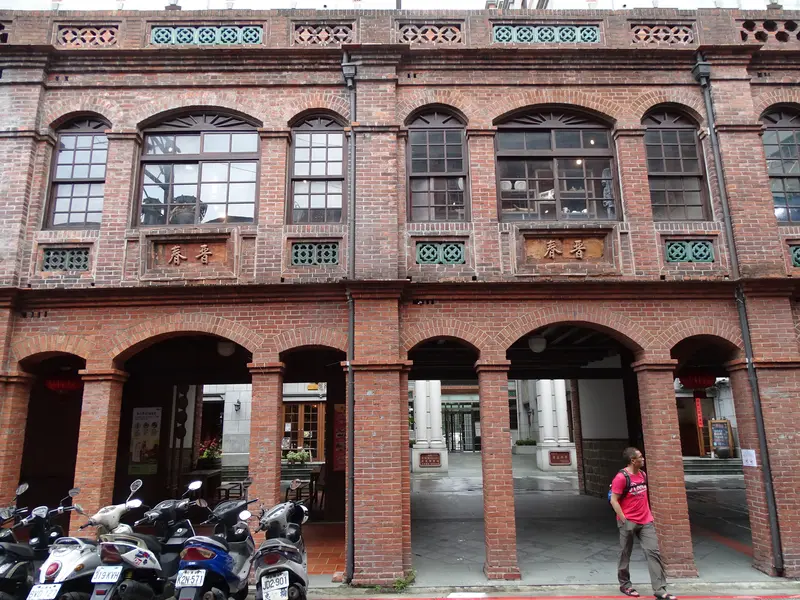
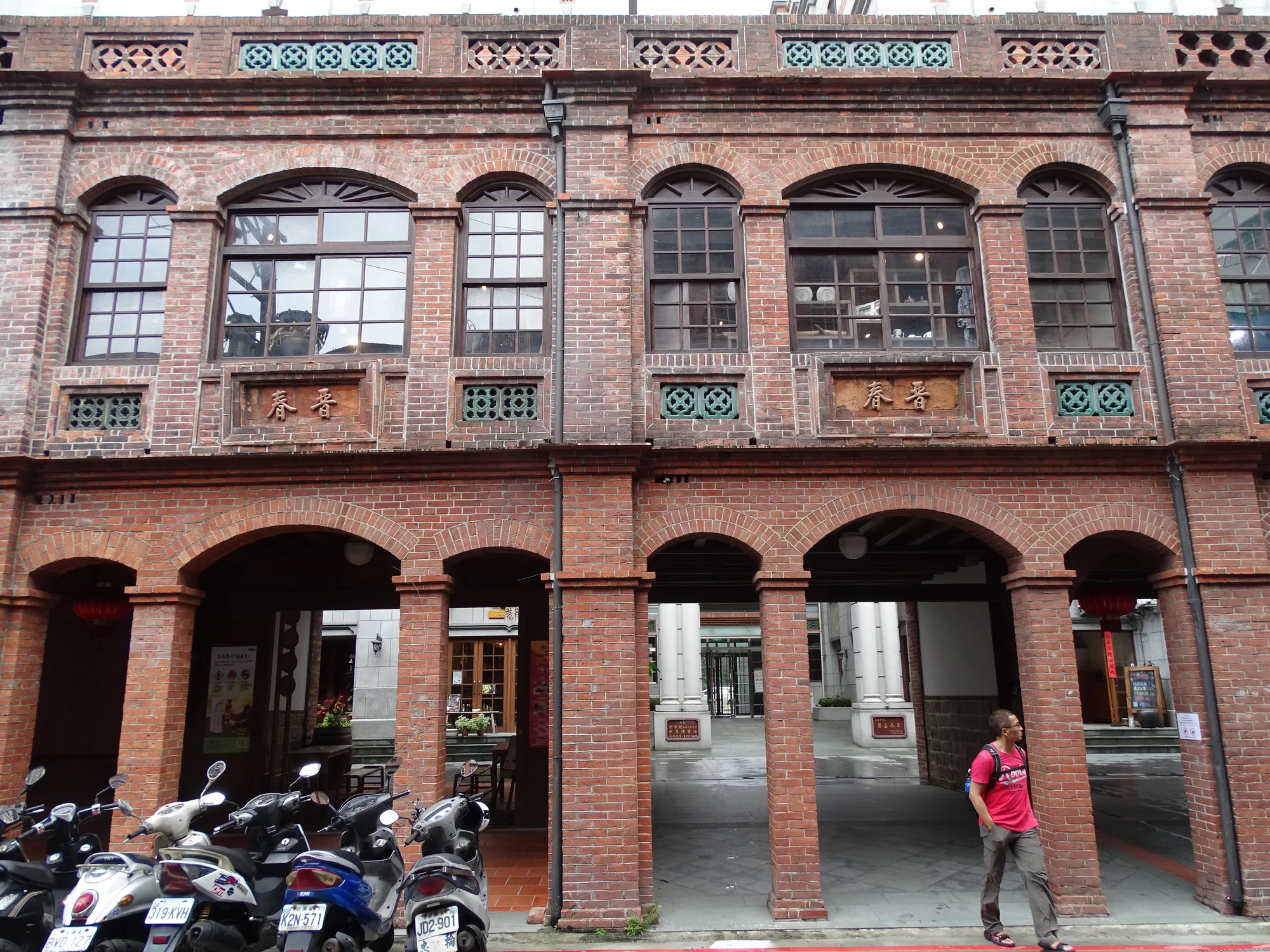
A historic red-brick shophouse facade with arched windows and a covered arcade on Dihua Street, Dadaocheng, Taipei
Taipei · 台北 · 25.03°N 121.56°E

Dadaocheng afternoon: tea shops, old Taipei streets, and river sunset

A low-stress half-day plan for Taipei’s historic heart: browse Dihua Street, snack and sip tea, then slow-walk to Dadaocheng Wharf for golden hour.

Adam Jones from Kelowna, BC, Canada · CC BY-SA 2.0

A low-stress half-day plan for Taipei’s historic heart: browse Dihua Street, snack and sip tea, then slow-walk to Dadaocheng Wharf for golden hour.

Updated June 20, 2026

Quick facts資訊

Cost
Free to wander; you pay only for tea, snacks, souvenirs, and any dinner you add
Time needed
A relaxed half-day, roughly 3–5 hours, timed to finish at sunset
Getting there
MRT Daqiaotou (Orange line) is closest to northern Dihua Street; Beimen (Green line) works for the southern end and a North Gate add-on
Best time / for
Start mid-afternoon so shops are open, then drift to Dadaocheng Wharf for golden hour
Good to know
Dihua Street shops generally keep daytime hours and the street gets especially busy during the pre–Lunar New Year market; the riverside wharf is the highlight, so a clear evening makes the day. Confirm shop and Container Market hours on official listings.
Best for
First-timers, repeat visitors, photographers, slow travel
Time to read
7–9 minutes
Ideal timing
Start mid-afternoon, finish at sunset

Highlights亮點

  • Old-town texture without needing a museum ticket
  • Tea + dry-goods browsing that makes a great souvenir mission
  • One of Taipei’s easiest sunset finishes (Dadaocheng Wharf)

Why Dadaocheng feels like ‘old Taipei’

Dadaocheng is Taipei at a slower tempo: heritage storefronts, tea aromas, and streets built for browsing. It’s not about one big attraction—it’s about a vibe that makes the city feel layered.

If you want a Taipei day that’s walkable, photogenic, and unhurried, this is one of the best bets.

Step 1: Dihua Street (browse with a souvenir mindset)

Start on Dihua Street when shops are open and the street has daylight energy. You’ll see tea, dried fruit, herbs, and old-style storefronts that are perfect for slow wandering.

The simplest strategy is to pick one theme: tea, snacks, or small gifts. You’ll enjoy it more when your browsing has a gentle purpose.

  • Go slow and step into shops (the best finds are inside)
  • Take one tea break mid-walk to reset your feet
  • If you’re buying food souvenirs, choose one high-quality item rather than many random ones

Step 2: Add one ‘ritual’ stop (temple or café)

Dadaocheng lands best when you add one small ritual: a temple visit for atmosphere, or a café/tea-house pause for pacing. It turns ‘shopping street’ into a complete afternoon.

  • Temple option: Xiahai City God Temple (quick, atmospheric)
  • Tea option: a slow sit-down tea moment before heading river-side
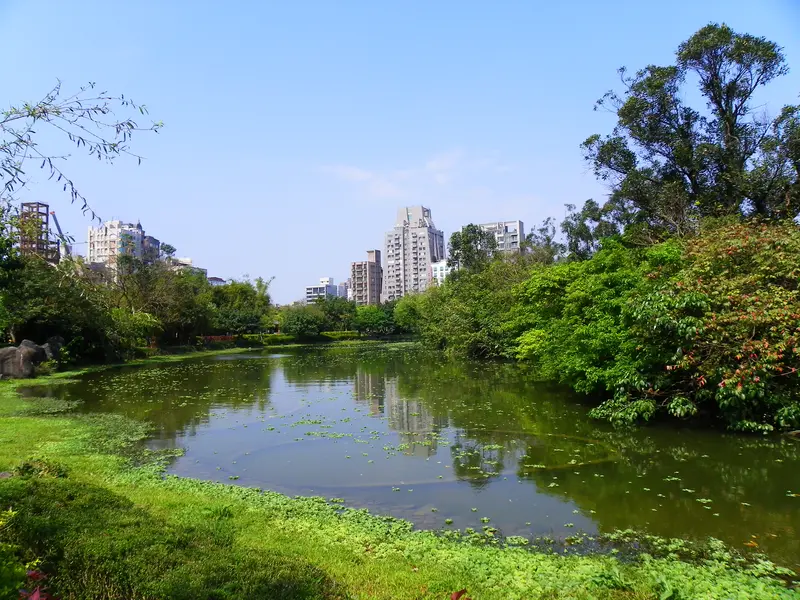
green plants near body of water during daytime
Photo: Y S / Unsplash

Step 3: Dadaocheng Wharf at golden hour

Finish at the river. The wharf area gives you open sky and a completely different feeling from central Taipei—especially at sunset when the light softens and the city feels spacious.

Treat this as your ‘no agenda’ moment: walk, sit, take photos, repeat.

  • Best light: the hour before sunset
  • If it’s humid/hazy: lean into silhouettes and warm street lights
  • If you still have energy: continue into Ningxia Night Market for dinner

Easy add-ons (choose one)

If you want to extend the day, keep it simple: one more stop max. Dadaocheng works because it’s low friction—don’t break the spell by over-scheduling.

  • Ningxia Night Market for an easy dinner mission
  • Zhongshan cafés for a calmer, design-y evening
  • A short heritage loop near North Gate (Beimen) if you’re in a photo mood
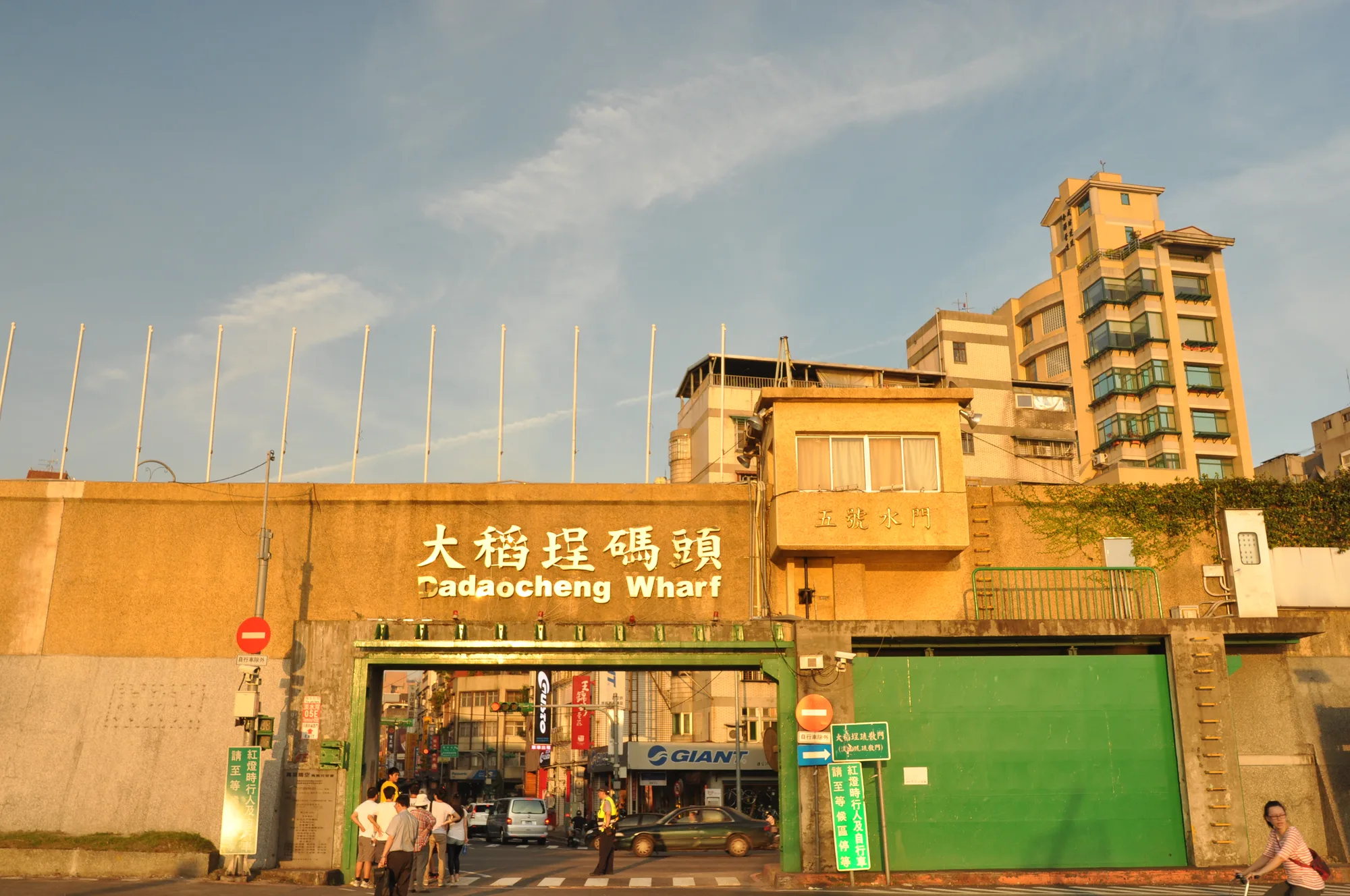
Dadaocheng Wharf in Taipei at golden sunset, with the green riverside floodgate sign reading Dadaocheng Wharf
Photo: keiichiro shikano · CC BY 2.0 · Wikimedia Commons

The history beneath the storefronts

Dadaocheng isn’t just atmospheric — it’s one of the oldest commercial districts in Taipei, and knowing the backstory makes the browsing richer. Dihua Street grew up in the 19th century as a hub for the tea, herb, and fabric trades, and it boomed as a riverside trading center when the nearby wharf connected Taipei to the wider world. That heritage is written into the architecture: you’ll see Qing-era shophouses alongside ornate Baroque-style facades from the Japanese colonial period, often stacked along the same block.

The street still works much as it always has. Dried goods, traditional medicines, fabrics, and tea remain its backbone, which is why a slow walk here feels less like a tourist stop and more like wandering a living market. The covered Yongle Market, a long-standing fabric and goods hall, anchors the southern stretch and is worth a peek even if you’re not shopping.

If your visit lands in the run-up to Lunar New Year, expect the street to transform into a famously bustling festival market — exhilarating but crowded. At any other time of year, the rhythm is calmer and better suited to the unhurried, browse-and-sip pace this guide is built around.

  • One of Taipei’s oldest trading streets — tea, herbs, medicines, and fabric
  • A mix of Qing-era shophouses and Japanese-era Baroque facades
  • Yongle Market anchors the southern end; great for a quick look
  • The pre–Lunar New Year market is thrilling but very crowded

A tea-and-snack strategy that actually works

Dadaocheng rewards a souvenir mindset, but the trick is restraint. Pick one theme — tea, dried fruit, or small gifts — and let that guide your browsing instead of grabbing a little of everything. Tea is the standout choice: it travels well, it’s genuinely useful at home, and the street’s long tea-trade history means there’s real depth to explore. Choose one high-quality item you’ll actually enjoy rather than a bag of random snacks that gather dust.

Pace yourself with a deliberate tea break mid-walk. A sit-down moment at a teahouse resets your feet and turns a shopping errand into an experience — and it’s the natural midpoint between Dihua Street browsing and the riverside finish. Many shops welcome you to step inside and look closely; the best finds are often tucked behind unassuming storefronts rather than displayed out front.

If you’re flying soon, ask about packaging for anything fragile or aromatic. A little planning here means your souvenir survives the trip home in good shape.

  • Pick one theme — tea, dried fruit, or small gifts — and browse with purpose
  • Tea is the easy win: it travels well and gets used at home
  • Build in one sit-down tea break as the day’s midpoint
  • Ask about packaging if you’re flying soon

Add a temple stop and a sunset finish

One small ritual stop turns a shopping street into a complete afternoon. The Xiahai City God Temple, right on Dihua Street, is the classic choice — compact, atmospheric, and famous for its Yue Lao, the matchmaker deity many visitors come to for matters of the heart. It’s a quick, meaningful pause that adds texture without slowing your momentum, and it fits naturally between browsing and the river.

The finale is Dadaocheng Wharf at golden hour. This former river port now opens onto wide sky and a riverside promenade that feels worlds away from the dense streets behind you, and on weekends a container-market area near the wharf adds food and drink to the mix. Time your arrival for the hour before sunset, then simply linger — walk, sit, take photos, and let the light do the work.

If you still have energy after dark, the nearby Ningxia Night Market is an easy, compact dinner mission, or you can drift toward Zhongshan’s cafés for a calmer, design-forward evening. Either way, you’ll have moved gracefully from old Taipei to a riverside sunset to a satisfying close — without ever feeling rushed.

  • Xiahai City God Temple: atmospheric and known for its Yue Lao matchmaker shrine
  • Dadaocheng Wharf: arrive an hour before sunset and linger (weekend container market nearby)
  • Easy dinner: Ningxia Night Market, or quieter cafés in Zhongshan

Read these next 延伸閱讀

The pages that pair best with this one — tap a card to keep planning.

FAQ 常見問題

Quick answers to common planning questions.

What’s the best time to start a Dadaocheng afternoon?
Aim to start mid-afternoon so the Dihua Street shops are open and the street has daylight energy, then drift to Dadaocheng Wharf for the hour before sunset. That timing lets you browse, take a tea break, and arrive riverside just as the light turns golden — which is the highlight of the day.
How do I get to Dihua Street by MRT?
For the northern end of Dihua Street, MRT Daqiaotou on the Orange line is closest. For the southern end — and if you want to add a North Gate (Beimen) photo loop — Beimen station on the Green line works well. Both leave a short, pleasant walk into the heart of the old district.
What should I buy in Dadaocheng?
Tea is the strongest, easiest souvenir: it travels well, it actually gets used at home, and the street’s tea-trade history runs deep. Dried fruit and small snacks are good for gifting. The key is restraint — choose one high-quality item rather than a pile of random ones, and ask about packaging if you’re flying soon.
When does the Dihua Street New Year market happen?
The famous festival market runs in the weeks leading up to Lunar New Year, which falls on different dates each year. It’s a thrilling, crowded experience worth seeing if your timing lines up — but for the calm, browse-and-sip pace this guide describes, any other time of year is more relaxed. Confirm the current dates on official listings.
Is Dadaocheng good for a rainy day?
Parts of it can work (shops, cafés, tea stops), but the best version includes a river walk. If it’s pouring, consider a museum afternoon and save Dadaocheng for a clearer day—sunset is a big part of the magic.
What’s the best souvenir to buy here?
Tea is a strong, easy win: it travels well and actually gets used at home. Dried fruit and small snacks also work well if you’re gifting.

Helpful links 連結

Official pages and references for planning details.

Keep exploring 繼續逛

Hand-picked next reads to make your Taipei plan smoother.

Datong & Dadaocheng: old streets, tea shops, and Taipei heritage

Datong & Dadaocheng: old streets, tea shops, and Taipei heritage

A historic area anchored by Dihua Street—tea, dry goods, traditional shops, and a slower, more photogenic side of Taipei. It’s one of the city’s oldest trading quarters, full of Qing-era and Japanese-Baroque facades that reward a slow, curious wander.

Read more →
Zhongshan: the stylish all-rounder (cafés, bars, easy transit)

Zhongshan: the stylish all-rounder (cafés, bars, easy transit)

A central, design-forward district with great food, cafés, nightlife, and convenient connections—an ideal ‘default’ base for many trips. It blends boutique shopping, art spaces, and a relaxed adult nightlife within easy reach of everywhere.

Read more →
Taipei Main Station area: transit hub, city edges, and practical Taipei

Taipei Main Station area: transit hub, city edges, and practical Taipei

Not a ‘romantic’ neighborhood, but incredibly useful: the city’s central transit nerve center, easy day-trip logistics, and a fast way to move between districts. Understanding it makes the rest of your trip run smoother.

Read more →
Dihua Street (Dadaocheng): old Taipei, tea shops, and dry goods culture

Dihua Street (Dadaocheng): old Taipei, tea shops, and dry goods culture

Taipei’s oldest street, with shops dating back to around 1851—a fragrant warren of tea, herbal medicine, fabric, and dried goods set among Qing-dynasty shophouses and colonial Baroque facades.

Read more →
Dadaocheng Wharf: riverside sunsets and Taipei’s slower side

Dadaocheng Wharf: riverside sunsets and Taipei’s slower side

A historic river port on the Tamsui in Dadaocheng—once a major trade gateway for tea, cotton, and silk, now revived for golden-hour walks, weekend river cruises, and an evening container market beside Dihua Street’s heritage texture.

Read more →
Taipei Xia-Hai City God Temple: a tiny temple with Taiwan’s busiest matchmaker

Taipei Xia-Hai City God Temple: a tiny temple with Taiwan’s busiest matchmaker

A compact 1859 temple on Dihua Street in Dadaocheng, packed with over 600 deities in just 152 square metres — the highest statue density in Taiwan. It’s famous nationwide for Yue Lao, the matchmaking ‘Old Man Under the Moon,’ where singles pray for love.

Read more →

Ready to plan your next stop? 下一站

Start with a simple loop: one neighborhood stroll, one iconic sight, and one night market. Taipei rewards balance.

Tip: hours, prices, and seasonal schedules can change. When something matters (like a museum ticket or a special exhibition), check the official listing before you go.