



Skip to content
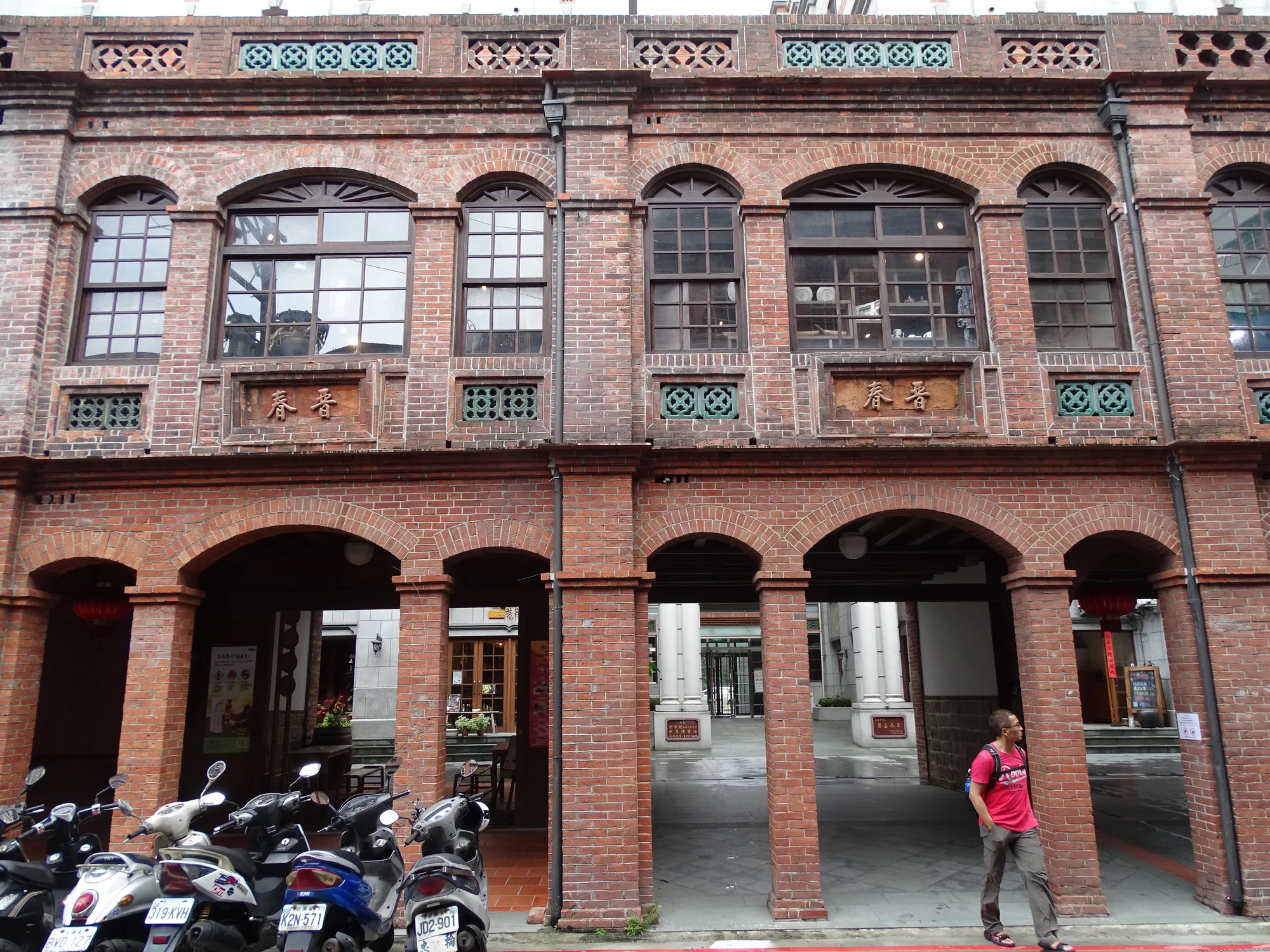
A historic red-brick shophouse facade with arched windows and a covered arcade on Dihua Street, Dadaocheng, Taipei
Taipei · 台北 · 25.03°N 121.56°E

Dihua Street (Dadaocheng): old Taipei, tea shops, and dry goods culture

Taipei’s oldest street, with shops dating back to around 1851—a fragrant warren of tea, herbal medicine, fabric, and dried goods set among Qing-dynasty shophouses and colonial Baroque facades.

Adam Jones from Kelowna, BC, Canada · CC BY-SA 2.0

Taipei’s oldest street, with shops dating back to around 1851—a fragrant warren of tea, herbal medicine, fabric, and dried goods set among Qing-dynasty shophouses and colonial Baroque facades.

Updated June 20, 2026

Map

Visualize where this fits in your day (and plan nearby pairings).

Open full map →

Quick facts資訊

Cost
Free to stroll the street; shops charge for goods
Hours
Most shops roughly 09:00–18:00; the Lunar New Year market runs extended hours (2026: 31 Jan–15 Feb)
Time needed
2–3 hours
Getting there
MRT Daqiaotou (Orange Line) to the north or MRT Beimen (Green Line) to the south—both about a 10-min walk
Best time / for
The Lunar New Year period for the festive market; weekdays for a quieter stroll
Good to know
Expect wall-to-wall crowds in the days before Lunar New Year’s Eve—visit on weekdays or off-season for a calmer walk.
District
Datong (Dadaocheng)
Best for
Tea, heritage vibes, souvenir shopping
Fun fact
First shops opened around 1851; the Yongle Fabric Market dates to 1908

Highlights亮點

  • Taipei’s oldest street, in the historic Dadaocheng (Twatutia) district
  • Tea, herbal medicine, fabric, and dried-goods shops in heritage storefronts
  • A famous Lunar New Year market each winter (2026: 31 Jan–15 Feb)

Why go

Dihua Street is the best place in Taipei to feel the city’s older layers. As Taipei’s oldest street, with its first shops opening around 1851, it sits at the heart of the historic Dadaocheng (Twatutia) district and still trades much as it has for generations—older buildings, richly scented shops, and a rhythm that invites browsing rather than rushing.

It’s also a great place to buy something meaningful to bring home, especially tea and small edible gifts. Strolling the street itself is free; you only pay when something pulls you into a shop.

A historic red-brick shophouse facade with arched windows and a covered arcade on Dihua Street, Dadaocheng, Taipei
Photo: Adam Jones from Kelowna, BC, Canada · CC BY-SA 2.0 · Wikimedia Commons

A bit of history

Dadaocheng boomed in the late 1800s after the port of Tamsui opened, turning Dihua Street into a major trading center for tea, herbal medicine, fabric, and dried goods. That commercial legacy is still the soul of the street today.

The architecture tells the story directly. You’ll pass well-preserved Qing-dynasty shophouses alongside ornate Japanese-colonial Baroque facades, and the Yongle (Fabric) Market—established in 1908—remains a landmark anchor on the street.

  • A tea, herbal-medicine, fabric, and dried-goods hub since the late 1800s
  • Qing-dynasty shophouses and Japanese-colonial Baroque facades
  • Yongle Fabric Market, established 1908

How to walk it

Start at one end and move slowly, giving yourself permission to step inside the stores—the dried-goods, tea, and herb shops are an experience in themselves, and the best finds aren’t always on the main street, so peek down the side lanes too.

Most shops keep daytime hours, roughly 09:00 to 18:00, so this is a daylight activity. Reach it from MRT Daqiaotou (Orange Line) to the north or MRT Beimen (Green Line) to the south—both about a 10-minute walk—and plan on 2 to 3 hours, more if you love to shop.

  • Go in daytime; most shops close by around 18:00
  • Take a tea break mid-walk and explore the side lanes
  • Arrive via MRT Daqiaotou (north) or Beimen (south)
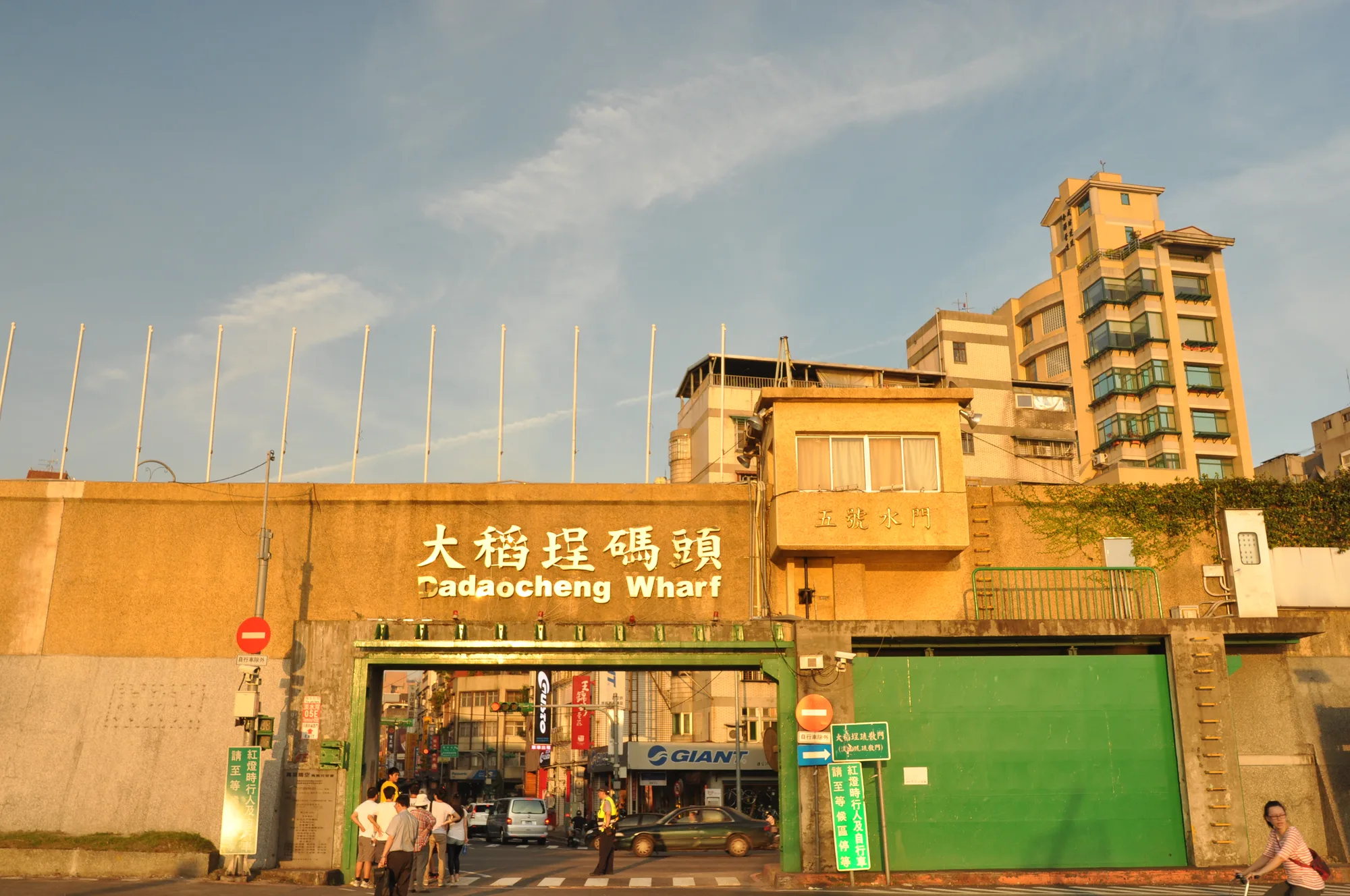
Dadaocheng Wharf in Taipei at golden sunset, with the green riverside floodgate sign reading Dadaocheng Wharf
Photo: keiichiro shikano · CC BY 2.0 · Wikimedia Commons

Timing it around Lunar New Year

Dihua Street’s most famous moment is its annual Lunar New Year market, when the street fills with stalls of festive snacks, candied fruit, and gifts and runs extended hours—in 2026 it takes place from 31 January to 15 February. It’s a wonderful, high-energy spectacle if you want the festive Taipei experience.

The trade-off is crowds. In the days before Lunar New Year’s Eve the street can be wall-to-wall, so if you prefer a calm, browsable stroll, come on a weekday or outside the New Year season.

  • 2026 Lunar New Year market: 31 Jan – 15 Feb, extended hours
  • Pre–New Year’s Eve days are extremely crowded
  • Weekdays and the off-season are far quieter

FAQ 常見問題

Quick answers to common planning questions.

What’s nearby to combine it with?
The whole of Dadaocheng radiates from here, so pair the street with the Xiahai City God Temple right on it, the boutique tea houses and design shops in restored shophouses, and Dadaocheng Wharf a short walk west for a riverside sunset. It makes a satisfying heritage-then-river afternoon without ever needing the MRT again.
What is Dihua Street known for?
As Taipei’s oldest street, in the historic Dadaocheng district, it’s a long-running trading center for tea, herbal medicine, fabric, and dried goods, set among Qing-dynasty shophouses and colonial Baroque facades.
When is the Lunar New Year market?
It runs on extended hours each winter; in 2026 it takes place from 31 January to 15 February. Expect wall-to-wall crowds in the days right before Lunar New Year’s Eve.
What are the shop hours?
Most shops open roughly 09:00 to 18:00, so it’s best as a daytime activity. The annual Lunar New Year market is the exception, running extended hours.
How do I get to Dihua Street?
Take the MRT to Daqiaotou (Orange Line) for the northern end or Beimen (Green Line) for the southern end—both are about a 10-minute walk to the street.
How long should I spend there?
Plan on 2 to 3 hours for a relaxed stroll with shop stops and a tea break—more if you love to shop or visit during the New Year market.

Helpful links 連結

Official pages and references for planning details.

Keep exploring 繼續逛

Hand-picked next reads to make your Taipei plan smoother.

Datong & Dadaocheng: old streets, tea shops, and Taipei heritage

Datong & Dadaocheng: old streets, tea shops, and Taipei heritage

A historic area anchored by Dihua Street—tea, dry goods, traditional shops, and a slower, more photogenic side of Taipei. It’s one of the city’s oldest trading quarters, full of Qing-era and Japanese-Baroque facades that reward a slow, curious wander.

Read more →
Dadaocheng Wharf: riverside sunsets and Taipei’s slower side

Dadaocheng Wharf: riverside sunsets and Taipei’s slower side

A historic river port on the Tamsui in Dadaocheng—once a major trade gateway for tea, cotton, and silk, now revived for golden-hour walks, weekend river cruises, and an evening container market beside Dihua Street’s heritage texture.

Read more →
Tea culture & bubble tea in Taipei: drink beyond the hype

Tea culture & bubble tea in Taipei: drink beyond the hype

Taiwan is a tea place first. Learn how to order bubble tea with intention—and where to slow down for real tea in Taipei.

Read more →
Dadaocheng afternoon: tea shops, old Taipei streets, and river sunset

Dadaocheng afternoon: tea shops, old Taipei streets, and river sunset

A low-stress half-day plan for Taipei’s historic heart: browse Dihua Street, snack and sip tea, then slow-walk to Dadaocheng Wharf for golden hour.

Read more →
Pineapple cake: the classic Taipei souvenir you’ll actually eat

Pineapple cake: the classic Taipei souvenir you’ll actually eat

A buttery pastry with pineapple-style filling—easy to pack, easy to gift, and one of the most popular edible souvenirs in Taiwan. The fun part is comparing textures and tanginess across brands.

Read more →
3 days in Taipei: culture, food, and the city’s best contrasts

3 days in Taipei: culture, food, and the city’s best contrasts

A three-day plan that goes beyond icons: museum depth, heritage streets, tea culture, and multiple neighborhood vibes with built-in breathing room.

Read more →

Ready to plan your next stop? 下一站

Start with a simple loop: one neighborhood stroll, one iconic sight, and one night market. Taipei rewards balance.

Tip: hours, prices, and seasonal schedules can change. When something matters (like a museum ticket or a special exhibition), check the official listing before you go.