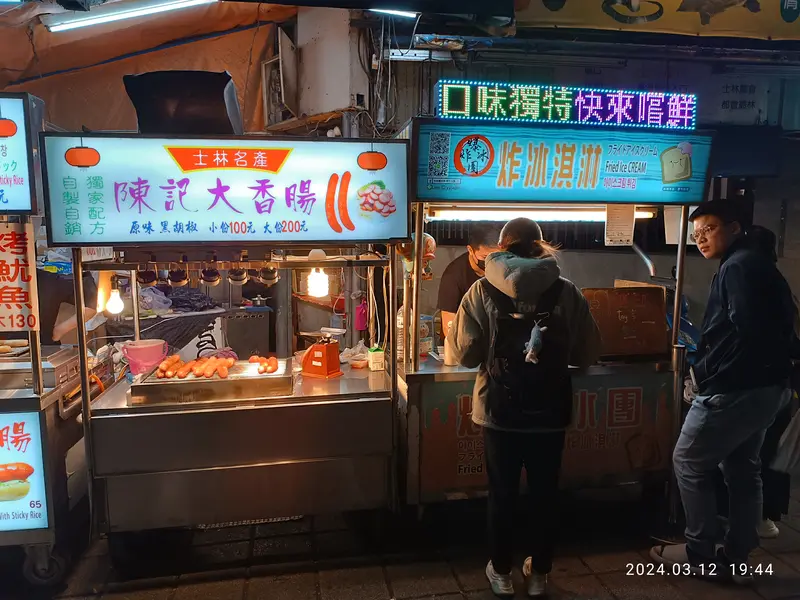
Shilin Night Market: the big classic for first-timers
One of Taipei’s best-known night markets—busy, varied, and ideal if you want a ‘try everything’ evening with lots of food options.
Read more →
A practical night-market playbook: what to expect, how to order, crowd strategy, and which markets fit your vibe.
A practical night-market playbook: what to expect, how to order, crowd strategy, and which markets fit your vibe.
Updated June 20, 2026
 Quick facts資訊Time neededBest time / forGood to knowBest forTime to readCore ideaDon’t miss
 Highlights亮點
A night market is part street-food hall, part social ritual, part shopping street. Some markets focus on food; others mix in games, clothing, and little everyday essentials. The vibe is lively but typically friendly.
The best strategy is to arrive with a plan for your first bite, then let curiosity guide the rest.
Pick one signature item first—something you’re genuinely excited about—so you don’t wander hungry and overwhelmed. After that, graze: split snacks, share drinks, try one new thing per person.
If a stall has a short menu and a steady local line, it’s often a good bet.
Night markets get dense. If you want an easier time, arrive on the early side and eat before peak crowds. Keep your bag close and move patiently—Taipei crowds are generally cooperative if you are.
Carry small cash, wet wipes, and a little extra water. You’ll thank yourself later.
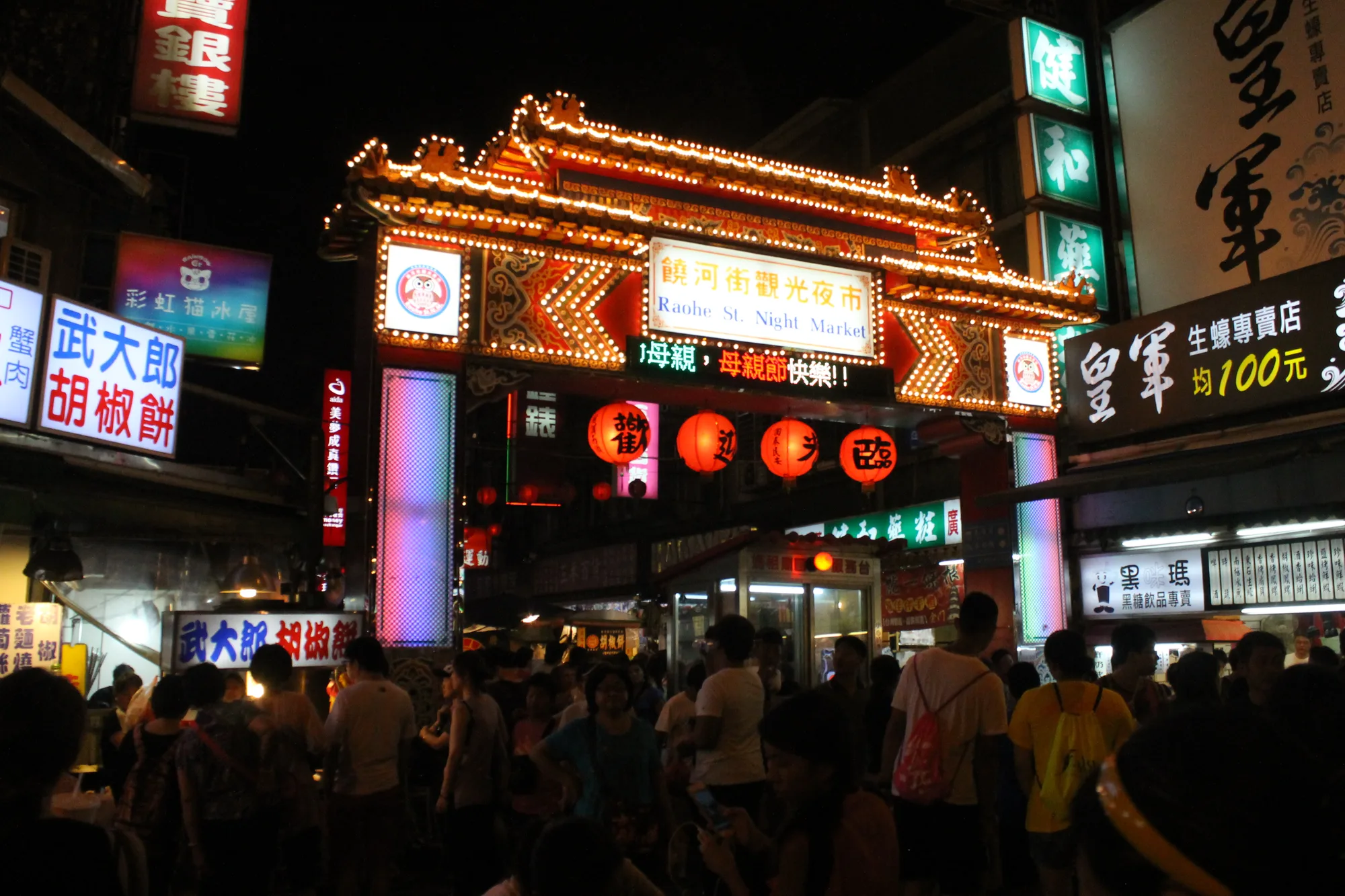
If you want a “classic” night-market postcard, start with Shilin for scale or Raohe for a more compact, iconic street-market feel. If you want a more food-focused street vibe, Ningxia is a strong pick.
If you have time for two, do one famous market and one smaller/food-focused one for contrast.
You don’t need to try everything in one night. A better goal: taste a few archetypes—fried snack, soup, grilled item, dessert, and a drink—then repeat what you love another evening.
Taipei night markets are generally food-forward and busy (which helps turnover), but comfort matters. The best approach is simple: choose busy stalls, eat hot food hot, and don’t push your stomach past its limit just because the options are endless.
Hydration is part of food strategy. Night markets are salty, sweet, and exciting—water keeps the night feeling good.
Night markets are flexible: there’s almost always something that works, even if you avoid certain meats or you prefer familiar textures. The trick is not trying to force a “perfect” dish—choose a few safe wins and add one adventurous bite if you feel like it.
If you need specific dietary guarantees (halal, strict vegetarian), use markets as a snack crawl and do one more controlled meal elsewhere.
A night market works best as the final act of a day: do culture or a neighborhood walk first, then show up hungry and curious. Don’t schedule a complicated second activity afterward.
A great night-market evening is one that ends early enough to sleep well.
Each major market has its own personality, and matching the market to your mood is half the skill. You don’t need to visit them all—pick one that fits the night you want, and save the others for return trips.
These are the markets most first-timers gravitate toward, plus a couple of local-leaning options for travelers who want a less touristy crawl. Hours and stall lineups change, so treat any specific detail as a starting point—a quick check on current openings pays off if it’s a long trip across town.
You don’t need fluent Mandarin to eat well, but a few habits make ordering smoother and more fun. Point confidently, hold up fingers for quantity, and watch how the person ahead of you orders—night-market stalls run on a fast, repeatable rhythm.
Many drink and shaved-ice stalls let you choose sweetness and ice level; a simple “less sugar” gesture or phrase goes a long way. For grilled and fried items, stalls often have you pick from a tray or tongs-and-basket system, then pay at the end. When in doubt, a smile and a point is a perfectly good order.

Bigger markets like Shilin aren’t only about eating—they’re part carnival, part shopping street. You’ll find ring-toss and dart games, claw machines, cheap clothing and accessories, phone cases, and small everyday goods woven between the food stalls.
This is a fun way to take a break from grazing. Play one quick game, browse a lane of stalls, then return to food with a fresh appetite. It’s also where night markets become a great budget activity: the people-watching and atmosphere are free, and you only spend on what tempts you.
The best night-market evenings have a lead-in. Do a temple visit, a neighborhood walk, or a viewpoint at sunset, then arrive at the market hungry and unhurried. The market becomes the satisfying finale rather than a frantic scramble.
Geography helps you choose: Raohe pairs with Songshan Ciyou Temple and the Songshan creative park; Huaxi pairs with Longshan Temple and old Wanhua; Shilin pairs with the Shilin museums and Yangmingshan day trips. Let the market’s neighborhood shape the rest of your night.
Most of Taipei’s famous night markets sit a short walk from an MRT station, which makes the metro your best tool for an efficient evening. Knowing the nearest station turns a vague “let’s find a market” into a clean plan: Shilin is by Jiantan on the Red line (the station is closer than Shilin station itself), Raohe is near Songshan on the Green line, Ningxia is a short walk from Shuanglian or Zhongshan on the Red line, Linjiang (Tonghua) is by Xinyi Anhe on the Red line near Taipei 101, and Huaxi sits right by Longshan Temple on the Blue line.
If you’re tempted to do two markets in one night, choose a pairing that doesn’t fight the geography or your stomach. The smartest combos are either two markets a quick metro hop apart, or a market plus a nearby neighborhood the same line serves—Raohe with the Songshan creative-park area, or Huaxi with old Wanhua and Ximending. Trying to cross the whole city between markets usually means you arrive at the second one too full to enjoy it and too late for the best stalls.
A little timing sense keeps the evening smooth. Markets get going in the late afternoon or early evening and run late, so go earlier for calmer walking and shorter lines, and remember the MRT stops running in the small hours—check the last-train time for your line if you’re staying out late, and keep your EasyCard topped up so you’re not buying tickets at midnight. When in doubt, one market done well beats two done in a rush.
Night-market menus aren’t completely fixed—part of the fun is noticing what shifts with the seasons. Hot, humid summers are peak time for cooling treats: towering plates of mango shaved ice when mango is in season, fruit cups, and ice-cold drinks become the natural way to finish a sweaty evening. Cooler months tip the other way, toward steaming, warming dishes—hot soups, oden-style simmered snacks, and freshly griddled and fried items that feel even better in the chill.
Markets also carry regional and signature flavors worth seeking out. Some stalls build their reputation on a single specialty—Raohe is famous for its pepper buns baked in a clay oven, the markets of the north coast and Keelung lean hard into seafood, and individual stalls across the city earn recognition for one perfected dish. Treat these signatures as your “anchor” bite, then graze around them. Tropical fruit in particular rewards seasonal curiosity, so ask what’s ripe right now rather than defaulting to the same thing every visit.
The practical takeaway is to stay flexible and let the season guide you. A market in July and the same market in January can feel like different places, and that’s a feature, not a bug. Since specific stalls and seasonal items come and go, treat any particular recommendation as a starting point and follow the freshest, busiest options on the night you actually go.
Night markets are flexible enough that most dietary needs can be met with a little strategy, even though stalls rarely come with detailed labels. The reliable approach is to identify a few safe, naturally-fitting dishes and build around them rather than hunting for one perfect option. Vegetarians do well with scallion pancakes, many dumplings and noodles, fruit, and tea-based drinks, though it’s worth knowing that broths and sauces can contain meat or seafood even when a dish looks plant-based—so ask if it matters.
Common allergens take a bit more care. Peanuts appear widely, including ground over desserts and shaved ice and in some sauces; soy, egg, wheat, shellfish, and seafood are all common, and shared frying oil and griddles mean cross-contact is realistic. If your allergy is serious, the safest plan is to use the market as a snack crawl for items you can clearly verify, then have one more controlled meal elsewhere—and to carry your own medication rather than relying on a stall to manage the risk.
Language helps bridge the gap. A written note in Chinese explaining what you can’t eat, or a translation app, makes a real difference at a busy stall, and pointing to ingredients you can see is often clearer than describing them. Vendors are generally willing to help when they understand the need, but they’re moving fast, so keep your question simple, have a flexible backup in mind, and don’t be shy about choosing the dish you can be sure of.
The pages that pair best with this one — tap a card to keep planning.
AttractionsShilin Night MarketOne of Taipei’s best-known night markets—busy, varied, and ideal if you want a ‘try everything’ evening with lots of food options.
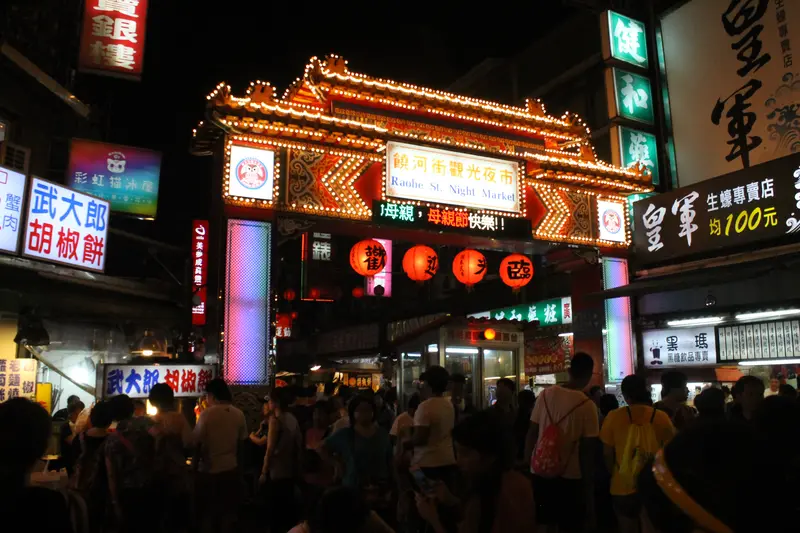 AttractionsRaohe Night Market
A famous night market with a focused, walkable layout—great for a deliberate food mission and a classic Taipei evening.
 AttractionsNingxia Night Market
One of Taipei’s oldest and most food-focused night markets—a single ~400 m lane of traditional Taiwanese street food, many recipes 50+ years old. Perfect for a short, high-impact snack crawl without getting lost in endless lanes.
AttractionsHuaxi Street Night Market (Snake Alley)Taiwan’s first tourist-designated night market, a covered ~600 m lane in Wanhua next to Longshan Temple. Nicknamed “Snake Alley” for its historic snake and medicinal foods, it’s more about atmosphere than endless options—best paired with Wanhua’s heritage streets.
Quick answers to common planning questions.
Official pages and references for planning details.
Hand-picked next reads to make your Taipei plan smoother.
One of Taipei’s best-known night markets—busy, varied, and ideal if you want a ‘try everything’ evening with lots of food options.
Read more →A famous night market with a focused, walkable layout—great for a deliberate food mission and a classic Taipei evening.
Read more →One of Taipei’s oldest and most food-focused night markets—a single ~400 m lane of traditional Taiwanese street food, many recipes 50+ years old. Perfect for a short, high-impact snack crawl without getting lost in endless lanes.
Read more →Taiwan’s first tourist-designated night market, a covered ~600 m lane in Wanhua next to Longshan Temple. Nicknamed “Snake Alley” for its historic snake and medicinal foods, it’s more about atmosphere than endless options—best paired with Wanhua’s heritage streets.
Read more →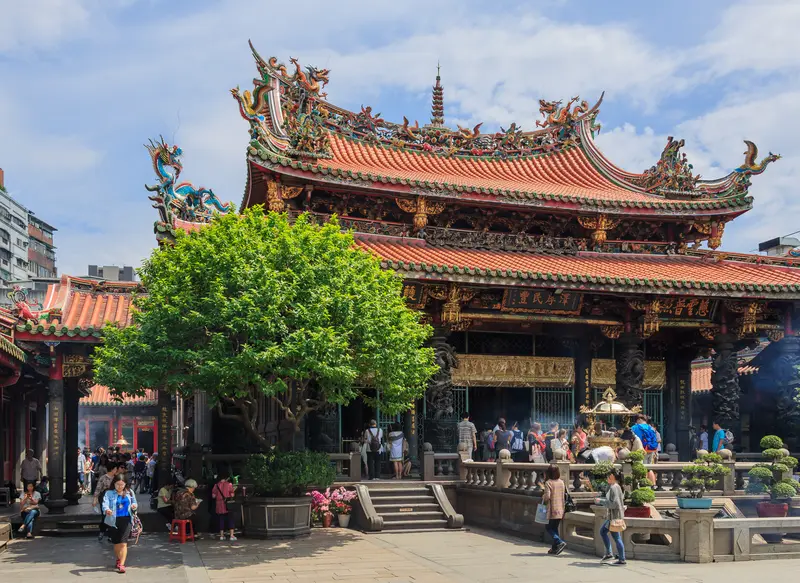
Founded in 1738 in Taipei’s oldest neighborhood, Longshan Temple is a working Buddhist-and-Taoist shrine wrapped in ornate Taiwanese craftsmanship—and the perfect gateway into the old streets of Wanhua.
Read more →
A night-market rite of passage. Stinky tofu can be pungent, but the best versions are crispy, juicy, and surprisingly balanced with pickles and sauce.
Read more →Start with a simple loop: one neighborhood stroll, one iconic sight, and one night market. Taipei rewards balance.
Tip: hours, prices, and seasonal schedules can change. When something matters (like a museum ticket or a special exhibition), check the official listing before you go.