Skip to content
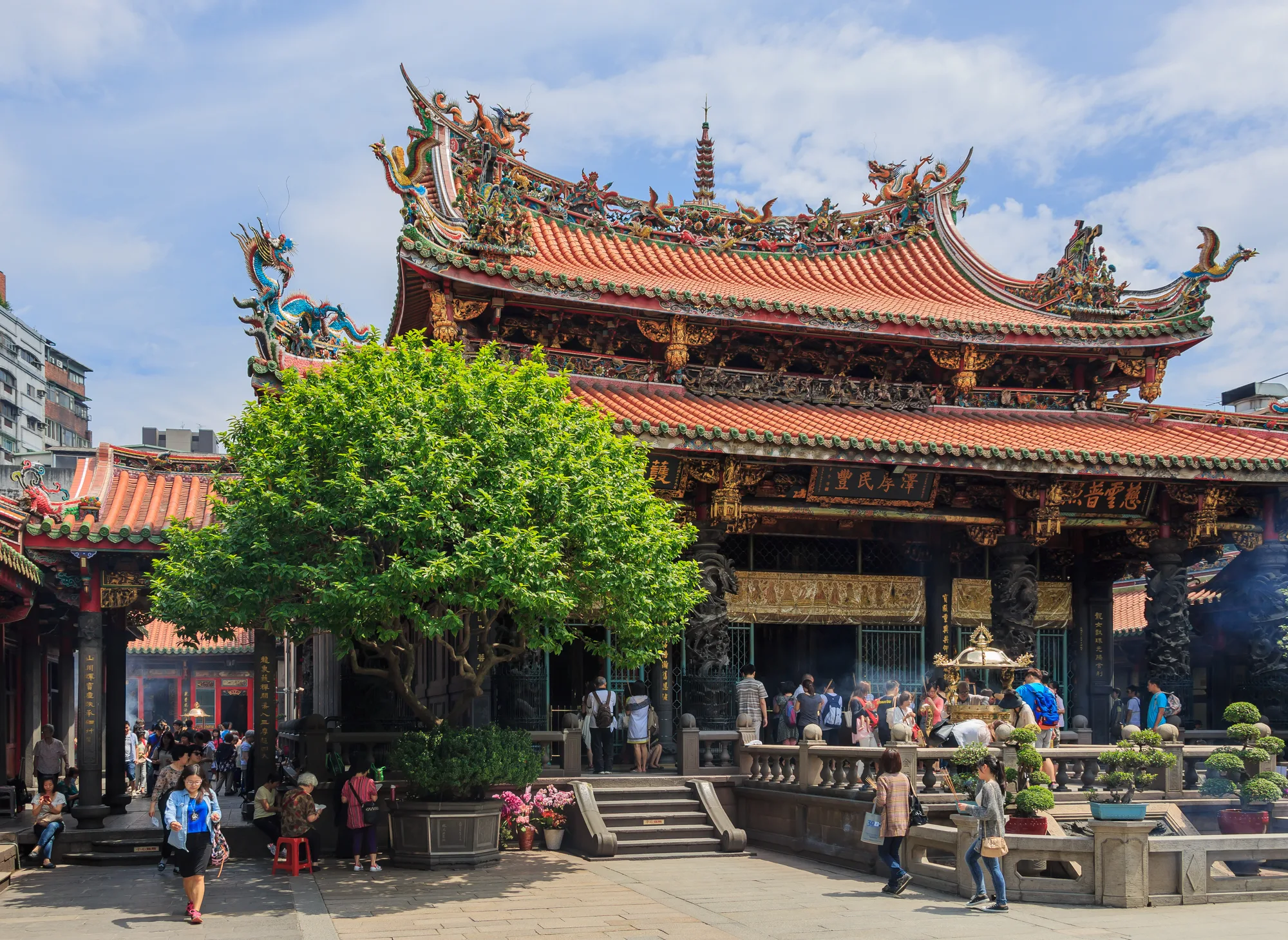
The ornate main hall of Longshan Temple in Wanhua, Taipei, with a dragon-decorated multi-tiered roof and red columns
Taipei · 台北 · 25.03°N 121.56°E

Longshan Temple: Taipei’s living heritage in Wanhua

Founded in 1738 in Taipei’s oldest neighborhood, Longshan Temple is a working Buddhist-and-Taoist shrine wrapped in ornate Taiwanese craftsmanship—and the perfect gateway into the old streets of Wanhua.

CEphoto, Uwe Aranas · CC BY-SA 3.0

Founded in 1738 in Taipei’s oldest neighborhood, Longshan Temple is a working Buddhist-and-Taoist shrine wrapped in ornate Taiwanese craftsmanship—and the perfect gateway into the old streets of Wanhua.

Updated June 20, 2026

Map

Visualize where this fits in your day (and plan nearby pairings).

Open full map →

Quick facts資訊

Cost
Free
Hours
06:00–21:30 daily
Time needed
30–60 minutes
Getting there
MRT Longshan Temple (Blue Line), Exit 1—directly across the street
Best time / for
Early morning for quiet; the 1st and 15th of the lunar month for active worship
Good to know
This is an active place of worship—dress respectfully; free guided tours are offered in English and Chinese.
District
Wanhua
Best for
Culture, architecture details, neighborhood texture
Fun fact
Established in 1738

Highlights亮點

  • Nearly 300 years of history in the heart of historic Bangka (Wanhua)
  • A combined Buddhist and Taoist temple with intricate traditional architecture
  • A short walk from Ximending and Huaxi Street Night Market

Why go

Longshan Temple isn’t a museum piece—it’s a working temple where locals come to pray every day, set in Wanhua (also known as Bangka or Monga), Taipei’s oldest neighborhood. First established in 1738, it has stood at the center of community life for nearly three centuries, and that long history is what gives the place its atmosphere.

It’s also one of the easiest meaningful stops in the city. Entry is free, the MRT drops you directly across the street, and 30 to 60 minutes is enough to take in the carvings, the incense, and the rhythm of worship before you head out to explore the surrounding old streets.

What to see

Longshan is a combined Buddhist and Taoist temple, which means it houses a whole roster of deities under one richly decorated roof—a very Taiwanese blend of faiths that you’ll see reflected in the offerings and prayers around you.

The architecture is the star. Look up at the swooping, ornamented rooflines, the dragon columns, and the layered wood and stone carving that define traditional Taiwanese temple craftsmanship. The detail rewards slow looking, so take your time moving through the courtyards.

  • Ornate rooflines and dragon columns—look up
  • Multiple Buddhist and Taoist deities in one complex
  • Wood and stone carving best seen in softer morning light
The ornate main hall of Longshan Temple in Wanhua, Taipei, with a dragon-decorated multi-tiered roof and red columns
Photo: CEphoto, Uwe Aranas · CC BY-SA 3.0 · Wikimedia Commons

How to visit respectfully

Because Longshan is a living place of worship, a little care goes a long way. Dress modestly, move slowly, and keep clear of people who are praying. Free guided tours in English and Chinese are offered if you want help reading the symbolism and ritual.

Early morning is the calmest time to visit. If you want to see the temple at its most alive, come on the 1st or 15th day of the lunar month, when worship is busiest.

  • Dress respectfully and move quietly
  • Avoid blocking entrances or photographing people mid-prayer
  • Take a free English or Chinese guided tour for context
green and red pagoda temple
Photo: Dave Weatherall / Unsplash

The atmosphere up close

Even non-religious visitors tend to be moved by the sheer aliveness of Longshan. The air is thick with incense, the courtyards hum with chanting and the clatter of fortune-telling blocks, and worshippers move with practised purpose between the halls — lighting joss sticks, laying out offerings of fruit and flowers, drawing fortune sticks for guidance. It’s one of the best places in Taipei to watch folk religion as a living daily practice rather than a frozen exhibit, and the back hall dedicated to deities like the matchmaker Yue Lao draws a steady stream of hopeful visitors.

The temple has also endured a great deal, which adds to its gravity. It has been rebuilt several times after earthquakes, fires, and even bombing during the Second World War, each time restored by the community that depends on it. That resilience is part of why locals hold it so dear — and why pausing here, however briefly, feels like touching the heart of old Taipei.

Make it a Wanhua walking loop

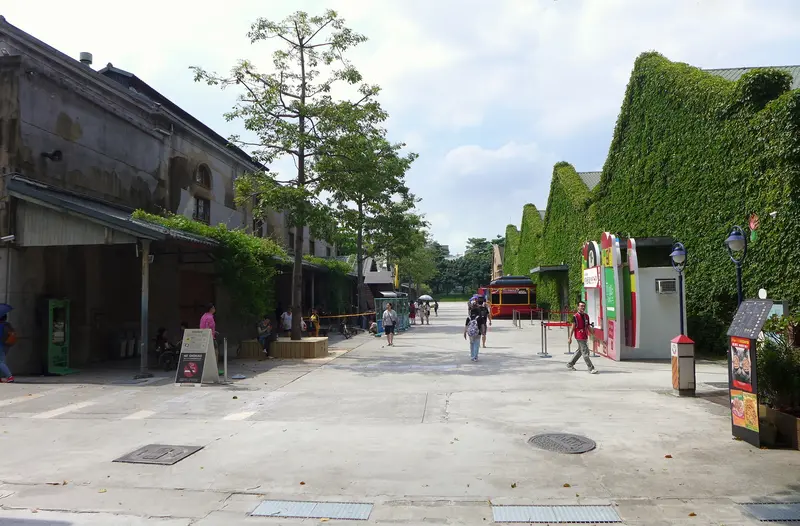
Longshan’s best feature might be its location. Everything that makes old Taipei distinctive is within roughly a kilometer’s walk: the historic lanes of Wanhua, Huaxi Street Night Market, and the neon energy of Ximending just beyond.

A natural plan is temple first, old-street wandering and a snack second, then Ximending in the evening for a complete contrast—centuries-old heritage giving way to night-market lights, all in one afternoon and evening.

  • Temple visit → Wanhua side streets → snack stop
  • Continue ~1 km to Huaxi Street Night Market
  • End in Ximending for neon night energy

FAQ 常見問題

Quick answers to common planning questions.

When’s the best time of day to visit?
Early morning is the most peaceful, with soft light on the carvings and fewer crowds, while evenings have an atmospheric glow as the lanterns come on. For the temple at its liveliest, come on the 1st or 15th of the lunar month, when worship is busiest — just expect bigger crowds then.
How much does it cost to visit Longshan Temple?
Entry is free. Free guided tours in English and Chinese are also offered if you’d like help understanding the deities and rituals.
What are Longshan Temple’s opening hours?
The temple is open daily from 06:00 to 21:30. Early morning is the quietest time, while the 1st and 15th of the lunar month see the most active worship.
How do I get to Longshan Temple?
Take the MRT Blue Line to Longshan Temple station and use Exit 1—the temple is directly across the street.
How long should I plan for a visit?
Budget 30 to 60 minutes for the temple itself, then add wandering time for the surrounding Wanhua streets, Huaxi Street Night Market, and nearby Ximending.
Is there an etiquette I should follow?
Yes—this is an active place of worship. Dress respectfully, move quietly, don’t block entrances, and avoid photographing people while they pray.

Helpful links 連結

Official pages and references for planning details.

Keep exploring 繼續逛

Hand-picked next reads to make your Taipei plan smoother.

Ximending: youth culture, neon nights, and easy street food

Ximending: youth culture, neon nights, and easy street food

Taipei’s most famous pedestrian shopping area—bright signage, pop culture, and a steady stream of snacks and late-night eats. Compact, walkable, and endlessly photogenic, it’s the city’s easiest ‘Taipei at night’ to dive into on day one.

Read more →
Wanhua: old Taipei texture, temples, and historic street life

Wanhua: old Taipei texture, temples, and historic street life

Taipei’s oldest district: temple atmosphere, heritage blocks, and everyday street scenes—best explored slowly with snacks and short walks. Anchored by Longshan Temple, it’s where the city’s lived-in history is most palpable.

Read more →
Bopiliao Historical Block: heritage lanes in Wanhua

Bopiliao Historical Block: heritage lanes in Wanhua

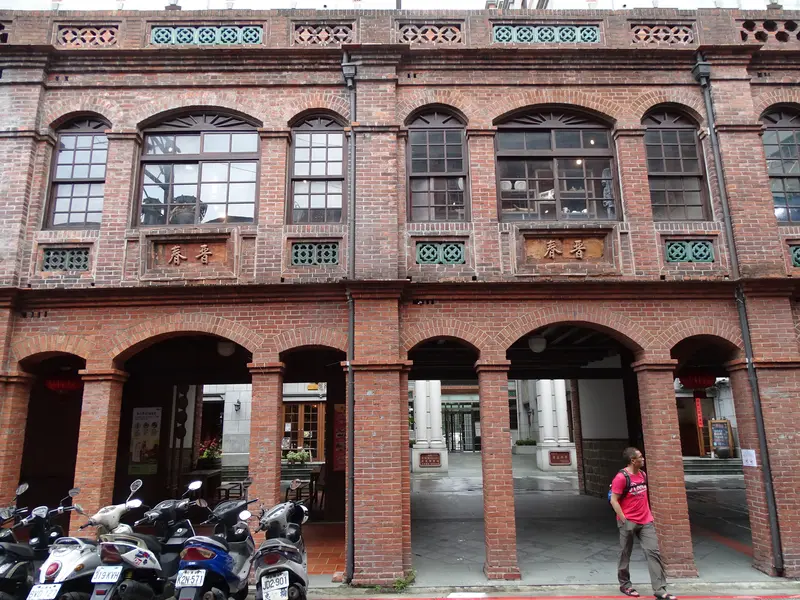
A preserved Qing-era commercial street beside Longshan Temple, with red-brick arcades layering Fujianese, Qing, Japanese-colonial and Western styles. A photogenic, free heritage stop—best paired with the temple and slow Wanhua wandering.

Read more →
Huaxi Street Night Market (Snake Alley): a gritty old-Taipei night walk

Huaxi Street Night Market (Snake Alley): a gritty old-Taipei night walk

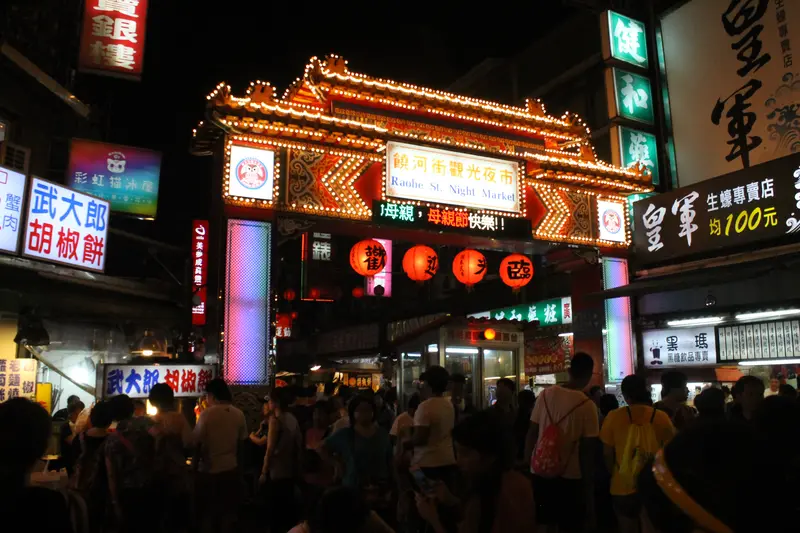
Taiwan’s first tourist-designated night market, a covered ~600 m lane in Wanhua next to Longshan Temple. Nicknamed “Snake Alley” for its historic snake and medicinal foods, it’s more about atmosphere than endless options—best paired with Wanhua’s heritage streets.

Read more →
Temples in Taipei: etiquette, timing, and what to notice

Temples in Taipei: etiquette, timing, and what to notice

A respectful, beginner-friendly guide to visiting Taipei’s temples—what to wear, how to move, and how to appreciate the details without feeling awkward.

Read more →
Night markets 101: how to eat your way through Taipei

Night markets 101: how to eat your way through Taipei

A practical night-market playbook: what to expect, how to order, crowd strategy, and which markets fit your vibe.

Read more →

Ready to plan your next stop? 下一站

Start with a simple loop: one neighborhood stroll, one iconic sight, and one night market. Taipei rewards balance.

Tip: hours, prices, and seasonal schedules can change. When something matters (like a museum ticket or a special exhibition), check the official listing before you go.