


Skip to content
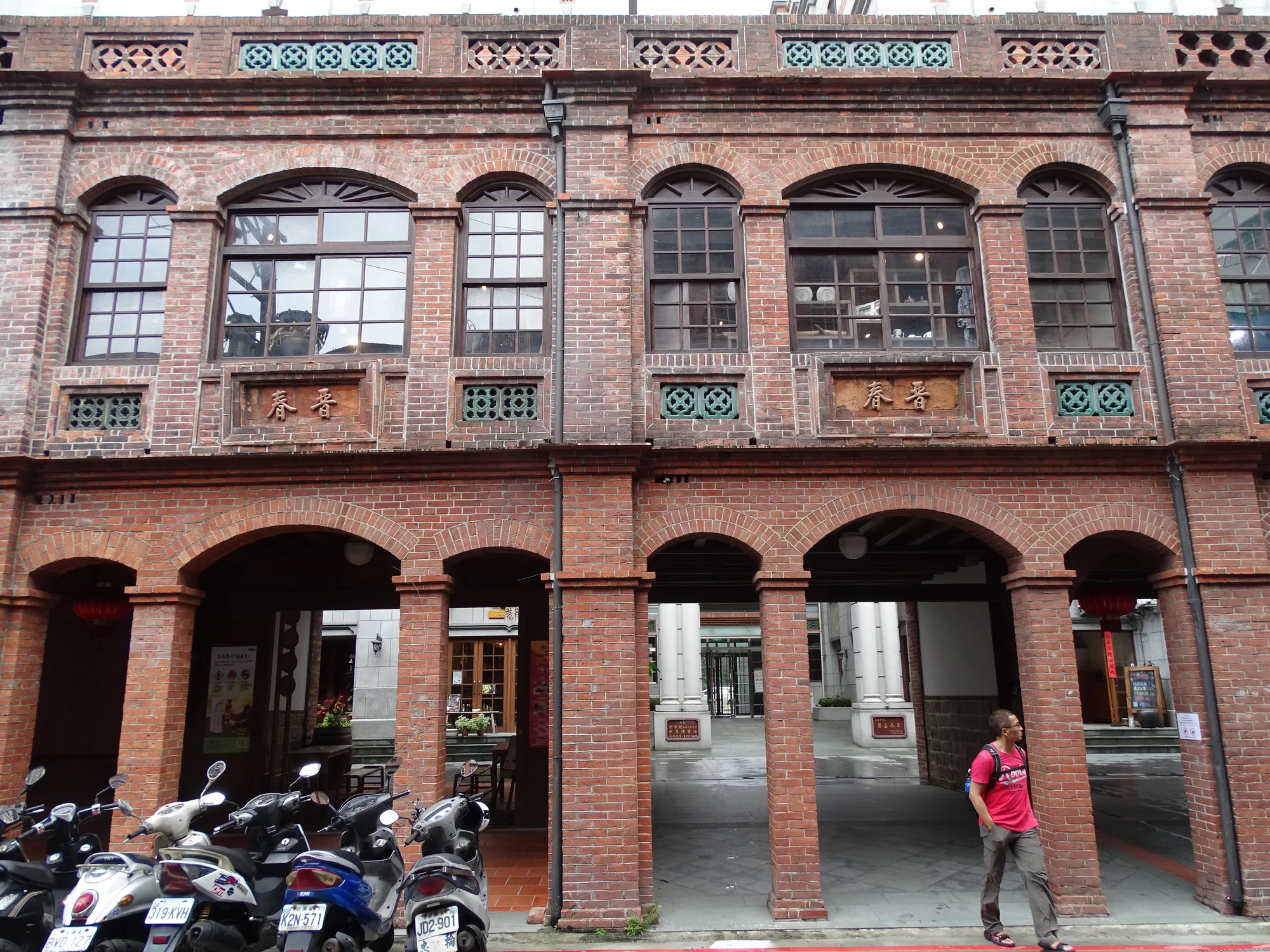
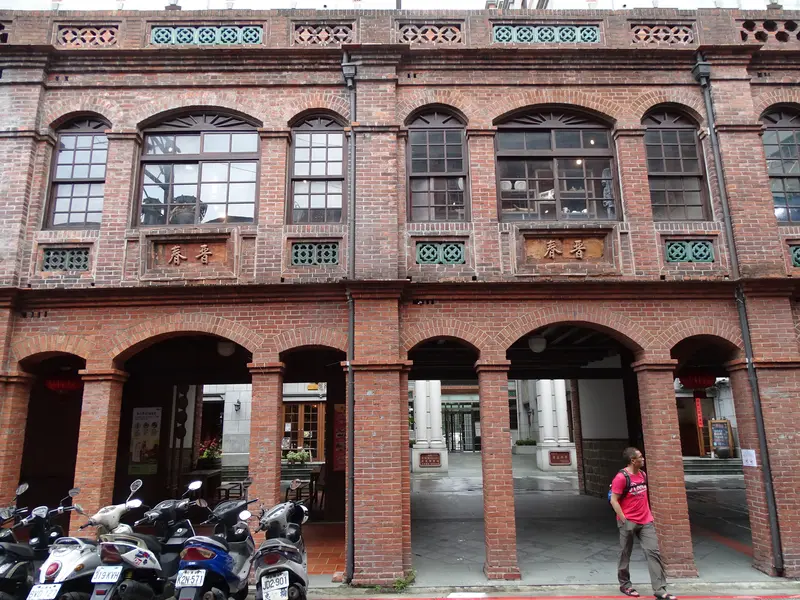
A historic red-brick shophouse facade with arched windows and a covered arcade on Dihua Street, Dadaocheng, Taipei
Taipei · 台北 · 25.03°N 121.56°E

Old Taipei City Gates Walk: a low-stress historic-core loop

A walking-first guide to Taipei’s city-gate landmarks—link North Gate, East Gate, South Gate, and Xiaonanmen into a single loop with museum and café add-ons.

Adam Jones from Kelowna, BC, Canada · CC BY-SA 2.0

A walking-first guide to Taipei’s city-gate landmarks—link North Gate, East Gate, South Gate, and Xiaonanmen into a single loop with museum and café add-ons.

Updated June 20, 2026

Quick facts資訊

Cost
Free (the gates are open-air monuments; museum add-ons are ticketed)
Time needed
2–3 hours for the gates; 3–5 hours with one add-on
Getting there
Start at MRT Beimen (Green line) or Taipei Main Station; the loop stays in the walkable historic core
Best time / for
Early morning for calm photos, or late afternoon into an evening in Ximending
Good to know
Only North Gate survives in its original Qing form—the others were rebuilt in a northern-palace style. Confirm any museum hours on official sites.
Best for
History lovers, walkers, repeat visitors, rainy-season planners
Time to read
6–8 minutes
Key idea
One loop + one add-on is enough

Highlights亮點

  • A satisfying “old Taipei” day with minimal transit
  • Easy add-ons: museums, parks, cafés, and night markets
  • Built for real trips: pacing first, photos second (but you’ll get both)

Why the city-gates walk works

Taipei’s city gates are perfect “texture anchors”: you get a sense of the old walled city without needing a long ticketed visit. The magic happens when you connect them with a walk—suddenly you’re doing history as a real day, not a checklist.

Here’s the quick backstory that makes the walk click. Taipei’s city wall went up in the early 1880s under Qing rule, with five gates guarding the prefectural capital. The wall itself was dismantled during the Japanese colonial era, but several gates survived—and North Gate (Beimen) is the only one still standing in its original 1884 form, after a road overpass that hid it for decades was finally removed in 2016.

This guide is designed to be flexible: you can do the full loop, or you can do a half-loop and still feel like you got the point. The gates are close enough that even a relaxed pace covers them in a morning.

Meet the gates (so you know what you’re looking at)

Knowing a little about each gate turns photo stops into real moments. The five gates ringed the old walled city; today four survive in some form, and the contrast between the original North Gate and the rebuilt others is part of the story.

  • North Gate (Beimen / Cheng’en Gate): the star of the walk—the only gate left in its original Qing-era stone-and-brick form, now sitting in an open plaza near Taipei Main Station
  • East Gate (Jingfumen): grand and prominent near the Presidential Office and CKS Memorial Hall; rebuilt in an ornate northern-Chinese palace style in the 1960s
  • South Gate (Lizhengmen): the “Gate of Beauty,” also rebuilt in northern-palace style over its original stone base
  • Little South Gate (Xiaonanmen / Chongximen): the quietest and most unusual of the surviving gates; it lends its name to the Xiaonanmen MRT station on the Green line
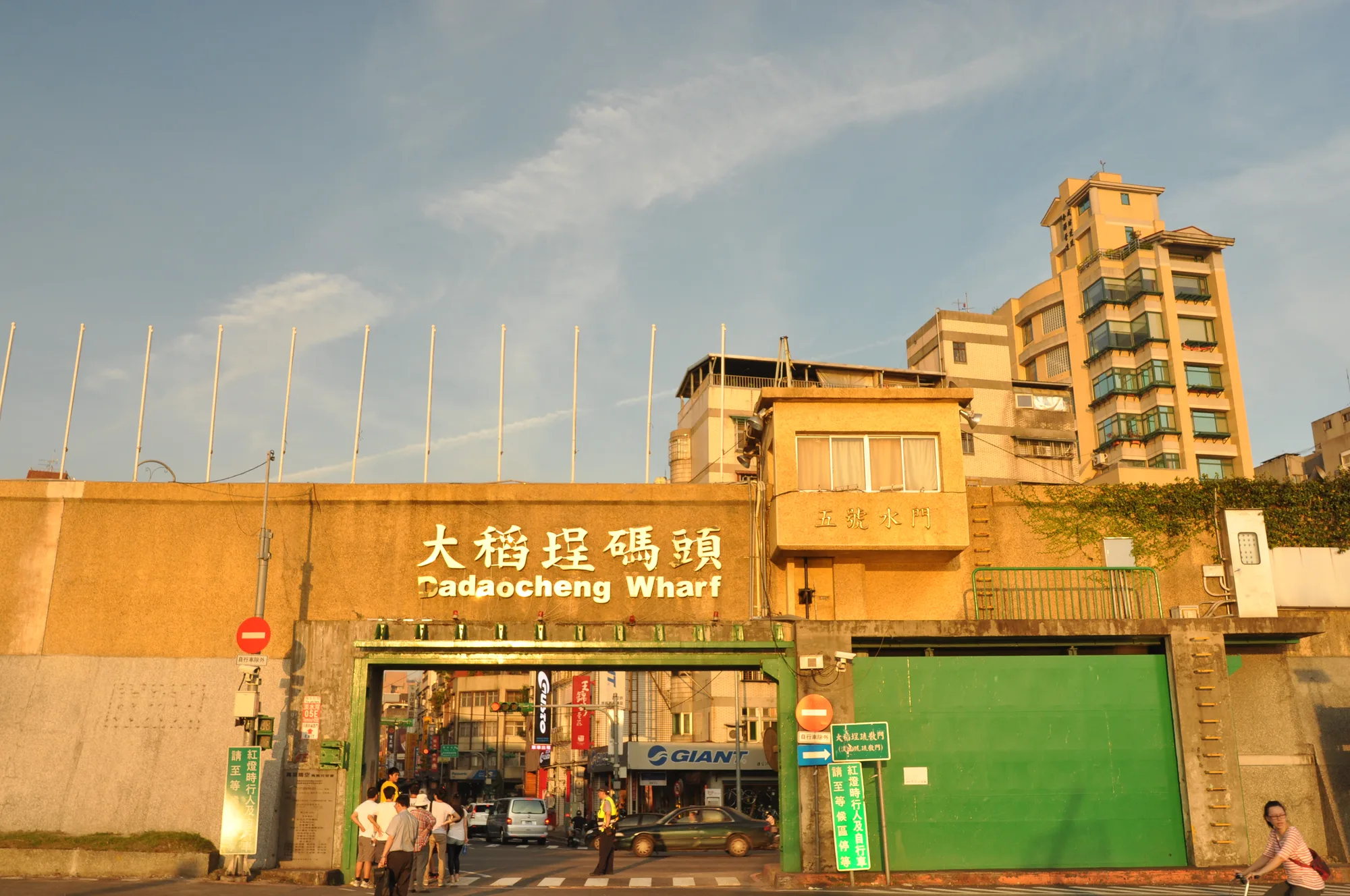
Dadaocheng Wharf in Taipei at golden sunset, with the green riverside floodgate sign reading Dadaocheng Wharf
Photo: keiichiro shikano · CC BY 2.0 · Wikimedia Commons

The core loop (choose your pace)

Start near Taipei Main Station / Beimen, then work your way through the historic core toward the East Gate and South Gate area, finishing near Xiaonanmen. Add one museum or one garden stop, and finish with food in a nearby neighborhood.

The distances are short—this is genuinely a stroll, not a hike—so the only real planning skill is choosing how many add-ons to layer in. Resist the urge to over-schedule; the gates are best as punctuation between cafés, museums, and a meal.

  • Fast loop (2–3 hours): North Gate → East Gate → South Gate → Xiaonanmen
  • Comfort loop (3–5 hours): add one museum + one café/tea break
  • Rainy-day version: quick outdoor gate photos → museums/covered walking → early dinner
  • Half-loop option: North Gate + one museum is plenty if your legs are tired

Best add-ons (pick one)

One add-on keeps the day satisfying without turning it into a marathon. Choose based on weather and energy. The historic core is dense with quality stops, so you’re never far from a worthwhile detour.

If you only have appetite for one, the National Taiwan Museum in 228 Peace Memorial Park is the most central and the easiest to fold into the loop.

  • Museum add-on: National Taiwan Museum (in 228 Peace Memorial Park) or the Evergreen Maritime Museum
  • Garden add-on: Taipei Botanical Garden + a tea break at Nanmending 323
  • History add-on: the Railway Department Park near North Gate for restored Japanese-era architecture
  • Street-culture add-on: Ximending + Red House Theater for evening energy
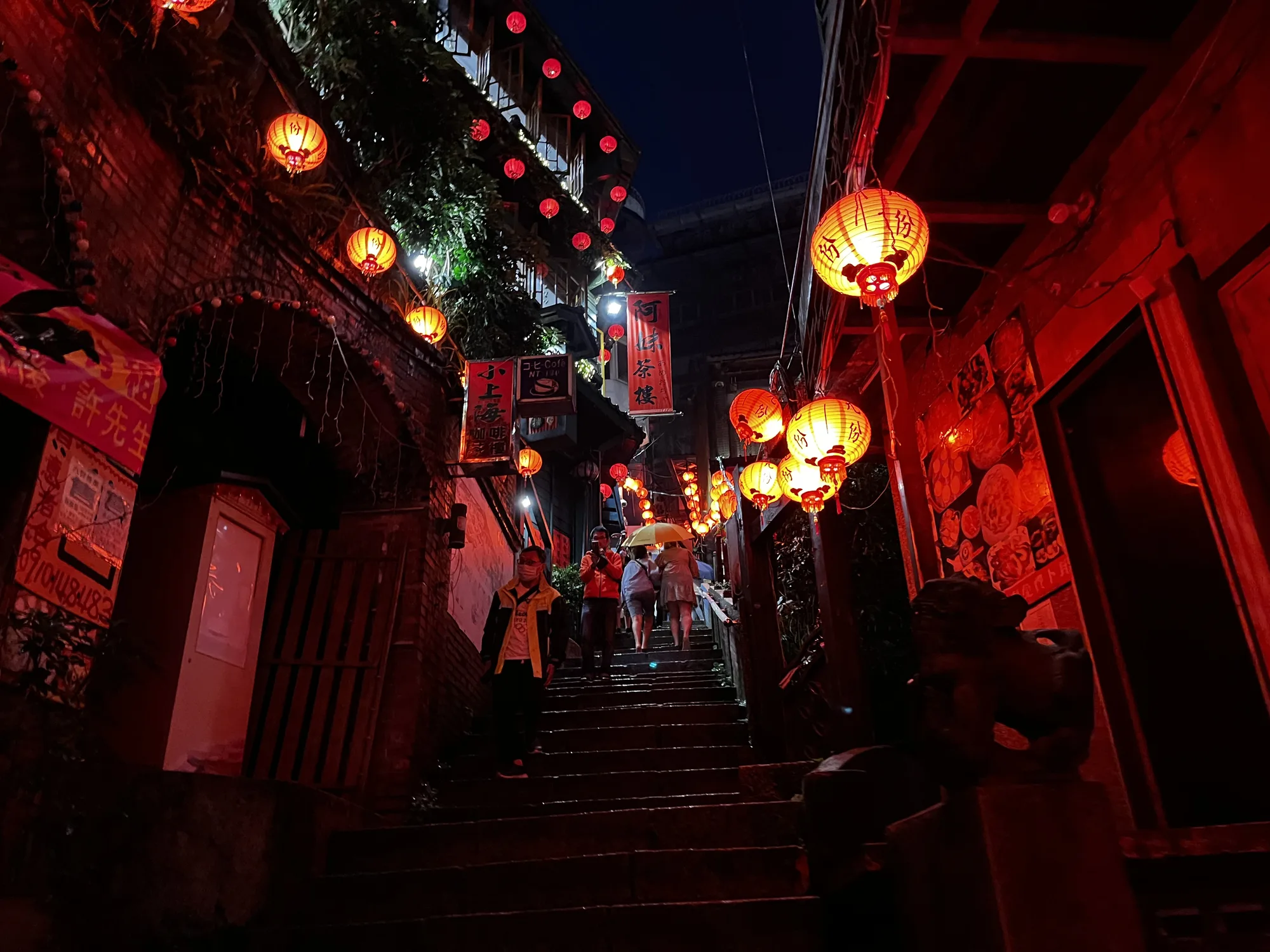
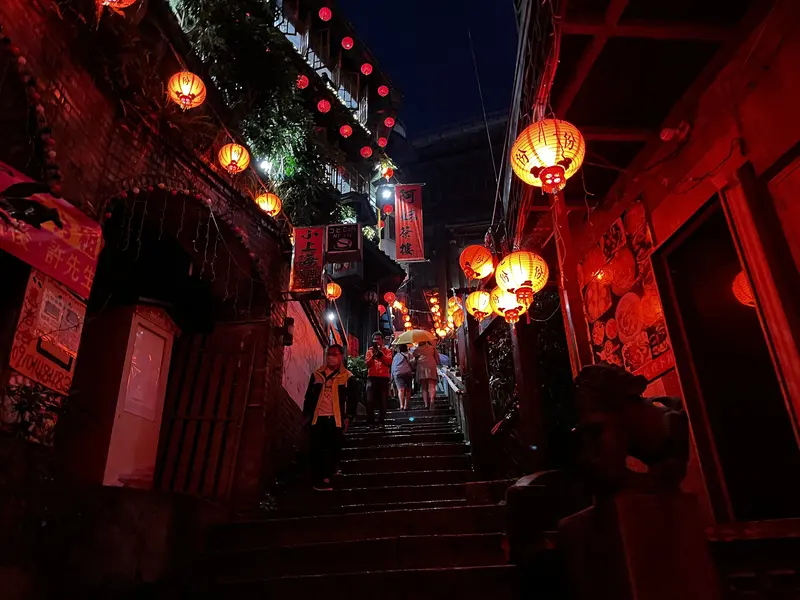
The red-lantern stairway of Jiufen old street glowing at night, lanterns lining the narrow alley as people climb the steps
Photo: Sunkenbean · CC BY-SA 4.0 · Wikimedia Commons

Turn it into a half-day with food and parks

The walk lives or dies on how you bookend it. Begin with a calm breakfast or coffee near Taipei Main Station, do the gates while the streets are quiet, then drift into 228 Peace Memorial Park or the Botanical Garden for a green reset before lunch.

For the finish, the historic core hands you two easy directions: west into Ximending for street snacks and youthful energy, or north into Dadaocheng/Dihua Street for tea shops and heritage browsing. Either makes the day feel complete without extra transit.

  • Morning: coffee near the station → gates while it’s quiet
  • Midday: one museum or the Botanical Garden, then lunch
  • Evening: Ximending snacks or a Dadaocheng tea-and-sunset finish

Accessibility and comfort notes

This route is flexible: you can shorten it at any point and take the MRT or a short taxi hop between anchors. In hot months, plan indoor breaks midday—the gates are exposed and the humidity is real. In rain, keep it museum-heavy and treat the gates as quick exterior photo stops.

If you’re traveling with strollers or mobility needs, treat it as “two short walks” with a café break and a transit hop in between. Crossings in the historic core are busy but signalized, so give yourself extra time at the bigger intersections near the East Gate.

  • Sidewalks are flat, but crossings near the East Gate are wide—use the signals
  • Carry water and a compact umbrella; the gates offer little shade
  • Lockers at Taipei Main Station let you walk hands-free if you’re between hotels

Read these next 延伸閱讀

The pages that pair best with this one — tap a card to keep planning.

FAQ 常見問題

Quick answers to common planning questions.

How long does the full city-gates loop take?
For a walking-first trip, plan 2–3 hours for the gates alone. If you add a museum or a botanical garden/tea break, 3–5 hours is a comfortable pace.
Which gate is the most impressive?
North Gate (Beimen) is the highlight because it’s the only one surviving in its original 1884 Qing-era form. The East Gate is the most photogenic of the rebuilt gates thanks to its ornate northern-palace styling.
What’s the best time of day to do this walk?
Early morning is calmest for photos and easier walking. Late afternoon works well too—then you can finish in Ximending or at a night market for dinner.
Can I go inside the gates?
No—the gates are exterior monuments, not enterable buildings, so visits are quick. That’s exactly why pairing them with a museum or garden makes for a fuller day.
Is this route good on a rainy day?
Yes—treat the gates as quick exterior stops, then shift indoors to a nearby museum and cafés. Taipei’s historic core has enough indoor options to turn rain into a great culture day.
Do I need a guide or a tour?
No. The gates are easy to visit independently; the main planning skill is pacing. Keep it simple: one loop, one add-on, and one food mission to finish.
Can I combine the gates with Dihua Street?
Yes, and it’s a great pairing. North Gate sits closest to Dadaocheng, so you can finish the gate loop and walk north into Dihua Street for tea shops, heritage storefronts, and a riverside sunset at Dadaocheng Wharf.

Keep exploring 繼續逛

Hand-picked next reads to make your Taipei plan smoother.

Taipei Main Station area: transit hub, city edges, and practical Taipei

Taipei Main Station area: transit hub, city edges, and practical Taipei

Not a ‘romantic’ neighborhood, but incredibly useful: the city’s central transit nerve center, easy day-trip logistics, and a fast way to move between districts. Understanding it makes the rest of your trip run smoother.

Read more →
Datong & Dadaocheng: old streets, tea shops, and Taipei heritage

Datong & Dadaocheng: old streets, tea shops, and Taipei heritage

A historic area anchored by Dihua Street—tea, dry goods, traditional shops, and a slower, more photogenic side of Taipei. It’s one of the city’s oldest trading quarters, full of Qing-era and Japanese-Baroque facades that reward a slow, curious wander.

Read more →
Zhongzheng: monuments, museums, and classic civic Taipei

Zhongzheng: monuments, museums, and classic civic Taipei

A central district for big cultural landmarks and museum-style sightseeing—ideal for your ‘classic Taipei’ day. Home to the CKS Memorial Hall, Liberty Square, and the city’s great national museums, it’s where Taipei tells its public story.

Read more →
Ximending: youth culture, neon nights, and easy street food

Ximending: youth culture, neon nights, and easy street food

Taipei’s most famous pedestrian shopping area—bright signage, pop culture, and a steady stream of snacks and late-night eats. Compact, walkable, and endlessly photogenic, it’s the city’s easiest ‘Taipei at night’ to dive into on day one.

Read more →
North Gate (Beimen): a historic Taipei city gate near the main station

North Gate (Beimen): a historic Taipei city gate near the main station

Officially Cheng’en Gate, this 1884 Qing-dynasty blockhouse is the only one of Taipei’s old city gates surviving in its original form—a compact but high-impact landmark on an ‘old city’ walking loop near Taipei Main Station.

Read more →
Taipei East Gate (Jingfumen): a city-wall landmark in the historic core

Taipei East Gate (Jingfumen): a city-wall landmark in the historic core

Built in 1884 as one of five gates in Taipei’s Qing-dynasty city wall, Jingfumen (景福門) is the grandest survivor — though a 1966 “beautification” remodel gave it today’s northern-Chinese palace look. It stands on a traffic island where Zhongshan South Road meets Ketagalan Boulevard, an easy free stop in the historic core.

Read more →

Ready to plan your next stop? 下一站

Start with a simple loop: one neighborhood stroll, one iconic sight, and one night market. Taipei rewards balance.

Tip: hours, prices, and seasonal schedules can change. When something matters (like a museum ticket or a special exhibition), check the official listing before you go.