



Skip to content
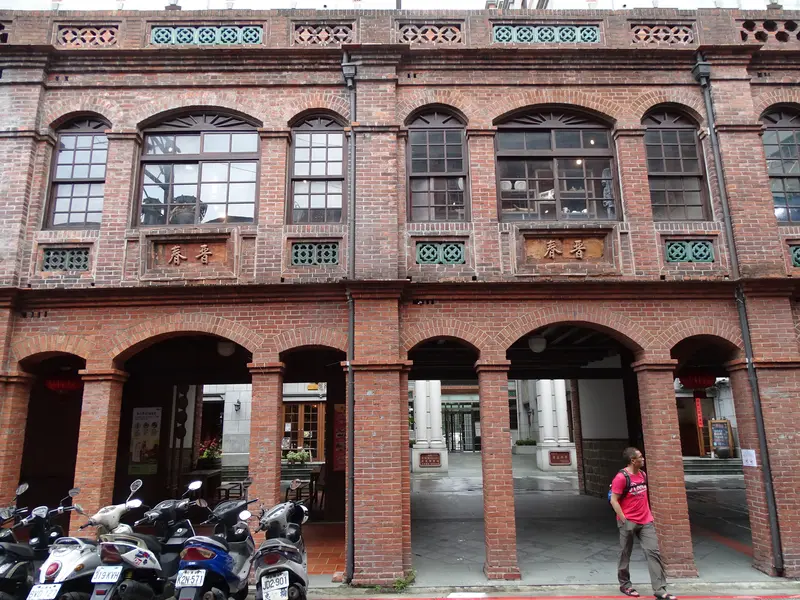
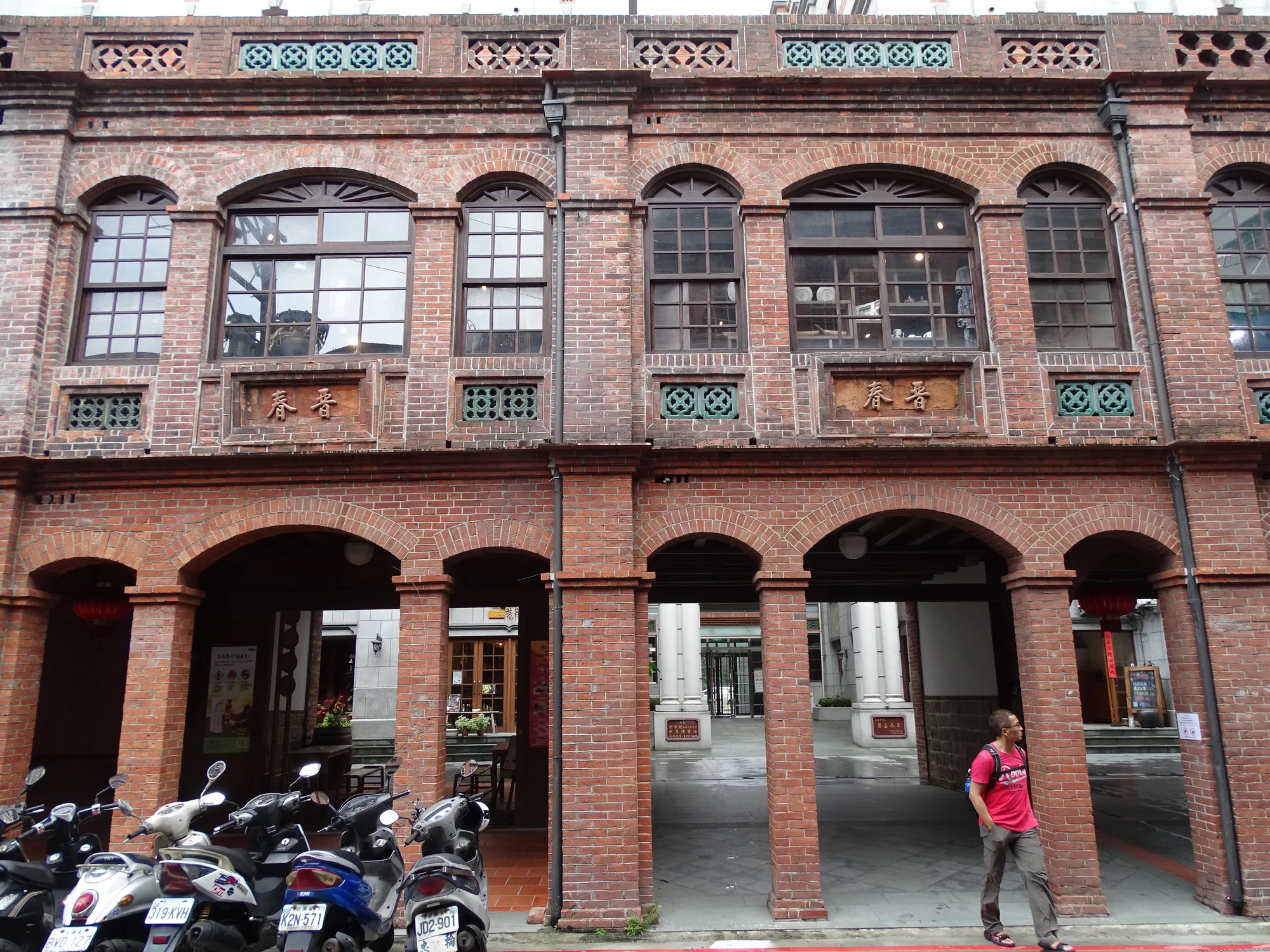
A historic red-brick shophouse facade with arched windows and a covered arcade on Dihua Street, Dadaocheng, Taipei
Taipei · 台北 · 25.03°N 121.56°E

Taipei East Gate (Jingfumen): a city-wall landmark in the historic core

Built in 1884 as one of five gates in Taipei’s Qing-dynasty city wall, Jingfumen (景福門) is the grandest survivor — though a 1966 “beautification” remodel gave it today’s northern-Chinese palace look. It stands on a traffic island where Zhongshan South Road meets Ketagalan Boulevard, an easy free stop in the historic core.

Adam Jones from Kelowna, BC, Canada · CC BY-SA 2.0

Built in 1884 as one of five gates in Taipei’s Qing-dynasty city wall, Jingfumen (景福門) is the grandest survivor — though a 1966 “beautification” remodel gave it today’s northern-Chinese palace look. It stands on a traffic island where Zhongshan South Road meets Ketagalan Boulevard, an easy free stop in the historic core.

Updated June 20, 2026

Map

Visualize where this fits in your day (and plan nearby pairings).

Open full map →

Quick facts資訊

Cost
Free
Time needed
15–40 minutes
Getting there
About a 5-minute walk from MRT Chiang Kai-shek Memorial Hall (Red R08 / Green G10); MRT NTU Hospital (R09) is also close. The gate sits on a traffic island, so cross at the lights.
Best time / for
Daytime for clear photos; the gate is floodlit at night for a different mood.
Good to know
It’s on a roundabout circled by busy roads — you view it from the surrounding pavements rather than walking up to it.
District
Zhongzheng
Best for
Historic Taipei, quick photo stops, walking loops
Famous for
Also known as Jingfumen (景福門), Taipei’s grandest surviving city gate

Highlights亮點

  • A genuine Qing-era city gate (1884) in the heart of government Taipei
  • Free, open-air, and viewable 24 hours — a quick photo stop, not a time sink
  • Sits between Chiang Kai-shek Memorial Hall and the museum district for easy loops
  • Look for the granite base, arched passage, and glazed-tile eaves

A surviving piece of the walled city

Taipei was once a walled city. In 1884, under the Qing dynasty, a defensive wall enclosed the administrative district with five gates; Jingfumen — the East Gate — was the largest and most ornate of them. The wall itself was largely dismantled during the Japanese colonial era (1895–1945) to make way for modern roads, but several gates were spared and remain scattered across the modern street grid.

What you see today isn’t purely Qing, though. In 1966 the Nationalist government remodelled the East Gate (along with several of its siblings) in a northern-Chinese palace style as part of a city “beautification” drive. The result is grander and more colourful than the original southern-Fujian fortification, which is part of why it photographs so well.

What to look for

City gates reward a slower look. Step back to take in the proportions: a solid granite base pierced by an arched passageway, topped by a two-storey pavilion with upturned, glazed-tile eaves. The 1966 styling is on full display in the bright roofwork and ceremonial feel.

Because it sits on a roundabout where Zhongshan South Road meets Ketagalan Boulevard — the ceremonial axis leading to the Presidential Office — the gate is best appreciated as a landmark within the cityscape rather than a building you enter.

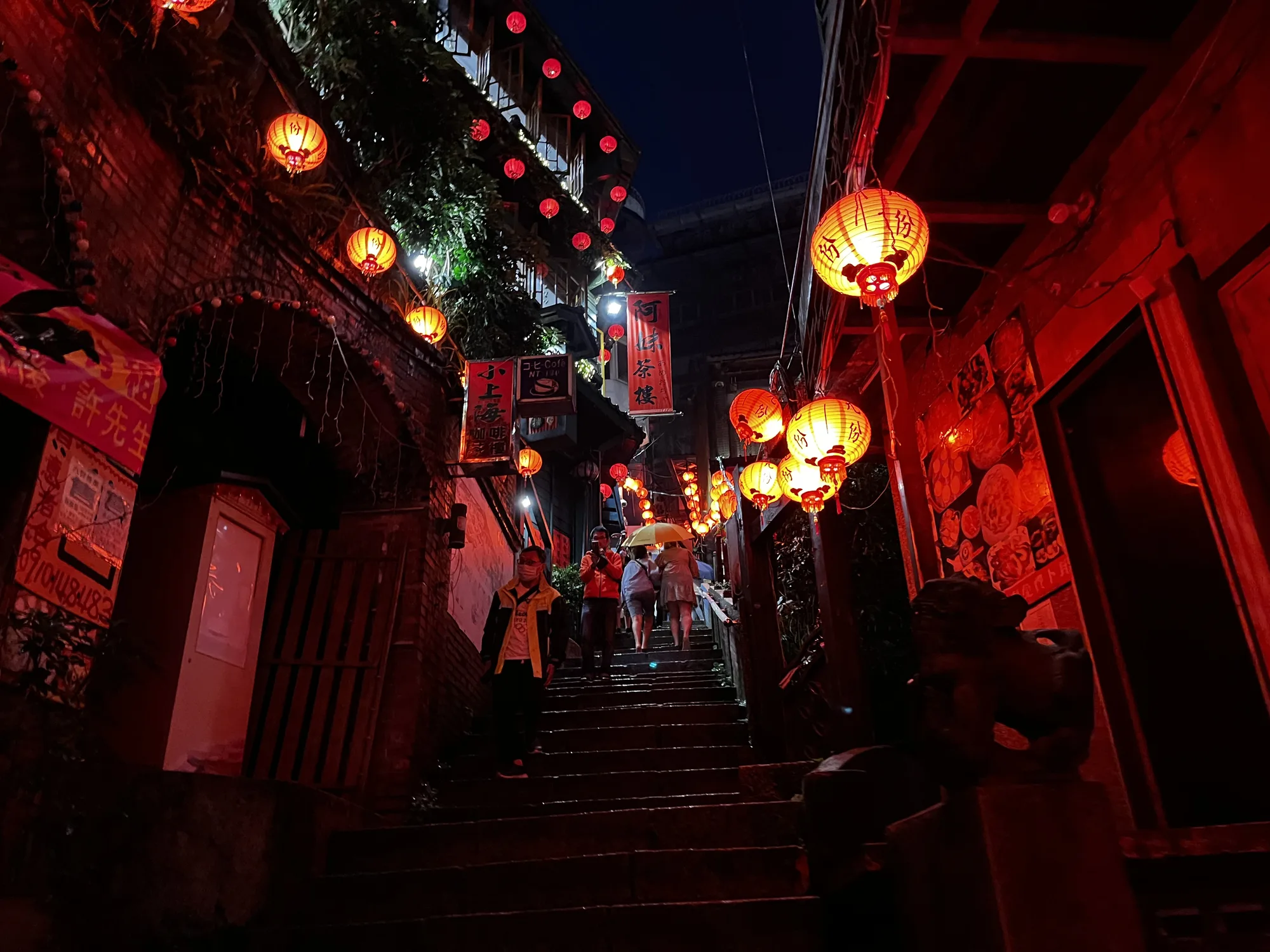
The red-lantern stairway of Jiufen old street glowing at night, lanterns lining the narrow alley as people climb the steps
Photo: Sunkenbean · CC BY-SA 4.0 · Wikimedia Commons

Make it a loop, not a stop

On its own the East Gate is brief. It shines as a link in a historic-core walk, with Chiang Kai-shek Memorial Hall, the National Taiwan Museum, and 228 Peace Memorial Park all within easy reach.

  • Culture loop: East Gate → National Taiwan Museum → 228 Peace Memorial Park → café
  • Contrast loop: East Gate → Zhongshan Hall → Ximending neon streets at dusk
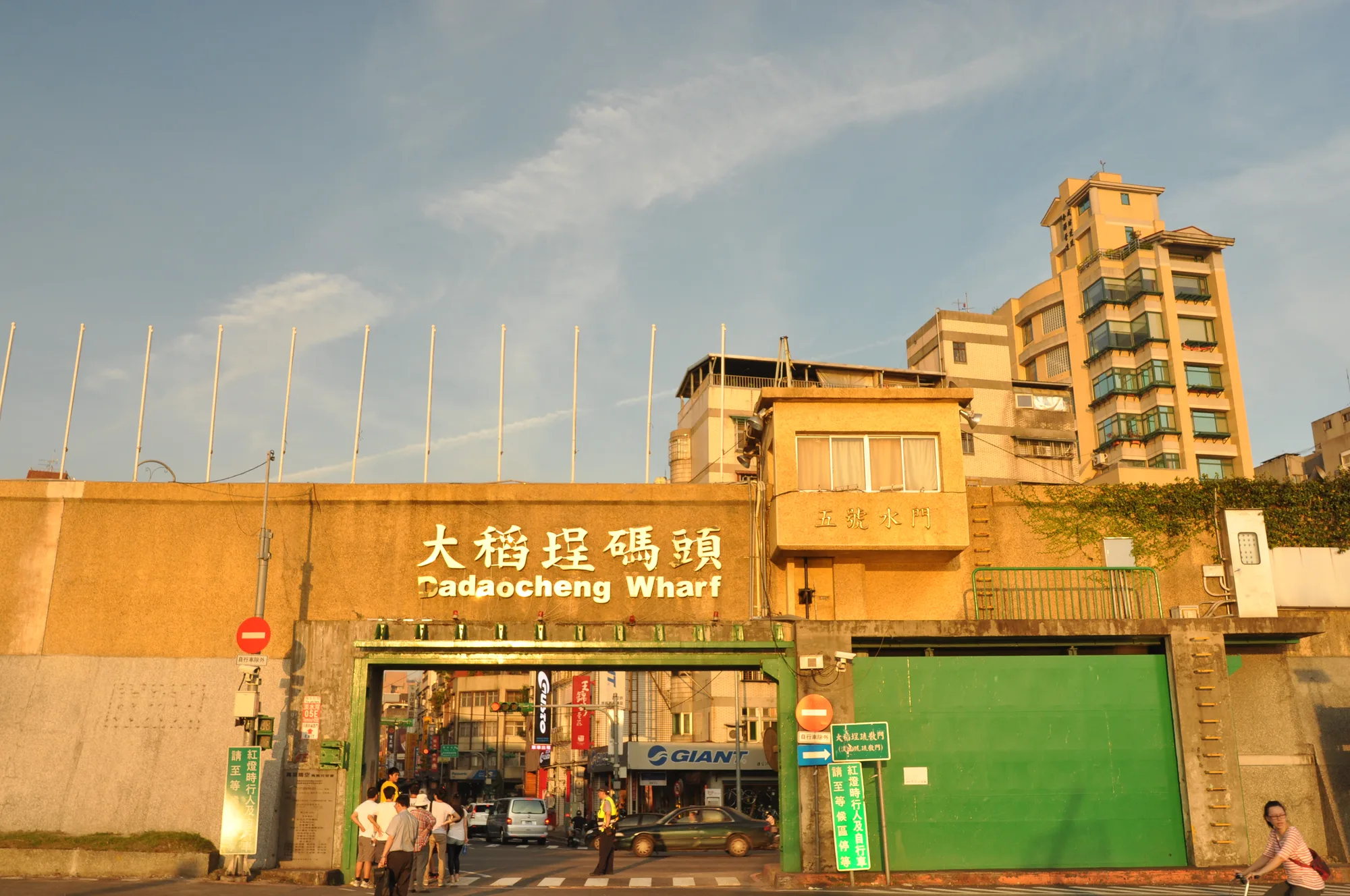
Dadaocheng Wharf in Taipei at golden sunset, with the green riverside floodgate sign reading Dadaocheng Wharf
Photo: keiichiro shikano · CC BY 2.0 · Wikimedia Commons

Why it’s worth slowing down for

It’s easy to drive or walk straight past the East Gate, but pausing rewards you with one of the few tangible links to the Taipei that existed before the modern grid. The Qing-era walled city is almost entirely gone — the wall demolished, the moat filled, the streets rerouted — so these surviving gates are physical anchors to a vanished layout. Standing at the gate and tracing where the ceremonial axis runs toward the Presidential Office gives you a quick, vivid sense of how the old administrative heart was organised.

There’s also a small lesson in Taiwan’s layered politics baked into the stonework. The 1966 palace-style remodel wasn’t neutral restoration; it reflected a particular era’s idea of how a Chinese capital should look. Knowing that, the gate becomes more than a pretty roundabout ornament — it’s a marker of Qing rule, Japanese-era demolition, and post-war Nationalist reinvention, all on a single traffic island.

Getting there

The simplest approach is MRT Chiang Kai-shek Memorial Hall (Red Line R08 / Green Line G10), about five minutes on foot to the northeast. MRT NTU Hospital (R09) is a short walk to the east as well. Since the gate is encircled by traffic, use the pedestrian crossings to find your viewing angle.

FAQ 常見問題

Quick answers to common planning questions.

What’s nearby to combine it with?
Plenty — the gate sits in the dense historic core, so within a short walk you can reach Chiang Kai-shek Memorial Hall, the National Taiwan Museum, 228 Peace Memorial Park, and the Presidential Office area. Treat the gate as one beat in a walking loop rather than a destination in itself.
How much does it cost and when is it open?
Nothing — it’s a free, open-air monument with no ticket or gate. You can view and photograph it any time of day, and it’s floodlit at night.
Is the gate original?
Partly. The East Gate dates from 1884 under the Qing dynasty, but it was substantially remodelled in 1966 into a northern-Chinese palace style, so its present appearance is grander than the original southern-Fujian design.
How do I get there by MRT?
It’s about a five-minute walk from MRT Chiang Kai-shek Memorial Hall (Red R08 / Green G10). MRT NTU Hospital (R09) is also nearby.
How long should I budget?
Fifteen to forty minutes is plenty for the gate itself. Pair it with the nearby museums or memorial hall to fill out a half-day.

Helpful links 連結

Official pages and references for planning details.

Keep exploring 繼續逛

Hand-picked next reads to make your Taipei plan smoother.

Zhongzheng: monuments, museums, and classic civic Taipei

Zhongzheng: monuments, museums, and classic civic Taipei

A central district for big cultural landmarks and museum-style sightseeing—ideal for your ‘classic Taipei’ day. Home to the CKS Memorial Hall, Liberty Square, and the city’s great national museums, it’s where Taipei tells its public story.

Read more →
Taipei Main Station area: transit hub, city edges, and practical Taipei

Taipei Main Station area: transit hub, city edges, and practical Taipei

Not a ‘romantic’ neighborhood, but incredibly useful: the city’s central transit nerve center, easy day-trip logistics, and a fast way to move between districts. Understanding it makes the rest of your trip run smoother.

Read more →
Ximending: youth culture, neon nights, and easy street food

Ximending: youth culture, neon nights, and easy street food

Taipei’s most famous pedestrian shopping area—bright signage, pop culture, and a steady stream of snacks and late-night eats. Compact, walkable, and endlessly photogenic, it’s the city’s easiest ‘Taipei at night’ to dive into on day one.

Read more →
National Taiwan Museum: Taiwan’s oldest museum, at the old city core

National Taiwan Museum: Taiwan’s oldest museum, at the old city core

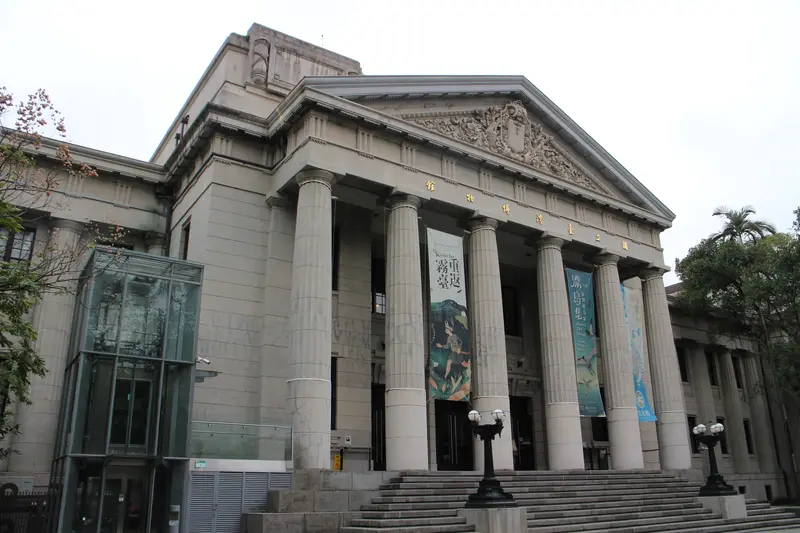
Established in 1908, the National Taiwan Museum is the oldest museum in Taiwan and the only Japanese-colonial-era museum still on its original site—a white Greek/Roman-revival building with a Roman dome at the north end of 228 Peace Memorial Park. With collections in Taiwan’s anthropology, geology, zoology, and botany, it’s an inexpensive, atmospheric ‘context’ stop for first-timers.

Read more →
228 Peace Memorial Park: a calm city-center walk with deep history

228 Peace Memorial Park: a calm city-center walk with deep history

A downtown Taipei park near Taipei Main Station, renamed to commemorate the victims of the 28 February 1947 (228) Incident. It pairs an always-open, leafy walking loop—with the 228 monument and a memorial museum—with the adjacent National Taiwan Museum, making it one of the most accessible places to add reflective depth to a city-center day.

Read more →
Zhongshan Hall: a classic Taipei landmark beside Ximending

Zhongshan Hall: a classic Taipei landmark beside Ximending

A 1930s civic landmark beside Ximending—originally the Taipei City Public Hall and the site of Japan’s 1945 surrender in Taiwan—that adds architectural and historical texture to a city-center day, and still stages concerts, opera, and exhibitions.

Read more →

Ready to plan your next stop? 下一站

Start with a simple loop: one neighborhood stroll, one iconic sight, and one night market. Taipei rewards balance.

Tip: hours, prices, and seasonal schedules can change. When something matters (like a museum ticket or a special exhibition), check the official listing before you go.