Taipei’s city walls were built between 1879 and 1884 during Qing rule, with five gates: the East Gate (Jingfu), West Gate (Baocheng), South Gate (Lizheng), Auxiliary South Gate (Chongxi) and North Gate (Cheng’en). The South Gate’s formal name, Lizhengmen (麗正門), translates roughly as the ‘(Main) Gate of Beauty,’ and it was built with finely worked stone, including a distinctive hornless-dragon (chilong) motif.
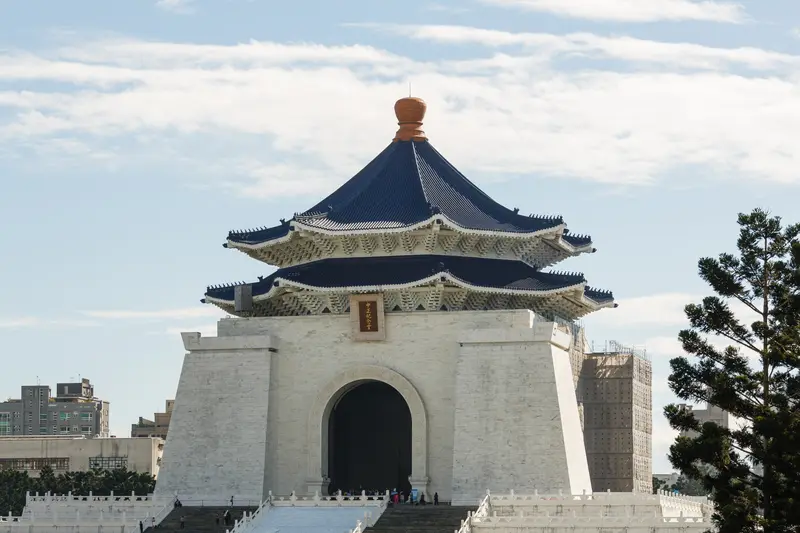
The walls themselves were largely demolished during the early Japanese colonial era, leaving the gates as the main survivors. After Taiwan’s 1945 handover to the Republic of China, the East, South and Auxiliary South Gates were rebuilt — but the Nationalist-era restoration recast the South Gate in a northern Chinese palatial style, changing its silhouette while preserving the masonry foundation and the round opening in the wall. The North Gate is the only one that keeps its original appearance.