


Skip to content
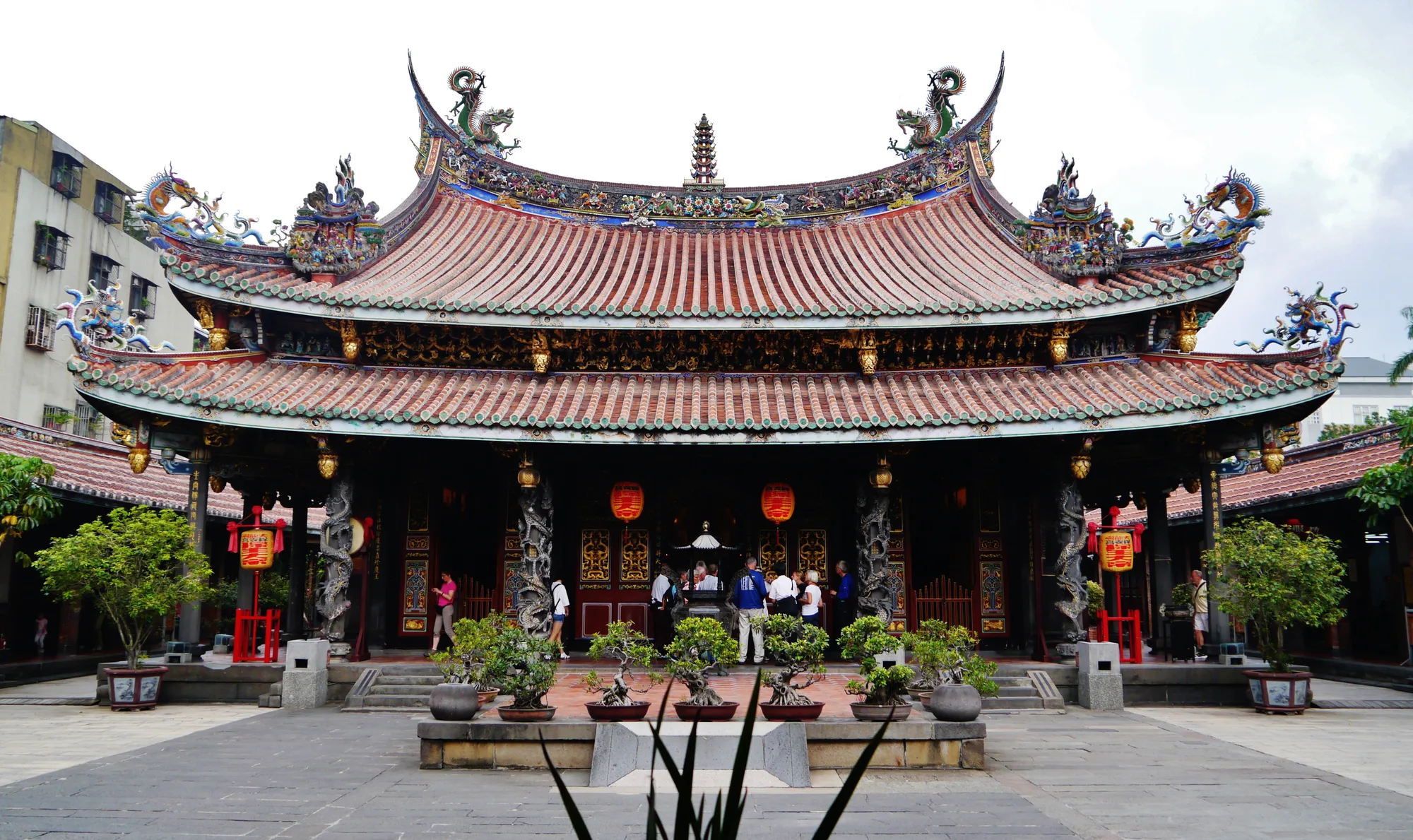
green and red pagoda temple
Taipei · 台北 · 25.03°N 121.56°E

Songshan Ciyou Temple: a classic temple stop that pairs perfectly with Raohe Night Market

A lavishly decorated Mazu temple in Songshan, founded in 1753 and rebuilt several times into the six-storey landmark you see today. It marks the western entrance of Raohe Street Night Market, making it the ideal pre-dinner ritual: temple first, street food after, with minimal transit.

A lavishly decorated Mazu temple in Songshan, founded in 1753 and rebuilt several times into the six-storey landmark you see today. It marks the western entrance of Raohe Street Night Market, making it the ideal pre-dinner ritual: temple first, street food after, with minimal transit.

Updated June 20, 2026

Map

Visualize where this fits in your day (and plan nearby pairings).

Open full map →

Quick facts資訊

Cost
Free to enter, like Taiwan’s temples generally.
Hours
Open daily; temples typically welcome visitors from early morning into the evening. Visit before your Raohe dinner.
Time needed
30–60 minutes.
Getting there
In Songshan, at the western end of Raohe Street Night Market. Closest stations are Songshan Station (on the metro/rail) and the night-market area; walk to the temple’s front, which faces the market entrance.
Best time / for
Late afternoon to dusk, so you flow straight into the night market as it gets going.
Good to know
It’s an active place of worship — be respectful with photos and don’t block worshippers.
District
Songshan
Founded
1753
Deity
Mazu (the sea goddess)
Best for
Temple architecture, evening loops, night-market pairing

Highlights亮點

  • A grand Mazu temple founded in 1753, rebuilt into six ornate floors
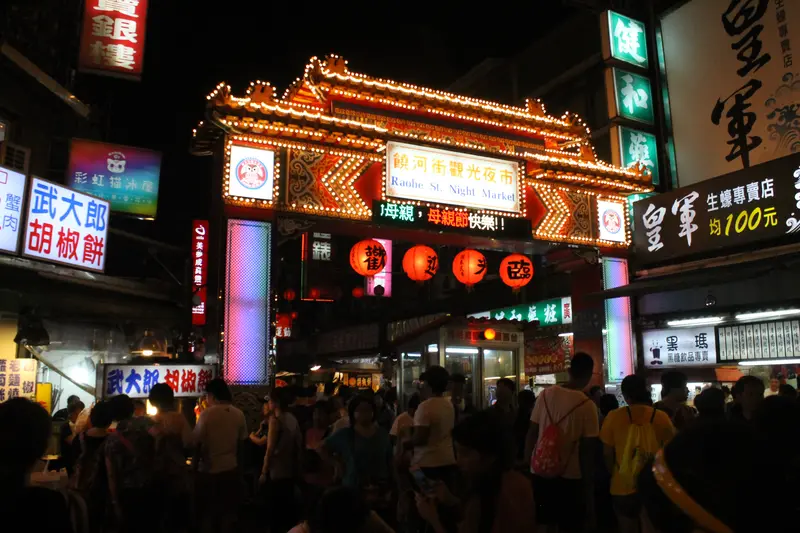
  • Stands right at the entrance to Raohe Street Night Market
  • Dragon-and-immortal roof ridges and intricate carvings
  • Great for photos, especially around dusk

Why go

If you want a temple visit that doesn’t require a big detour, Songshan Ciyou Temple is an excellent choice. It’s atmospheric, richly decorated and dedicated to Mazu, the sea goddess revered across Taiwan and southern China — and it’s impossible to miss, because it sits right at the entrance to one of Taipei’s most iconic night markets.

That makes it the perfect ‘two birds, one evening’ Taipei plan: a few minutes of slow looking inside the temple, then straight into the food.

A temple with history

The temple was originally founded in 1753 and has been rebuilt several times over the centuries, growing into the imposing structure you see today — a multi-storey complex housing not just Mazu but a wide array of Taoist and Buddhist deities across its floors. Its survival and repeated rebuilding reflect how central it has been to the surrounding Songshan community for more than two and a half centuries.

It anchored what was historically the river-port settlement of Xikou, on a bend of the Keelung River, and as the area grew the temple grew with it. The market street that became Raohe developed alongside the temple precisely because temples were the social and commercial centre of old Taiwanese towns — people gathered to worship, then stayed to trade and eat. That ancient link is exactly why the temple and the night market still sit side by side today.

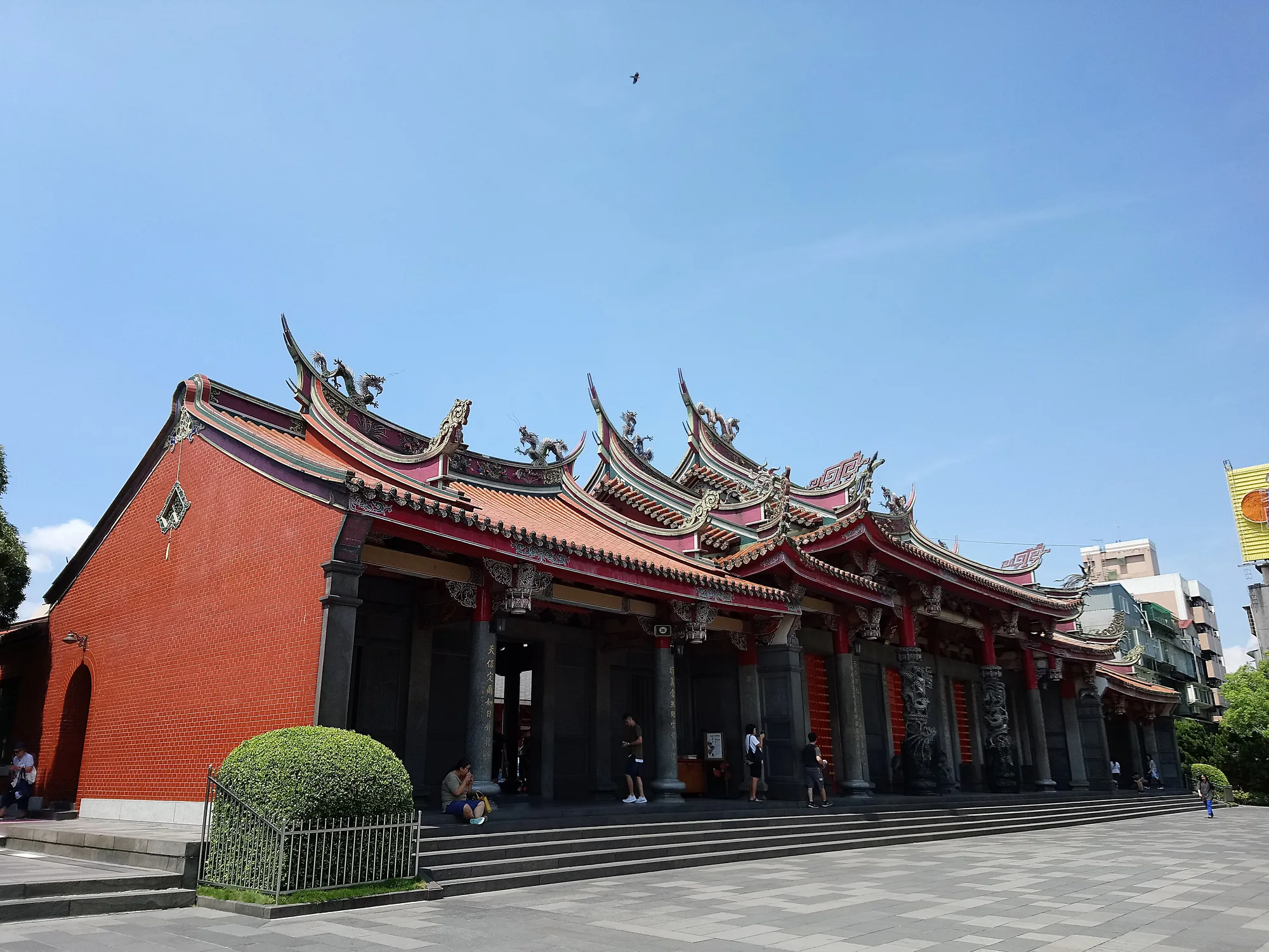
The red-walled Xingtian Temple main hall in Taipei with its ornate swallowtail roof under a blue sky
Photo: 寺人孟子 · CC BY-SA 4.0 · Wikimedia Commons

Understanding Mazu

Mazu is one of the most beloved deities in Taiwan, a protector of sailors and fishermen whose worship spread from the Fujian coast with generations of migrants crossing the strait. For an island nation that has always depended on the sea, she became a kind of patron goddess, and major Mazu temples draw enormous followings and elaborate annual pilgrimages elsewhere in Taiwan.

Knowing this adds depth to a visit here: the central shrine to Mazu, flanked by attendant generals and surrounded by other deities, reflects a folk-religion tradition that blends Taoist, Buddhist, and local belief. You don’t need to participate to appreciate it — simply watching worshippers offer incense and bow gives a window into a living practice that shapes daily life across the country.

  • Mazu: sea goddess and protector revered across Taiwan
  • Brought by Fujianese migrants crossing the strait
  • A blend of Taoist, Buddhist, and local folk belief
The ornate main hall of Dalongdong Bao'an Temple in Taipei, with a multi-tiered swallowtail roof, dragon ornaments and red lanterns
Photo: Zairon · CC BY-SA 4.0 · Wikimedia Commons

What to look for

Spend a little time on the details: the roof ridges crowded with dragons, phoenixes and immortal figures, the carved stone and woodwork at the entrance, and the layered shrine halls rising over several floors. At dusk, when the lanterns and lights come on against the dark sky, it’s especially photogenic.

  • Ornate dragon-and-immortal roof decoration
  • Multiple shrine floors of Taoist and Buddhist deities
  • Carved entrance stone and woodwork

The ideal evening loop

Keep it simple: temple first (slow looking, respectful), then food. The temple stands at the western entrance of Raohe Street Night Market, which runs roughly 600 metres east toward the Rainbow Bridge, so you can step straight from the shrine into the food crawl. Arrive a little before peak crowds and graze rather than rushing.

  • Songshan Ciyou Temple → Raohe Night Market dinner crawl
  • Add-on: a short riverside stroll near the Rainbow Bridge to finish

FAQ 常見問題

Quick answers to common planning questions.

How old is the temple?
It was founded in 1753 and has been rebuilt several times since, evolving into today’s large multi-storey complex.
Which deity is it dedicated to?
Mazu, the sea goddess, who is also worshipped alongside many other Taoist and Buddhist deities across the temple’s floors.
How close is it to Raohe Night Market?
It’s right at the western entrance of Raohe Street Night Market, which runs about 600 metres toward the Rainbow Bridge — you can walk straight from the temple into the market.
Is there an entry fee?
No — like most temples in Taiwan, it’s free to enter.
How long should I spend?
About 30 to 60 minutes is plenty before you head into the night market.

Helpful links 連結

Official pages and references for planning details.

Keep exploring 繼續逛

Hand-picked next reads to make your Taipei plan smoother.

Ready to plan your next stop? 下一站

Start with a simple loop: one neighborhood stroll, one iconic sight, and one night market. Taipei rewards balance.

Tip: hours, prices, and seasonal schedules can change. When something matters (like a museum ticket or a special exhibition), check the official listing before you go.