Skip to content
green and red pagoda temple
Taipei · 台北 · 25.03°N 121.56°E

Guandu Temple: riverside temple vibes at the edge of Taipei

Northern Taiwan’s oldest Mazu temple, with roots reaching back to 1661 and the current temple dating to 1712. A dramatic Beitou complex near the river—famous for an ~80 m “Ancient Buddha Cave” that exits onto a riverside viewpoint over the Guandu Plain.

Northern Taiwan’s oldest Mazu temple, with roots reaching back to 1661 and the current temple dating to 1712. A dramatic Beitou complex near the river—famous for an ~80 m “Ancient Buddha Cave” that exits onto a riverside viewpoint over the Guandu Plain.

Updated June 20, 2026

Map

Visualize where this fits in your day (and plan nearby pairings).

Open full map →

Quick facts資訊

Cost
Free
Hours
Roughly 06:00–21:00 daily
Time needed
1–1.5 hours
Getting there
MRT Guandu (Red Line), about a 10–15 min walk (or local bus to the “Guandu Temple” stop)
Best time / for
Early morning for fewer crowds; lively during Mazu’s birthday and Lunar New Year
Good to know
An active place of worship—dress respectfully; the famous ~80 m Buddha cave exits onto a riverside viewpoint over the Guandu Plain.
District
Beitou
Best for
Temple atmosphere, north-side exploring, photos
Dedicated to
Mazu (with a Buddhist chapel to Guanyin)

Highlights亮點

  • The oldest Mazu temple in northern Taiwan (current temple from 1712)
  • An ~80 m “Ancient Buddha Cave” lined with 28 deva statues
  • Riverside setting overlooking the Guandu Plain

Why go

Guandu Temple is for when you want a different Taipei mood: fewer towers, more riverside air, and a temple complex that feels dramatic and open compared with dense city-center landmarks. It’s also one of the most historically significant temples in the region—originally founded in 1661, with the current temple tracing to 1712, making it the oldest Mazu temple in northern Taiwan.

It’s dedicated to Mazu, the sea goddess, with a Buddhist chapel to Guanyin, and it sits at No. 360, Zhixing Road in Beitou District. It’s a rewarding stop if you’re already exploring the north side of Taipei—especially when you want culture plus a little nature in the same day.

The Ancient Buddha Cave

The temple’s signature feature is its roughly 80-metre “Ancient Buddha Cave,” a tunnel lined with 28 deva statues that ends at a Thousand-hand Guanyin. Walking through it is the highlight of a visit—and it pays off twice, because the cave exits onto a riverside viewpoint looking out over the Guandu Plain.

Beyond the cave, the temple is richly ornamented: carved dragon pillars, stone lions, and painted beams reward slow looking. Take your time moving through the courtyards rather than rushing the loop.

  • ~80 m “Ancient Buddha Cave” with 28 deva statues
  • Ends at a Thousand-hand Guanyin
  • Carved dragon pillars, stone lions, and painted beams
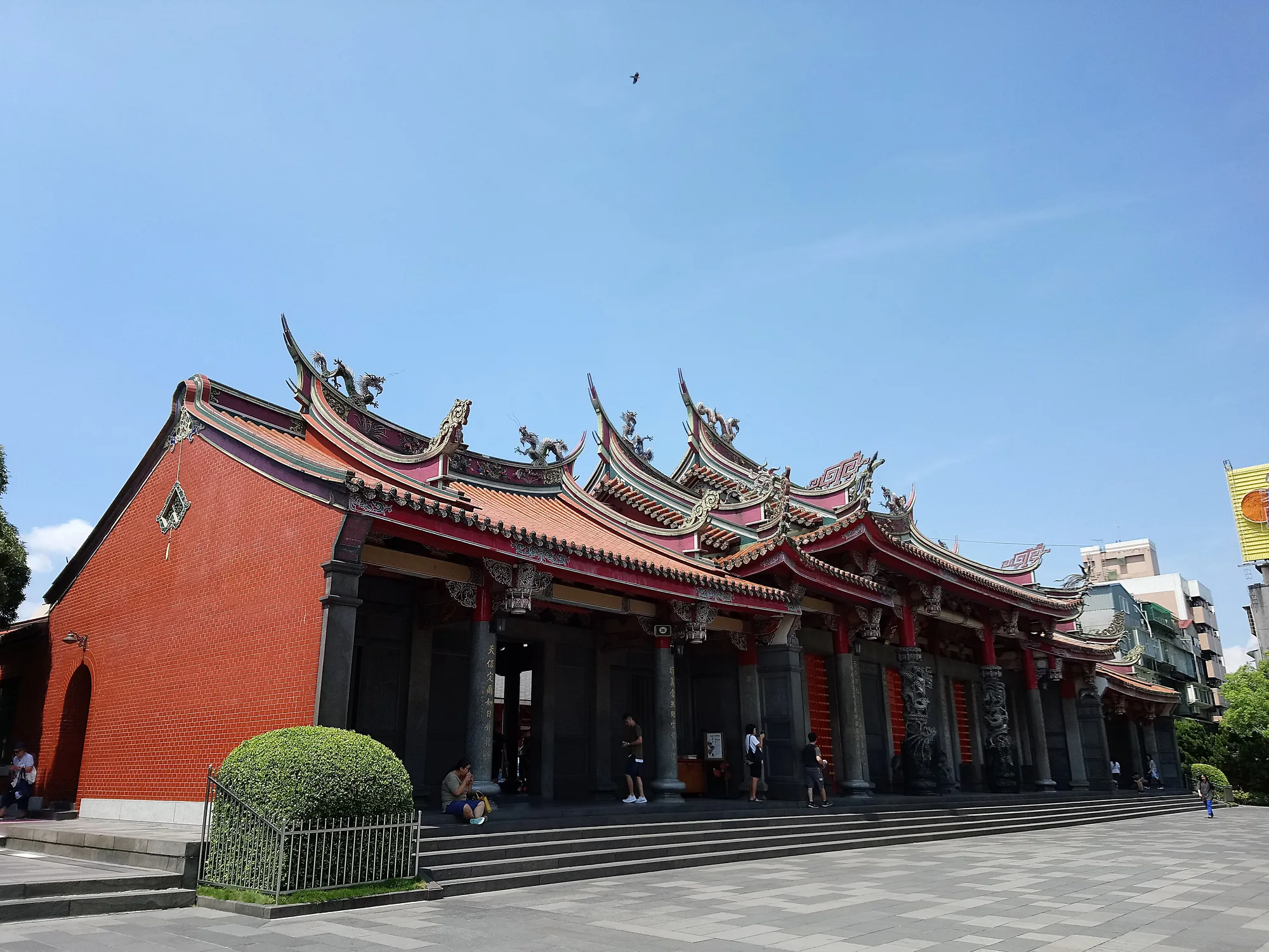
The red-walled Xingtian Temple main hall in Taipei with its ornate swallowtail roof under a blue sky
Photo: 寺人孟子 · CC BY-SA 4.0 · Wikimedia Commons

How to visit

Treat this as a slow visit: walk the grounds, explore the Buddha cave, take your photos from the riverside viewpoint, then leave space in your day for a calm meal or hot springs. This is an active place of worship, so dress respectfully and move quietly.

Timing helps. Early morning means fewer crowds; the temple is busiest and most atmospheric during Mazu’s birthday and Lunar New Year. From MRT Guandu it’s a 10–15 minute walk, or you can take a local bus to the “Guandu Temple” stop.

  • Go early for fewer crowds
  • Dress respectfully—this is an active temple
  • Bring water; north-side days can involve more walking
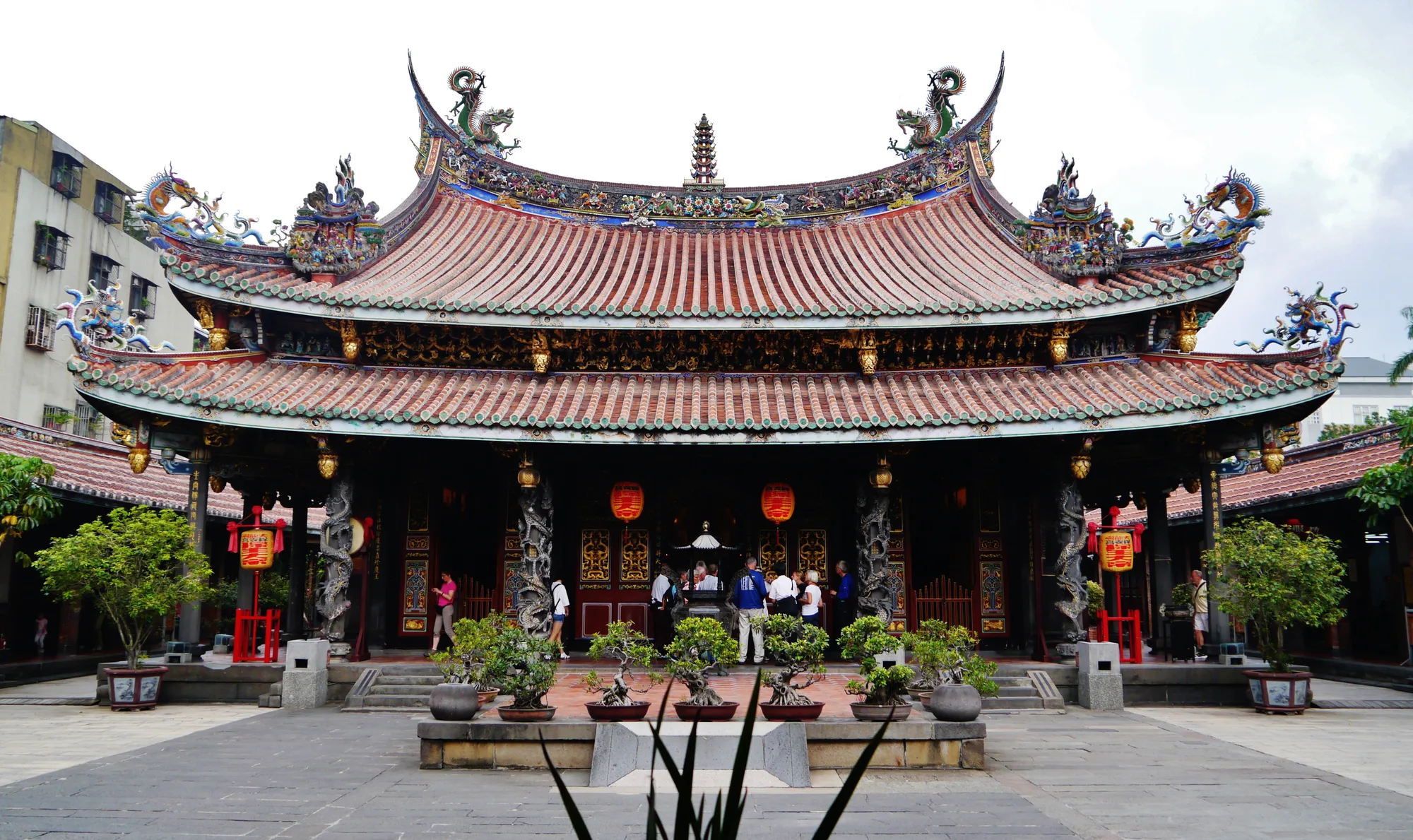
The ornate main hall of Dalongdong Bao'an Temple in Taipei, with a multi-tiered swallowtail roof, dragon ornaments and red lanterns
Photo: Zairon · CC BY-SA 4.0 · Wikimedia Commons

Why the setting matters

Most of Taipei’s famous temples are hemmed in by city blocks, so part of what makes Guandu memorable is simply where it sits—built into a hillside near the confluence of the Tamsui and Keelung rivers, on the edge of the protected Guandu wetlands. That open, watery landscape gives the visit a sweep you don’t get downtown, and it’s why the riverside viewpoint at the end of the Buddha cave feels like such a reward. On a clear day you can look out over the floodplain toward the hills beyond.

It also means the area pairs nature with culture better than almost anywhere else on the north side. The Guandu Nature Park and its birdwatching boardwalks are close by, and the riverside bike path runs right past, so you can easily fold a temple visit into a longer outdoor morning rather than treating it as a one-off stop. Come early, before tour groups arrive, and the combination of incense, river breeze, and open sky is genuinely lovely.


How to pair it

Keep your north-side plan cohesive: one temple, one nature stop, one easy meal. That’s enough. Beitou’s hot springs are an easy follow-on, or extend into a Yangmingshan nature loop.

  • Guandu Temple → Beitou hot springs
  • Guandu Temple → Yangmingshan nature loop → early night

FAQ 常見問題

Quick answers to common planning questions.

Is it worth the trip out from central Taipei?
If you enjoy temples with a strong sense of place, yes—the riverside setting, the dramatic Buddha cave, and the open views over the Guandu Plain make it feel quite different from the city-centre temples. It’s an easy ride on the Tamsui–Xinyi (Red) Line, and pairs naturally with Beitou’s hot springs or the nearby nature park.
What are Guandu Temple’s opening hours?
The temple is open roughly 06:00 to 21:00 daily. Early morning is the calmest time to visit.
How do I get there?
Take the MRT Red Line to Guandu station, then it’s about a 10–15 minute walk—or take a local bus to the “Guandu Temple” stop.
What’s the Ancient Buddha Cave?
It’s an approximately 80-metre tunnel lined with 28 deva statues that ends at a Thousand-hand Guanyin. It exits onto a riverside viewpoint over the Guandu Plain, making it the temple’s standout feature.
How old is the temple?
It was originally founded in 1661, with the current temple tracing back to 1712—making it the oldest Mazu temple in northern Taiwan.
Is it free to visit?
Yes, entry is free. It’s an active place of worship, so dress respectfully and keep noise down.

Helpful links 連結

Official pages and references for planning details.

Keep exploring 繼續逛

Hand-picked next reads to make your Taipei plan smoother.

Ready to plan your next stop? 下一站

Start with a simple loop: one neighborhood stroll, one iconic sight, and one night market. Taipei rewards balance.

Tip: hours, prices, and seasonal schedules can change. When something matters (like a museum ticket or a special exhibition), check the official listing before you go.