Temples in Taipei: etiquette, timing, and what to notice
A respectful, beginner-friendly guide to visiting Taipei’s temples—what to wear, how to move, and how to appreciate the details without feeling awkward.
Read more →
A respectful, beginner-friendly temple day plan: how to move, what to notice, and how to pair temples with food streets and cafés for a complete Taipei day.
A respectful, beginner-friendly temple day plan: how to move, what to notice, and how to pair temples with food streets and cafés for a complete Taipei day.
Updated June 20, 2026
 Quick facts資訊
 CostTime neededGetting thereBest time / forGood to knowBest forPacePhotography
 Highlights亮點
A temple day isn’t about rushing between sites—it’s about slowing down enough to see details. The best plan: one major temple, one secondary stop, and lots of small street texture in between.
Think of temples as anchors inside a neighborhood walk, not standalone checkboxes.
Start with a major, atmospheric temple in an older district, then add a second temple stop if you feel like it. Use cafés as quiet breaks, and end with food.
Temples reward looking up. Rooflines, carved beams, guardian figures, and painted panels often hold the most artistry. Also notice the soundscape: chanting, small bells, footsteps, and the quiet rhythm of people moving through rituals.
If you feel unsure, stand to the side and watch for a minute. Taipei temple etiquette is easy when you let the space teach you.

A temple day feels best when it ends with something delicious. Choose a neighborhood with a strong food rhythm (night market or street snacks) and close the loop with a sweet finish.
The fear of ‘doing it wrong’ stops a lot of travelers from enjoying temples—but the truth is, Taipei’s temples are welcoming, and a little quiet awareness covers almost everything. The golden rule is simple: watch first, then follow the flow. Stand to one side for a minute, see how regular worshippers move, and mirror the general rhythm. You don’t need to perform any ritual yourself to be respectful.
Dress modestly (shoulders and knees covered is a safe default), keep your voice low, and be thoughtful with photography—avoid using flash, don’t photograph people mid-prayer, and look for any posted signs about restricted areas. When you enter and exit, use the side doorways rather than stepping on the raised central threshold, which traditionally carries significance.
One detail worth knowing: not every temple uses incense the way you might expect. Some, like Xingtian Temple, have phased out incense burning in recent years. Rather than memorizing rules per temple, just take your cue from the people around you—matching the local rhythm is both the easiest and the most respectful approach.
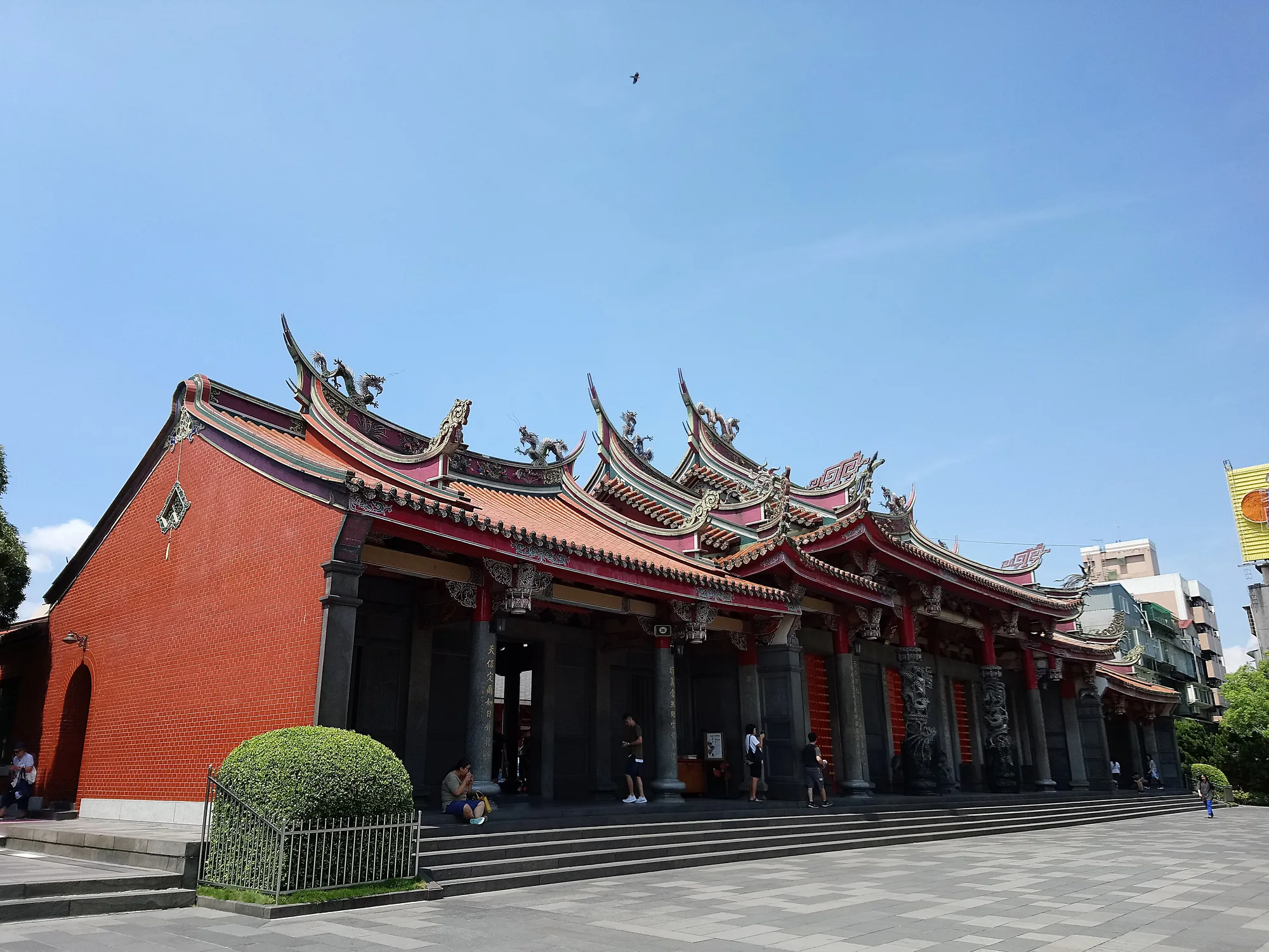
You don’t need a long list—two or three temples with real character beats a checklist of six. The classic anchor is Longshan Temple in old Wanhua: one of Taipei’s most famous and atmospheric temples, free to enter, and sitting right at its own MRT station (Blue line, Exit 1) in a district packed with street texture. It’s the easiest, richest place to start a temple day.
From there, mix in a second temple with a different mood. Xingtian Temple, dedicated to Guan Gong, is calm and orderly and known for a free blessing ritual offered by volunteers—a gentler, quieter contrast to busy Wanhua. The Dalongdong Baoan Temple and the nearby Taipei Confucius Temple form a serene cultural pairing in the Yuanshan area, rewarding for their architecture and craftsmanship. And on Dihua Street in Dadaocheng, the small but storied Xiahai City God Temple is famous for its Yue Lao matchmaking tradition—a charming, very local stop.
Whichever you choose, treat the temples as anchors inside a neighborhood, not isolated photo stops. The walk between them—the side-street shrines, the shops, the everyday life—is half of what makes a temple day feel like Taipei rather than a museum visit.
Temples reward people who slow down and look up. The most spectacular artistry is usually overhead: swooping, dragon-crowned rooflines; intricately carved wooden beams; and the colorful ‘jiannian’ mosaic figures—deities, immortals, and mythical beasts—pieced together from cut ceramic shards along the ridges and eaves. Once you start noticing these, every temple becomes a treasure hunt.
Down at eye level, look for the guardian figures and carved stone pillars flanking the main entrances, often featuring coiled dragons or scenes from legend. Notice the door gods painted on the main doors, the layered incense-and-candle glow in the central halls, and the way the layout typically moves from an outer courtyard inward toward the main deity. These aren’t random decorations—they tell stories and signal hierarchy.
Engage your other senses, too. Part of a temple’s atmosphere is its soundscape and rhythm: the soft clatter of divination blocks, the murmur of prayers, footsteps on worn stone, the hush in a side hall. Letting yourself simply stand and absorb that for a few minutes is, honestly, the best thing you can ‘do’ at a temple.
A temple day lands best when it’s bookended by food and neighborhood texture. Start in the morning while the temples are calm and the light is soft, pairing your anchor temple with a wander through its surrounding streets. Around Longshan, that means old Wanhua and the nearby Bopiliao historic block; around Dihua Street, it means heritage storefronts, tea shops, and dried-goods stalls.
Use cafés or a teahouse as quiet midday resets between temples, then let the evening carry you into food. The geography makes the pairings easy: Longshan flows naturally into Ximending for a buzzy contrast and late snacks, while a Wanhua temple morning sits right beside the atmospheric Huaxi Street night market. A Dadaocheng temple-and-tea afternoon can wind down with a riverside sunset at Dadaocheng Wharf before a calm dinner.
Keep the pace gentle. The goal isn’t to ‘collect’ temples—it’s to move slowly enough that the details, the streets, and the food all register. One or two temples, one neighborhood, one good meal: that’s a complete, deeply Taipei day.
The pages that pair best with this one — tap a card to keep planning.
 GuidesTemples in Taipei
A respectful, beginner-friendly guide to visiting Taipei’s temples—what to wear, how to move, and how to appreciate the details without feeling awkward.
 GuidesNight markets 101
A practical night-market playbook: what to expect, how to order, crowd strategy, and which markets fit your vibe.
NeighborhoodsWanhuaTaipei’s oldest district: temple atmosphere, heritage blocks, and everyday street scenes—best explored slowly with snacks and short walks. Anchored by Longshan Temple, it’s where the city’s lived-in history is most palpable.
NeighborhoodsXimendingTaipei’s most famous pedestrian shopping area—bright signage, pop culture, and a steady stream of snacks and late-night eats. Compact, walkable, and endlessly photogenic, it’s the city’s easiest ‘Taipei at night’ to dive into on day one.
Quick answers to common planning questions.
Hand-picked next reads to make your Taipei plan smoother.
A respectful, beginner-friendly guide to visiting Taipei’s temples—what to wear, how to move, and how to appreciate the details without feeling awkward.
Read more →
A practical night-market playbook: what to expect, how to order, crowd strategy, and which markets fit your vibe.
Read more →
Taipei’s oldest district: temple atmosphere, heritage blocks, and everyday street scenes—best explored slowly with snacks and short walks. Anchored by Longshan Temple, it’s where the city’s lived-in history is most palpable.
Read more →Taipei’s most famous pedestrian shopping area—bright signage, pop culture, and a steady stream of snacks and late-night eats. Compact, walkable, and endlessly photogenic, it’s the city’s easiest ‘Taipei at night’ to dive into on day one.
Read more →A lively eastern district where night-market energy meets converted creative spaces—great for evenings, food missions, and a modern-meets-traditional Taipei vibe. The pairing of a design park with one of the city’s best night markets makes for an unmistakably Taipei night.
Read more →A historic area anchored by Dihua Street—tea, dry goods, traditional shops, and a slower, more photogenic side of Taipei. It’s one of the city’s oldest trading quarters, full of Qing-era and Japanese-Baroque facades that reward a slow, curious wander.
Read more →Start with a simple loop: one neighborhood stroll, one iconic sight, and one night market. Taipei rewards balance.
Tip: hours, prices, and seasonal schedules can change. When something matters (like a museum ticket or a special exhibition), check the official listing before you go.