



Skip to content
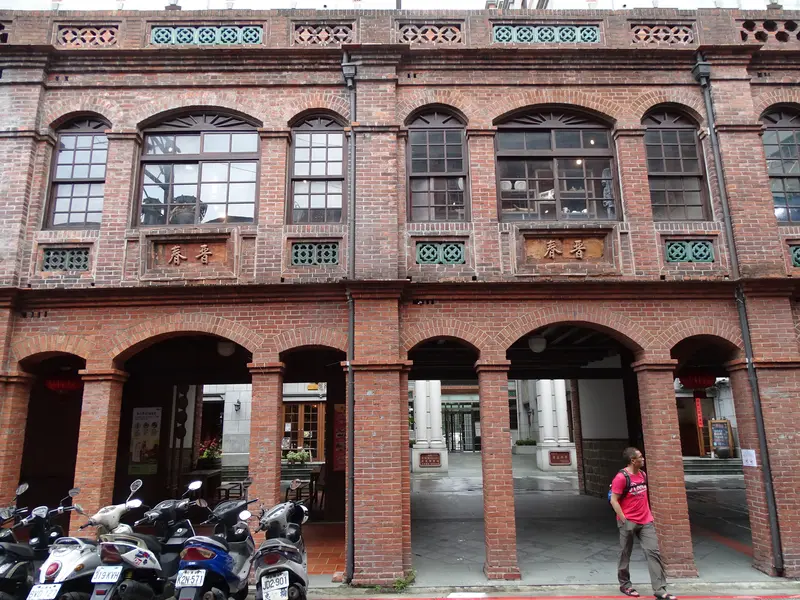
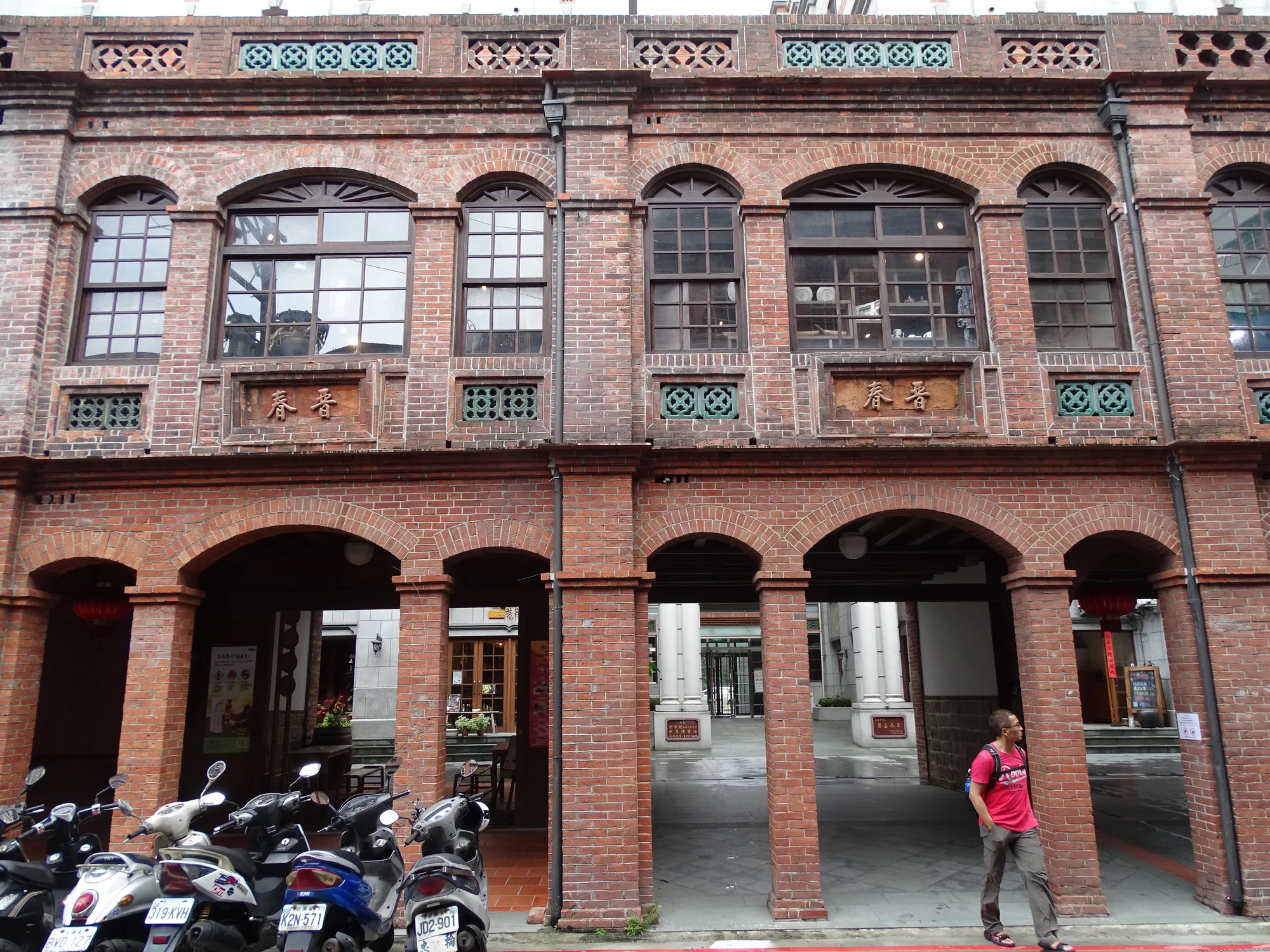
A historic red-brick shophouse facade with arched windows and a covered arcade on Dihua Street, Dadaocheng, Taipei
Taipei · 台北 · 25.03°N 121.56°E

Xiaonanmen (Little South Gate): the quiet fifth gate of old Taipei

The ‘Little South Gate,’ formally Chongximen, was the fifth and most unusual gate in Taipei’s 1880s city wall — most Chinese walled cities had four. The original was lost in the Japanese era and the present arch was rebuilt in Northern Chinese style. A calm historic stop in Zhongzheng.

Adam Jones from Kelowna, BC, Canada · CC BY-SA 2.0

The ‘Little South Gate,’ formally Chongximen, was the fifth and most unusual gate in Taipei’s 1880s city wall — most Chinese walled cities had four. The original was lost in the Japanese era and the present arch was rebuilt in Northern Chinese style. A calm historic stop in Zhongzheng.

Updated June 20, 2026

Map

Visualize where this fits in your day (and plan nearby pairings).

Open full map →

Quick facts資訊

Cost
Free — it’s a roadside historic monument you view from the outside.
Hours
Viewable any time as an outdoor landmark; best seen in daylight.
Time needed
15–30 minutes
Getting there
In Zhongzheng District near the junction of Yanping and Aiguo roads. The closest MRT is Xiaonanmen Station on the Songshan–Xindian (green) line, named after the gate.
Best time / for
Any time in daylight; it photographs well in soft morning or late-afternoon light, and is easiest to appreciate as part of a wider city-gates walk.
Good to know
The gate stands on a traffic island, so you mostly admire it from across the road. The current structure is a 20th-century rebuild, not the original Qing gate.
District
Zhongzheng
Formal name
Chongximen (重熙門), ‘Gate of Abundant Prosperity’
Part of
Taipei city wall (built 1882–1884)
Best for
Historic Taipei loops, walking explorers, photos

Highlights亮點

  • The unusual ‘fifth gate’ in Taipei’s old city wall
  • Formally named Chongximen, the ‘Gate of Abundant Prosperity’
  • A quieter historic landmark with low crowd stress
  • Easy to fold into a walk between Ximending and Zhongzheng

Why go

Xiaonanmen is a great ‘if you’re nearby’ stop: it adds a historic punctuation mark to your day without a big detour or a ticket. If you like travel that feels layered — modern streets plus historic fragments — this is a perfect micro-stop.

It also has a genuinely good story behind it, which makes the few minutes you spend here more rewarding than a quick glance suggests.

The unusual fifth gate

Taipei’s city wall was built between 1882 and 1884, running nearly five kilometres around the old walled city, pierced by gates. Most Chinese walled cities had four gates — Taipei had five. The extra one was the Little South Gate, and tradition holds it was added for the convenience of the wealthy Lin family of Banqiao, though this has never been proven.

Its formal name is Chongximen (重熙門), often translated ‘Gate of Abundant Prosperity.’

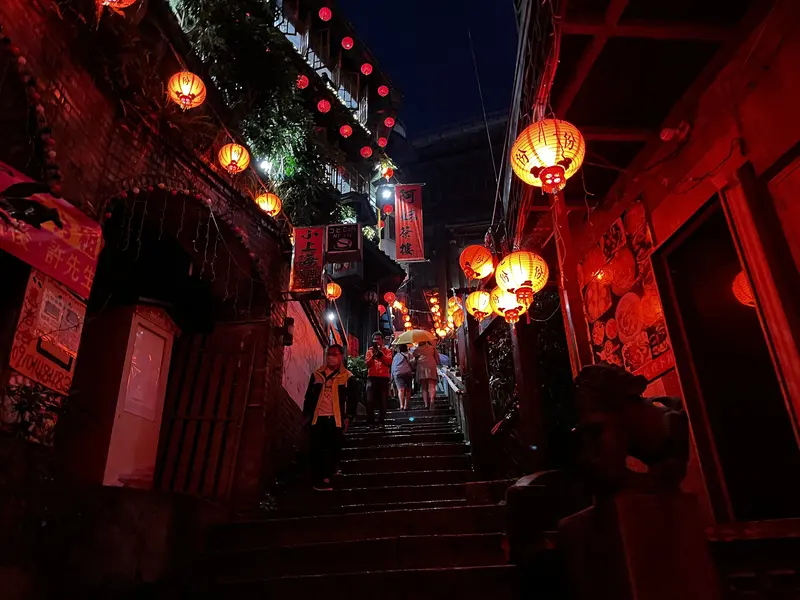
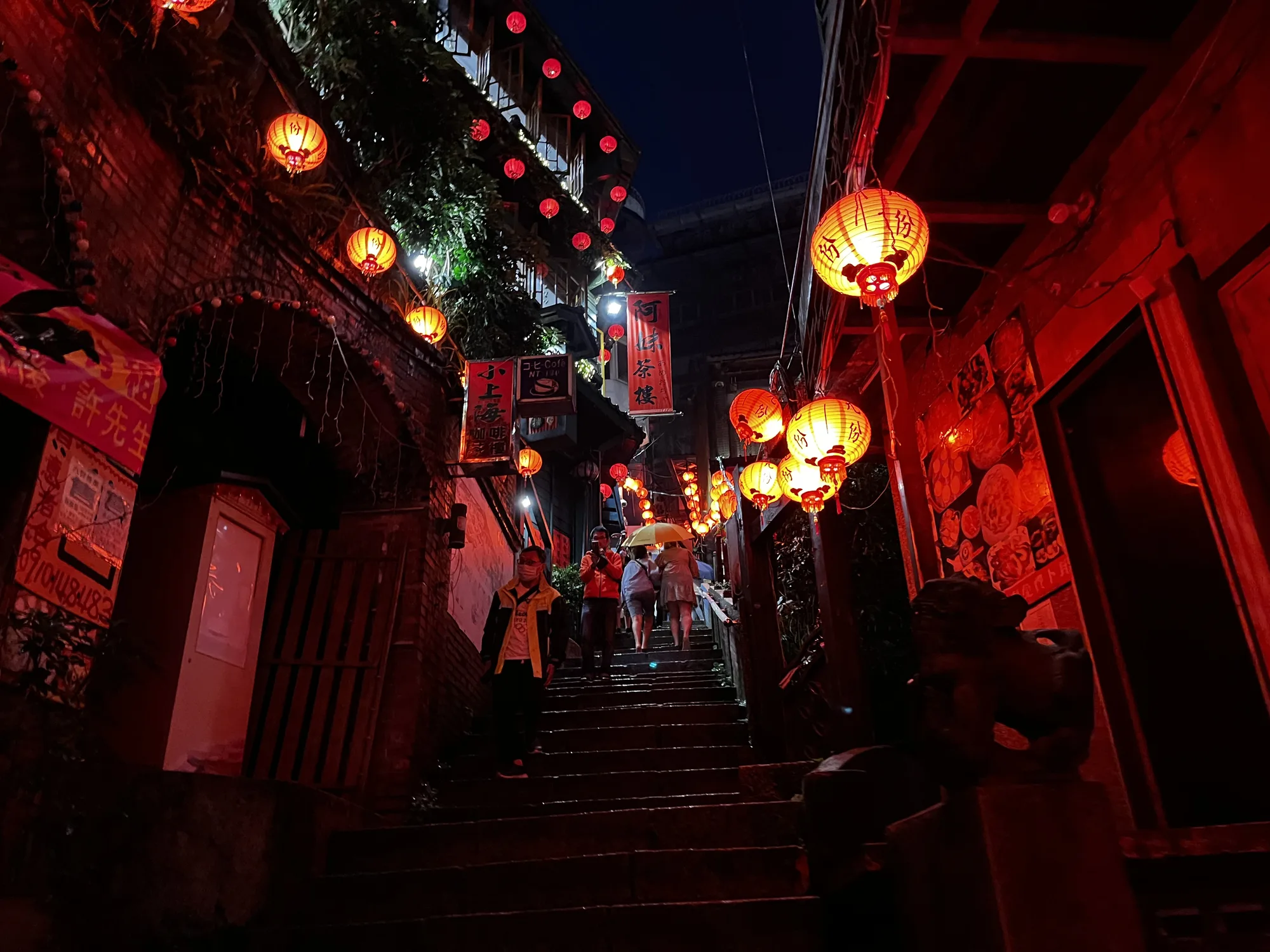
The red-lantern stairway of Jiufen old street glowing at night, lanterns lining the narrow alley as people climb the steps
Photo: Sunkenbean · CC BY-SA 4.0 · Wikimedia Commons

Lost and rebuilt

Much of the wall and its gates were torn down during the Japanese colonial period. The gates that survived into the post-1945 era — including the Little South Gate — were rebuilt in a Northern Chinese palace style, so their original Qing appearance was not preserved. Only the North Gate keeps its original form today, which makes the others a slightly romanticised version of old Taipei.

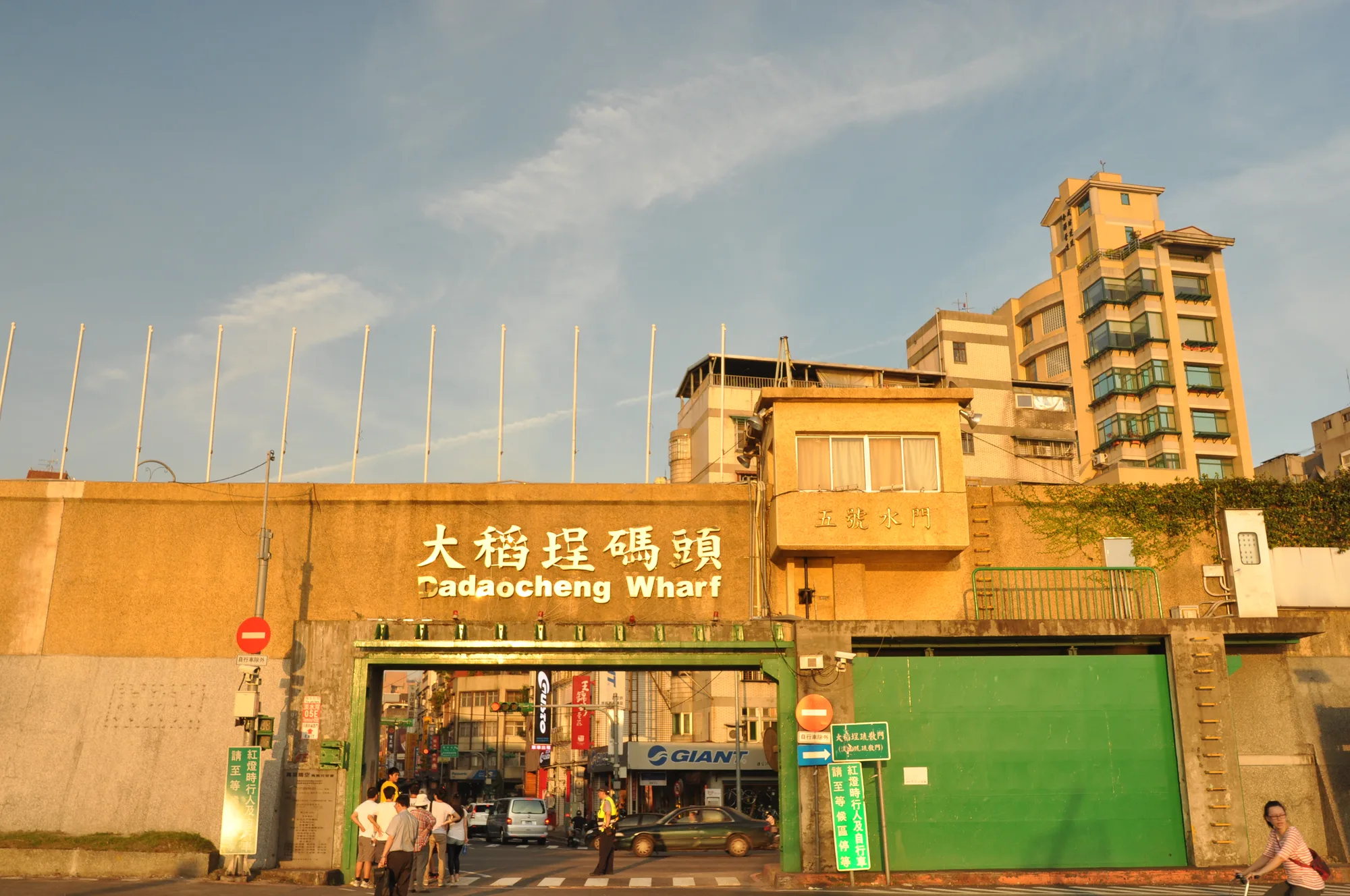
Dadaocheng Wharf in Taipei at golden sunset, with the green riverside floodgate sign reading Dadaocheng Wharf
Photo: keiichiro shikano · CC BY 2.0 · Wikimedia Commons

Doing the city-gates walk

Xiaonanmen makes the most sense as one stop on a self-guided tour of Taipei’s surviving gates. The old wall’s gates are scattered across the modern Zhongzheng grid within walking distance of one another — the North Gate, East Gate, and South Gate among them — and stringing them together turns a series of brief glances into a genuine sense of the walled city’s footprint. Done on foot, the loop also threads past the museum district and the historic core’s cafés, so it never feels like a dry monument crawl.

Of the gates, this is the quiet one, and that’s part of its charm. While the grander gates anchor busy intersections, the Little South Gate tends to be calm, with its odd origin story — the unexplained ‘fifth gate’ — giving curious walkers something to mull over. Come in soft morning or late-afternoon light, when the rebuilt palace-style roof photographs at its best.

How to use it in a real day plan

The best way to enjoy Xiaonanmen is as connective tissue: a moment of history between two bigger anchors. The nearest MRT is Xiaonanmen Station on the green line, named after the gate, which makes it easy to drop into a walking loop.

  • Ximending → Xiaonanmen → South Gate → museum/café
  • Longshan Temple → streets of Wanhua → Xiaonanmen → Zhongzheng dinner

FAQ 常見問題

Quick answers to common planning questions.

Is it worth a special trip?
On its own, not really — it’s a brief, view-from-across-the-road monument. But as part of a city-gates walk or a wider Zhongzheng/Ximending stroll, it’s a rewarding free stop with a genuinely good backstory. The MRT station named after it makes dropping by effortless.
Why does Taipei have a ‘little’ south gate as well as a south gate?
Most Chinese walled cities had four gates, but Taipei’s wall had five. The extra one — the Little South Gate — is traditionally said to have been added for the convenience of the wealthy Lin family of Banqiao, though that has never been confirmed.
Is the gate original?
No. Much of Taipei’s wall and several gates were demolished in the Japanese era. The Little South Gate was rebuilt in a Northern Chinese palace style, so it doesn’t keep its original Qing appearance. Only the North Gate retains its original form.
What is its real name?
Its formal name is Chongximen (重熙門), usually translated as the ‘Gate of Abundant Prosperity.’
How do I get there?
It’s in Zhongzheng District. The closest MRT is Xiaonanmen Station on the Songshan–Xindian (green) line, which is named after the gate.
How long should I spend here?
About 15–30 minutes. It’s best treated as a short, free stop folded into a walk between Ximending, the museum district and the other city gates.

Helpful links 連結

Official pages and references for planning details.

Keep exploring 繼續逛

Hand-picked next reads to make your Taipei plan smoother.

Ximending: youth culture, neon nights, and easy street food

Ximending: youth culture, neon nights, and easy street food

Taipei’s most famous pedestrian shopping area—bright signage, pop culture, and a steady stream of snacks and late-night eats. Compact, walkable, and endlessly photogenic, it’s the city’s easiest ‘Taipei at night’ to dive into on day one.

Read more →
Zhongzheng: monuments, museums, and classic civic Taipei

Zhongzheng: monuments, museums, and classic civic Taipei

A central district for big cultural landmarks and museum-style sightseeing—ideal for your ‘classic Taipei’ day. Home to the CKS Memorial Hall, Liberty Square, and the city’s great national museums, it’s where Taipei tells its public story.

Read more →
Taipei Main Station area: transit hub, city edges, and practical Taipei

Taipei Main Station area: transit hub, city edges, and practical Taipei

Not a ‘romantic’ neighborhood, but incredibly useful: the city’s central transit nerve center, easy day-trip logistics, and a fast way to move between districts. Understanding it makes the rest of your trip run smoother.

Read more →
Taipei South Gate (Lizheng Gate): a city-gate stop near the museum district

Taipei South Gate (Lizheng Gate): a city-gate stop near the museum district

Taipei’s grandest surviving city gate, completed in 1884 as the main south gate of the Qing-era walled city. Formally named Lizhengmen — the ‘(Main) Gate of Beauty’ — it now sits on a busy traffic circle in Zhongzheng, pairing beautifully with the Nanhai Road museum cluster and an easy historic-core walking day.

Read more →
Taipei East Gate (Jingfumen): a city-wall landmark in the historic core

Taipei East Gate (Jingfumen): a city-wall landmark in the historic core

Built in 1884 as one of five gates in Taipei’s Qing-dynasty city wall, Jingfumen (景福門) is the grandest survivor — though a 1966 “beautification” remodel gave it today’s northern-Chinese palace look. It stands on a traffic island where Zhongshan South Road meets Ketagalan Boulevard, an easy free stop in the historic core.

Read more →
Nishi Honganji Square: Japanese-era heritage and a calm plaza moment

Nishi Honganji Square: Japanese-era heritage and a calm plaza moment

A restored Japanese-era temple complex on the edge of Ximending, where a bell tower, wooden Rinbansho residence, and the brick-and-timber Tree Heart Hall now form a free, photogenic public square — a calm heritage pause between Beimen, Ximending, and the historic core.

Read more →

Ready to plan your next stop? 下一站

Start with a simple loop: one neighborhood stroll, one iconic sight, and one night market. Taipei rewards balance.

Tip: hours, prices, and seasonal schedules can change. When something matters (like a museum ticket or a special exhibition), check the official listing before you go.