



Skip to content
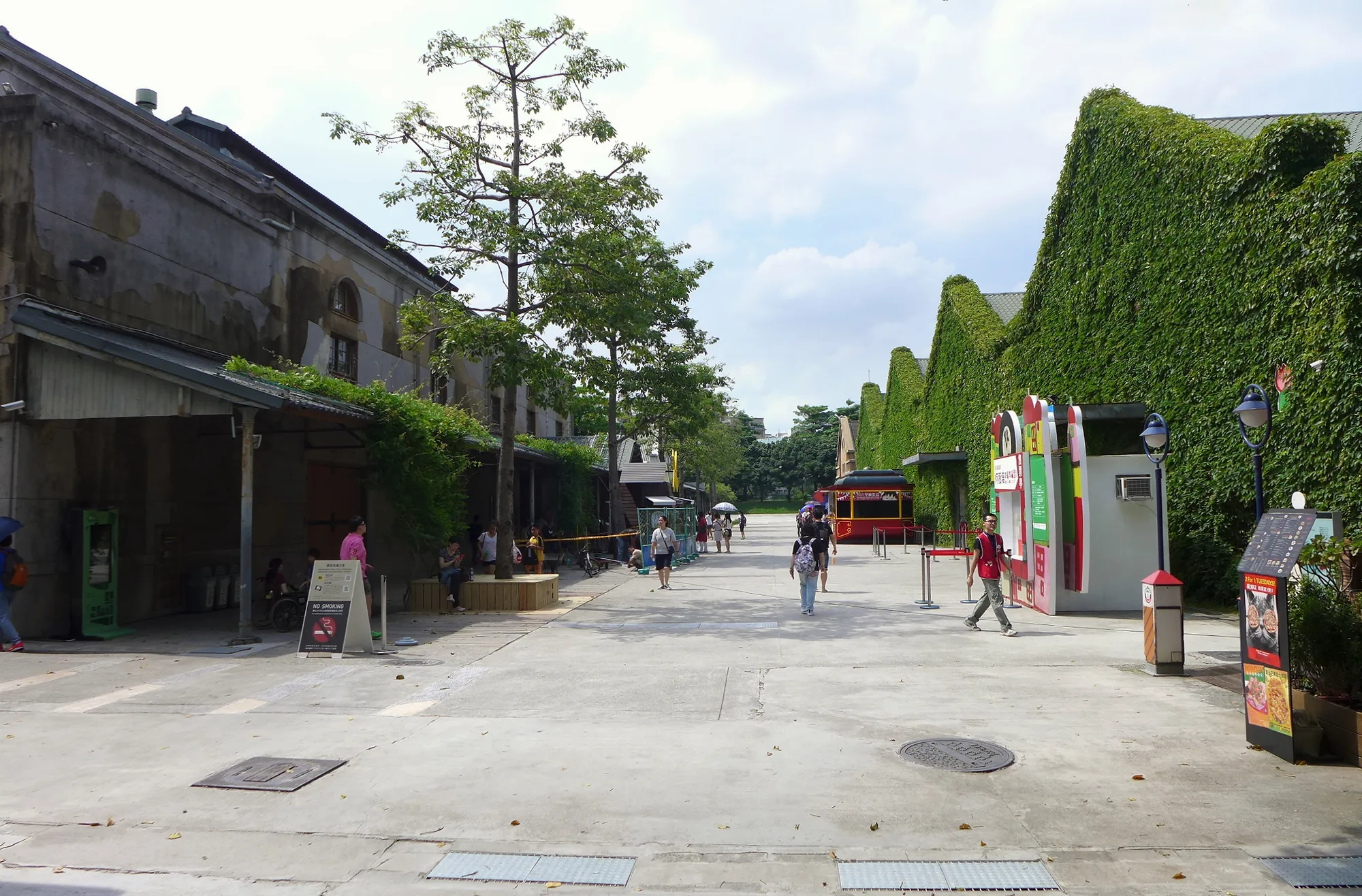
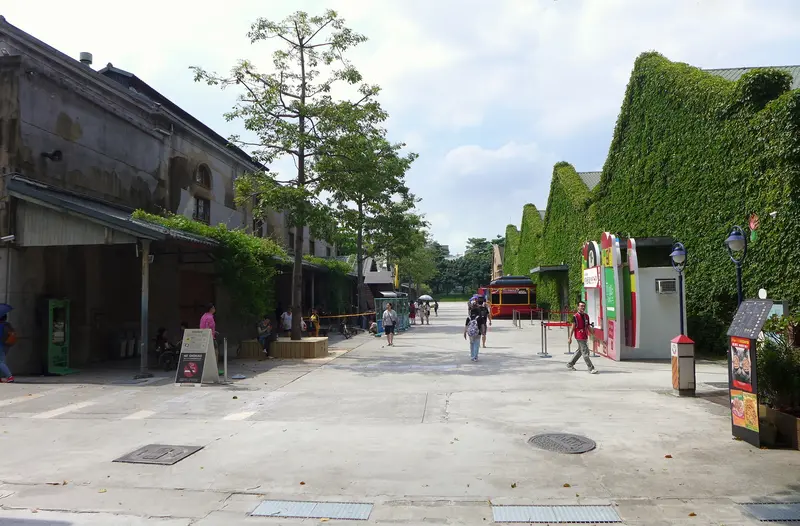
Huashan 1914 Creative Park in Taipei — ivy-covered former-winery warehouse buildings along a tree-lined boulevard with a red sightseeing tram
Taipei · 台北 · 25.03°N 121.56°E

Nishi Honganji Square: Japanese-era heritage and a calm plaza moment

A restored Japanese-era temple complex on the edge of Ximending, where a bell tower, wooden Rinbansho residence, and the brick-and-timber Tree Heart Hall now form a free, photogenic public square — a calm heritage pause between Beimen, Ximending, and the historic core.

Wpcpey · CC BY 4.0

A restored Japanese-era temple complex on the edge of Ximending, where a bell tower, wooden Rinbansho residence, and the brick-and-timber Tree Heart Hall now form a free, photogenic public square — a calm heritage pause between Beimen, Ximending, and the historic core.

Updated June 20, 2026

Map

Visualize where this fits in your day (and plan nearby pairings).

Open full map →

Quick facts資訊

Cost
Free to enter the square and walk up to the bell tower.
Hours
The outdoor square is open at all hours. The adjacent Taipei City Archives building is open roughly 9:00am–5:00pm on weekdays for English materials and a map of the site.
Time needed
15–40 minutes for a relaxed look around.
Getting there
Near the intersection of Zhonghua Road and Changsha Street on the southern edge of Ximending. Walkable from Ximen Station (MRT Blue/Green lines).
Best time / for
Late afternoon and early evening, when the bell tower catches softer light and Ximending’s energy is just picking up.
Good to know
This is a compact site best treated as a connector stop rather than a standalone destination. The Rinbansho wooden house runs a Taiwanese tea experience worth a pause.
District
Wanhua (edge of Ximending)
Best for
Walking loops, heritage texture, photo breaks
Nearest MRT
Ximen Station

Highlights亮點

  • Free, open-air heritage site with a landmark bell tower and restored Japanese-era buildings
  • The Rinbansho wooden residence now hosts a Taiwanese tea experience
  • A quick, photogenic stop on a Ximending–Beimen walking loop
  • Taipei City Archives next door offers English materials and a site map

What it is

Nishi Honganji was originally the Taiwanese branch temple of the Jōdo Shinshū Honganji school of Pure Land Buddhism, built jointly by Japanese and Taiwanese Buddhists between 1904 and 1912. It was one of the largest Japanese temple complexes in colonial-era Taipei.

After 1945 the buildings fell into neglect, and most of the complex was lost to a fire in 1975. The surviving structures were restored and the grounds reopened as a public square, with restoration of the site officially completed in 2014.

A trace of Japanese-era Taipei

The square is a reminder that during the half-century of Japanese rule (1895–1945), Japanese Buddhist schools established temples across Taiwan, and Taipei in particular gained a number of grand wooden complexes serving the colonial population. Most have vanished — to fire, demolition, or redevelopment — which makes the surviving pieces here unusually valuable, and explains why the city invested in restoring them rather than clearing the lot.

Seeing it alongside Taiwan’s many Chinese-style temples gives a fuller sense of how layered the island’s religious heritage is. Within a short walk in this part of town you can encounter Qing-era Fujianese temples, Japanese Buddhist architecture, and the neon of modern Ximending — a compressed timeline of who has shaped Taipei. That context is what turns a quick photo stop into something more meaningful.

  • A rare survivor of Japanese-era Buddhist architecture in Taipei
  • Restored rather than cleared, to preserve the heritage
  • Adds a Japanese layer to Taipei’s mostly Chinese temple landscape
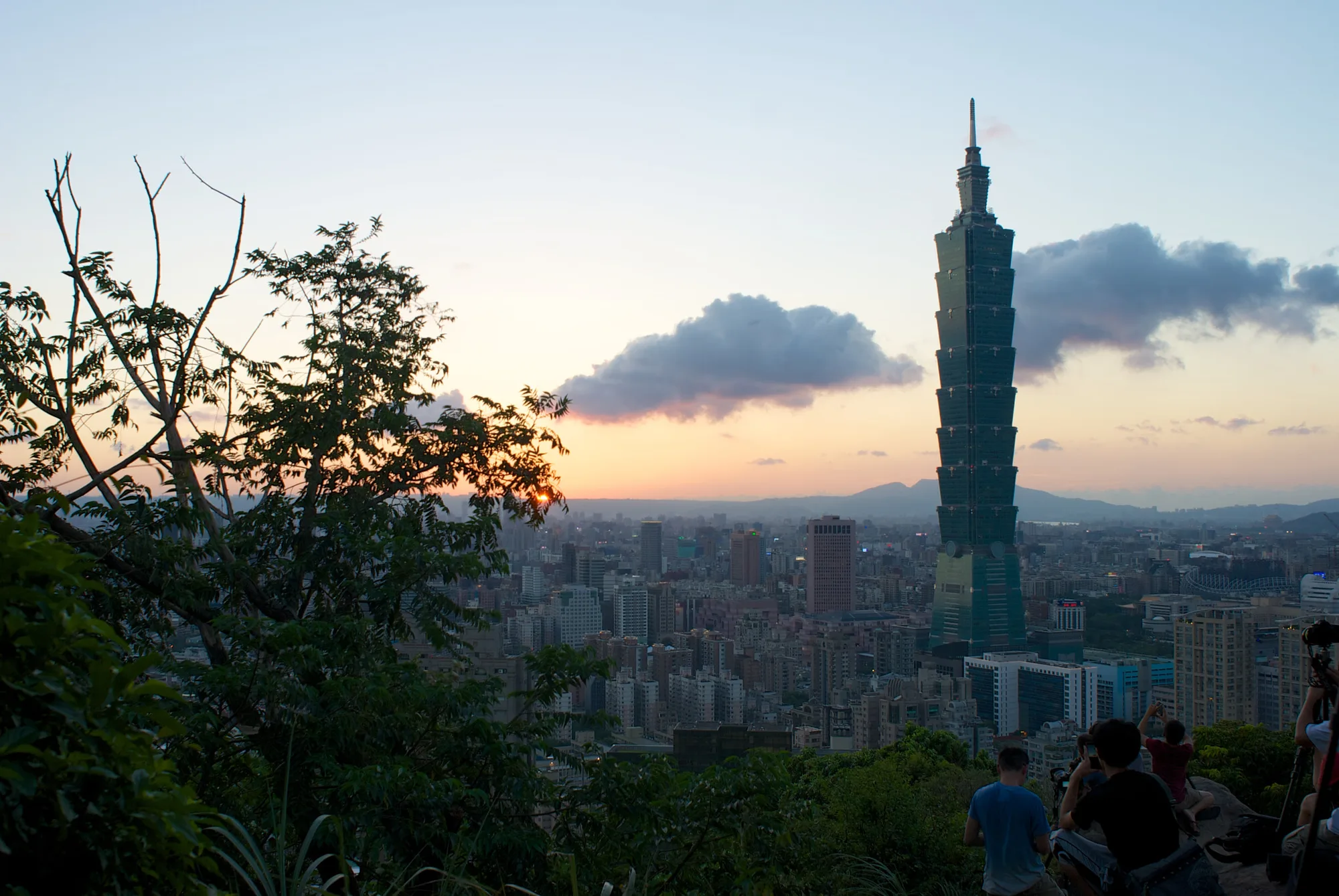
The Elephant Mountain (Xiangshan) trail view at dusk, with Taipei 101 and the city skyline behind dark foreground foliage
Photo: Jared Adler · CC BY 3.0 · Wikimedia Commons

What survives

What remains today reads like a small open-air museum of Japanese-era architecture. The standout is the bell tower (Shōrō), which originally held a large bronze bell cast in 1901 by an Osaka foundry; a replica now stands in its place.

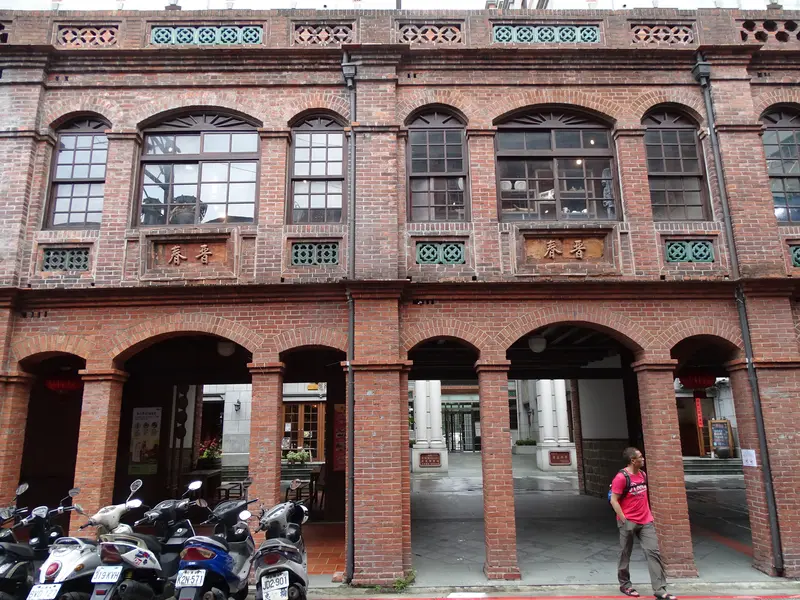
Other surviving pieces include the Tree Heart Hall (Shuxin Hall / Jushin Assembly Hall), a distinctive blend of brick, European-style timber, and Japanese roofing; the wooden Rinbansho abbot’s residence; and the raised concrete base of the former Main Hall, which gives a sense of the temple’s original footprint.

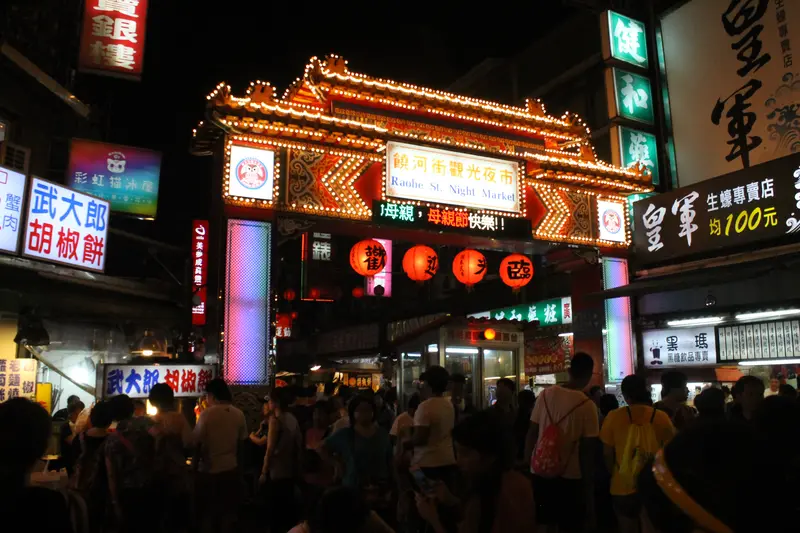
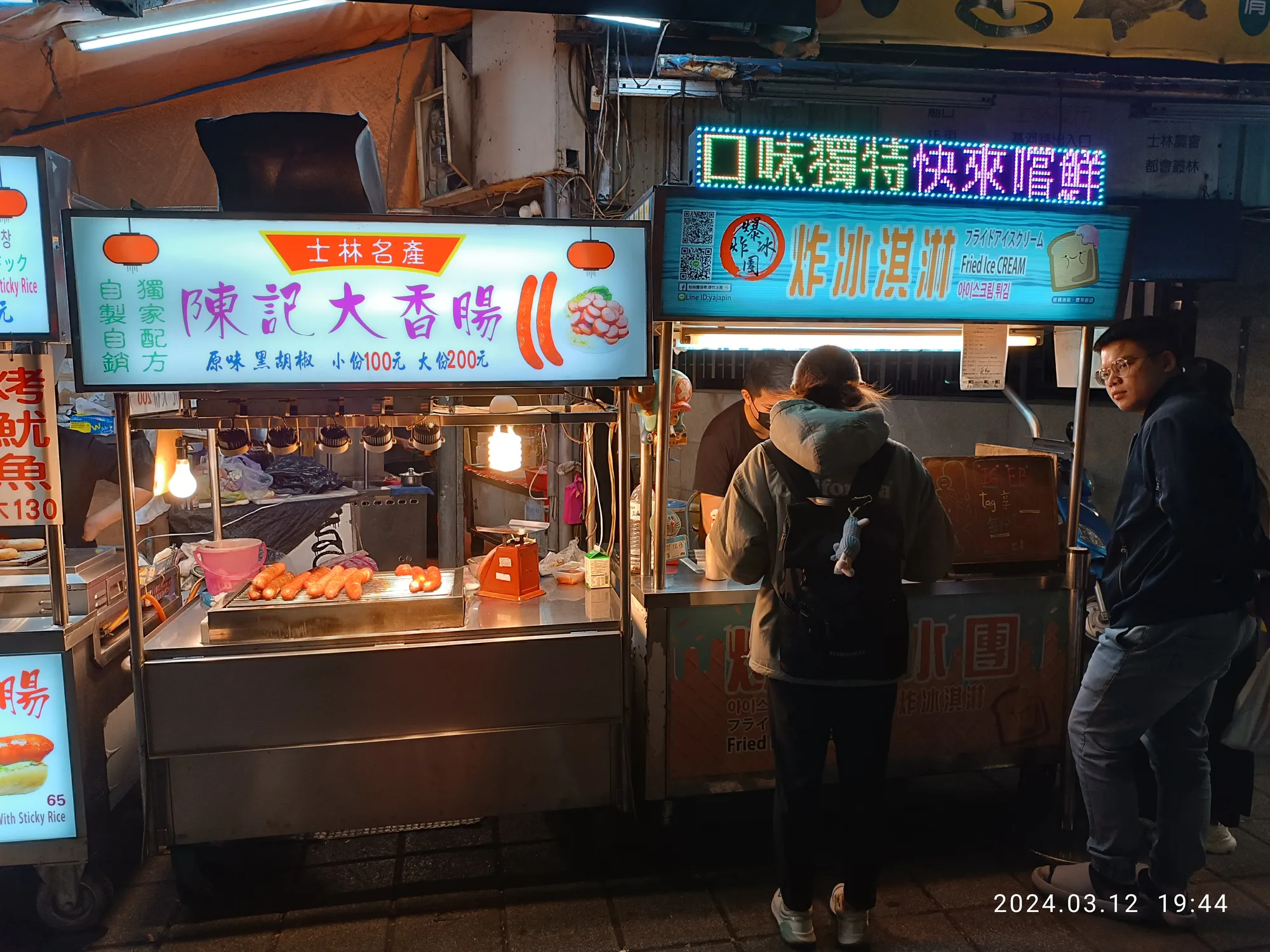
Illuminated food stalls at Shilin Night Market in Taipei at night, with glowing Shilin specialty signs and customers
Photo: Hauskyg YWICAORP · CC0 · Wikimedia Commons

Why go

Ximending days can be high-energy. Nishi Honganji Square gives you a calmer, heritage-leaning pause nearby — good for photos and a small change of tempo without leaving the area.

It’s most satisfying when you treat it as a connector stop between bigger anchors in the historic core, rather than a destination you build a day around.

How to pair it

Build a loop that combines heritage, street life, and one indoor stop (a museum, a café, or a creative space). This keeps your day balanced.

  • North Gate → Nishi Honganji Square → Ximending stroll → Red House Theater
  • Nishi Honganji Square → Zhongshan Hall → café break → night market

FAQ 常見問題

Quick answers to common planning questions.

Is there an entrance fee?
No. The square is a free public space, and you can walk right up to the bell tower.
How much of the temple complex still stands?
Most of the original complex was destroyed by fire in 1975. What you see today are restored surviving structures — the bell tower, the Tree Heart Hall, the wooden Rinbansho residence, and the concrete base of the former Main Hall.
Can I get tea or coffee on site?
Yes. The restored Rinbansho wooden residence hosts a traditional Taiwanese tea experience, which is a nice way to slow down mid-walk.
How do I get there?
It sits near the corner of Zhonghua Road and Changsha Street on the southern edge of Ximending, an easy walk from Ximen Station (MRT Blue/Green lines).

Helpful links 連結

Official pages and references for planning details.

Keep exploring 繼續逛

Hand-picked next reads to make your Taipei plan smoother.

Ximending: youth culture, neon nights, and easy street food

Ximending: youth culture, neon nights, and easy street food

Taipei’s most famous pedestrian shopping area—bright signage, pop culture, and a steady stream of snacks and late-night eats. Compact, walkable, and endlessly photogenic, it’s the city’s easiest ‘Taipei at night’ to dive into on day one.

Read more →
Taipei Main Station area: transit hub, city edges, and practical Taipei

Taipei Main Station area: transit hub, city edges, and practical Taipei

Not a ‘romantic’ neighborhood, but incredibly useful: the city’s central transit nerve center, easy day-trip logistics, and a fast way to move between districts. Understanding it makes the rest of your trip run smoother.

Read more →
North Gate (Beimen): a historic Taipei city gate near the main station

North Gate (Beimen): a historic Taipei city gate near the main station

Officially Cheng’en Gate, this 1884 Qing-dynasty blockhouse is the only one of Taipei’s old city gates surviving in its original form—a compact but high-impact landmark on an ‘old city’ walking loop near Taipei Main Station.

Read more →
The Red House (Ximending): heritage architecture + plaza energy

The Red House (Ximending): heritage architecture + plaza energy

A landmark 1908 red-brick complex at the edge of Ximending—Taiwan’s first government-built public market, now a cultural-creative hub. Its octagonal “Red House Theater” and cruciform building make a quick, photogenic stop before street food and a late-night stroll.

Read more →
Zhongshan Hall: a classic Taipei landmark beside Ximending

Zhongshan Hall: a classic Taipei landmark beside Ximending

A 1930s civic landmark beside Ximending—originally the Taipei City Public Hall and the site of Japan’s 1945 surrender in Taiwan—that adds architectural and historical texture to a city-center day, and still stages concerts, opera, and exhibitions.

Read more →
Old Taipei City Gates Walk: a low-stress historic-core loop

Old Taipei City Gates Walk: a low-stress historic-core loop

A walking-first guide to Taipei’s city-gate landmarks—link North Gate, East Gate, South Gate, and Xiaonanmen into a single loop with museum and café add-ons.

Read more →

Ready to plan your next stop? 下一站

Start with a simple loop: one neighborhood stroll, one iconic sight, and one night market. Taipei rewards balance.

Tip: hours, prices, and seasonal schedules can change. When something matters (like a museum ticket or a special exhibition), check the official listing before you go.